


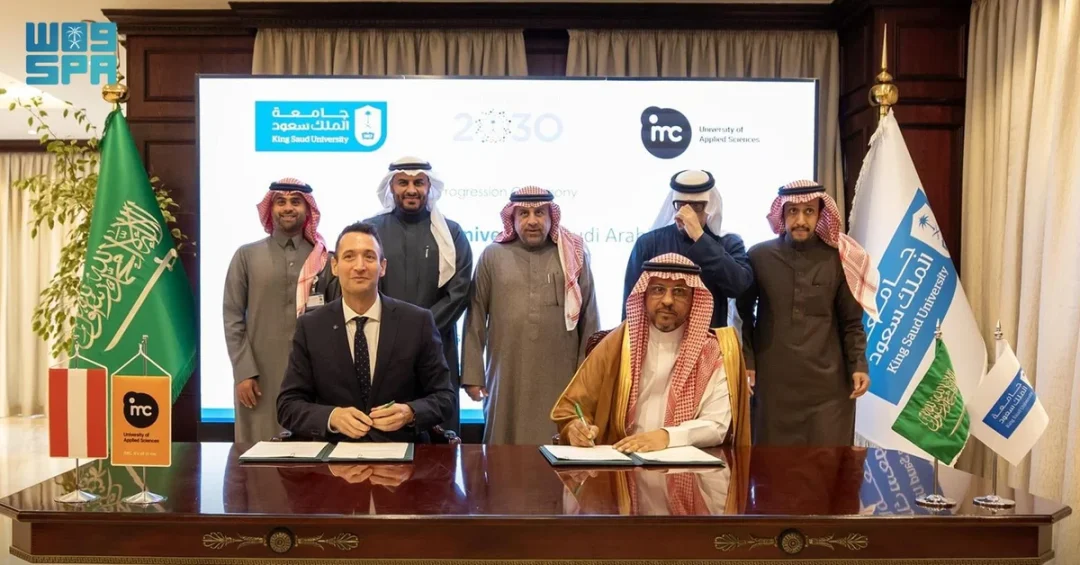
King Saud University (KSU) and IMC Krems University of Applied Sciences in Austria have signed a cooperation framework agreement to activate the provisions of a memorandum of understanding (MoU) first established in April 2024. The agreement, announced by the Saudi Press Agency on December 16, 2024, formalizes the launch of specific academic programs in hospitality and tourism management, reflecting a deepening partnership between the two institutions.
Context and Background
The new framework agreement builds on the momentum of the initial MoU signed earlier this year, which set the foundation for cooperative academic initiatives. King Saud University, one of the Kingdom’s leading higher education institutions, has been actively pursuing international partnerships to enhance its academic offerings and align with global standards. This collaboration with IMC Krems University, a respected Austrian institution specializing in applied sciences, represents a strategic step in broadening educational opportunities for Saudi students.
Key Details
Under the agreement, the partnership will focus on offering specific courses for the Intermediate Diploma program in Hotel Management and the bachelor’s degree program in Tourism and Leisure Management. These programs are designed to equip students with practical skills and knowledge tailored to the growing tourism and hospitality sectors. The agreement also includes provisions for faculty exchange, joint research, and curriculum development, ensuring that the programs meet international quality standards.
Implications and Impact
This academic collaboration is particularly timely as Saudi Arabia accelerates its tourism sector under Vision 2030, aiming to attract 150 million annual visits by 2030. The programs will help address the demand for skilled professionals in hotel management and tourism, supporting the Kingdom’s goal of becoming a leading global tourist destination. By partnering with IMC Krems University, KSU leverages Austrian expertise in applied sciences and hospitality education, which is renowned for its rigorous training and industry integration.
Vision 2030 Alignment
The agreement aligns closely with Vision 2030’s emphasis on human capital development and educational excellence. By activating international academic partnerships, King Saud University is contributing to the Kingdom’s strategy to prepare a skilled workforce capable of driving economic diversification. This collaboration not only enhances Saudi Arabia’s educational landscape but also strengthens cultural and academic ties between the Kingdom and Austria, fostering a shared commitment to knowledge exchange and innovation.
20 Questions
Q1. What is the main purpose of the cooperation agreement between King Saud University and IMC Krems University?
A1. The agreement aims to activate the provision of specific academic programs in hotel management and tourism, building on a memorandum of understanding signed earlier in April 2024.
Q2. When was the cooperation framework agreement signed?
A2. The agreement was signed on December 16, 2024, as announced by the Saudi Press Agency.
Q3. Which two universities are involved in this agreement?
A3. King Saud University in Saudi Arabia and IMC Krems University of Applied Sciences in Austria.
Q4. What academic programs are covered under this agreement?
A4. The Intermediate Diploma in Hotel Management and the bachelor’s degree in Tourism and Leisure Management.
Q5. What is the significance of this agreement for Saudi Arabia’s tourism sector?
A5. It supports Vision 2030’s goal to boost tourism by training skilled professionals for the hospitality industry.
Q6. How does this agreement align with King Saud University’s vision?
A6. It aligns with KSU’s strategy to maximize benefits from international partnerships and adapt to recent developments in higher education.
Q7. Why was IMC Krems University chosen as a partner?
A7. IMC Krems University specializes in applied sciences, particularly in hospitality and tourism, making it a valuable partner for practical education.
Q8. What specific provisions are included in the agreement?
A8. Provisions include faculty exchange, joint research, and curriculum development to meet international standards.
Q9. When was the initial memorandum of understanding signed?
A9. The MoU was signed in April 2024, laying the groundwork for the current framework agreement.
Q10. How does this agreement support Vision 2030?
A10. It enhances human capital development and educational excellence, which are key pillars of Vision 2030’s economic diversification strategy.
Q11. What is the expected impact on Saudi students?
A11. Students will gain practical skills in hotel management and tourism, improving their employability in a growing sector.
Q12. Does the agreement include any research components?
A12. Yes, joint research initiatives are part of the agreement, promoting academic collaboration between the two institutions.
Q13. How many annual visits does Saudi Arabia aim to attract by 2030?
A13. Saudi Arabia aims to attract 150 million annual visits by 2030, as per Vision 2030 targets.
Q14. What role does the Saudi Press Agency play in this story?
A14. The Saudi Press Agency announced the agreement, serving as the official source of the information.
Q15. Is this agreement limited to academic programs only?
A15. No, it also includes faculty exchange and curriculum development, fostering broader educational ties.
Q16. How does this partnership benefit Austria?
A16. It strengthens cultural and academic ties with Saudi Arabia, offering Austrian educators and researchers collaborative opportunities.
Q17. What is the duration of the cooperation agreement?
A17. The agreement builds on the MoU signed in April 2024, but the specific duration has not been disclosed.
Q18. Are there any other Saudi universities with similar partnerships?
A18. King Saud University is one of several Saudi institutions actively pursuing international academic collaborations to enhance education.
Q19. How will the programs be delivered?
A19. The programs will likely be offered on campus at King Saud University, with potential input from IMC Krems faculty.
Q20. What is the long-term goal of this agreement?
A20. The goal is to create a sustainable pipeline of skilled professionals for the tourism sector, supporting Saudi Arabia’s economic transformation.
Reader Feedback
We value your thoughts. Please share your feedback on this article.
Your feedback helps us improve our coverage.