


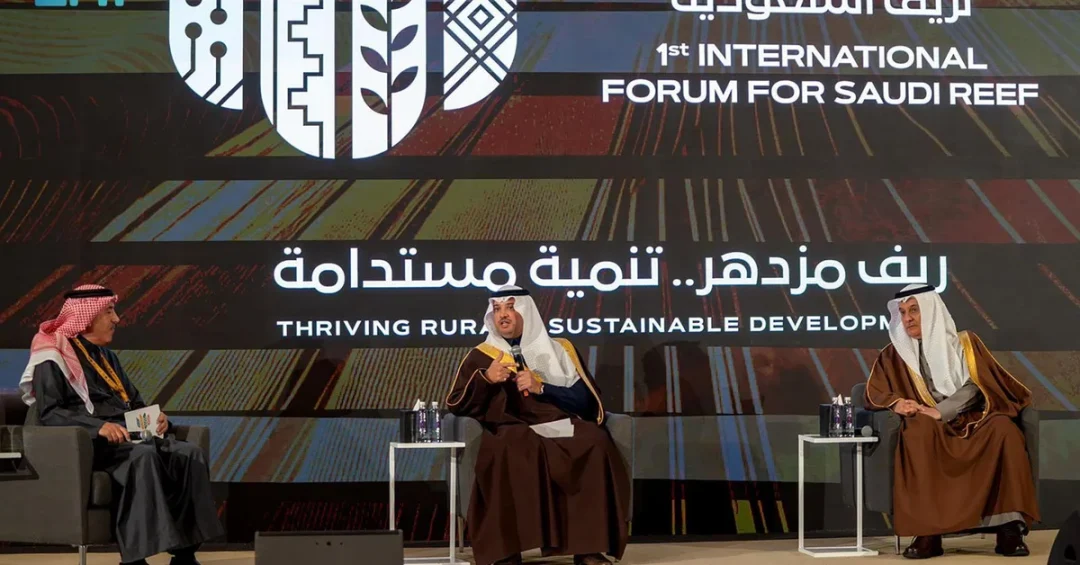
The first International Forum for Saudi Reef, held in Al-Ahsa, concluded with a strong emphasis on the role of public-private partnerships in empowering rural families and developing the agricultural sector, in alignment with Saudi Vision 2030. The forum, which took place on December 17, 2024, brought together key government officials, including the Governor of Al-Ahsa, Prince Saud bin Talal bin Badr, and the Minister of Environment, Water and Agriculture, Eng. Abdulrahman Alfadley, to discuss strategies for sustainable rural development.
Context and Background
The Saudi Reef Program, officially known as the Sustainable Agricultural Rural Development Program, is a cornerstone of the Kingdom’s efforts to diversify its economy and enhance food security. Launched under the umbrella of Vision 2030, the program aims to support small-scale farmers, rural women, and productive families by providing technical assistance, training, and financial support. The forum served as a platform to showcase the program’s achievements and explore new avenues for collaboration between the public and private sectors.
Key Details
During the opening panel session, Prince Saud bin Talal bin Badr highlighted the program’s success in raising a new generation of youth with a keen interest in agriculture. He noted that the program empowers rural women and productive families by fostering a conducive work environment and supporting agricultural regulations. The agricultural sectors supported by Saudi Reef constitute 43% of the total agricultural and female workforce in the Kingdom, contributing to increased production and high levels of self-sufficiency in many crops, thereby bolstering national food security.
Minister Eng. Abdulrahman Alfadley emphasized that the ministry’s strategies are fully aligned with Vision 2030 objectives. The Saudi Reef Program focuses on eight key sectors, leveraging the comparative advantages of each region. The minister reported that the program has improved the income and quality of life for over 80,000 beneficiaries, providing services directly in their areas to eliminate the need for travel.
Implications and Impact
The forum underscores Saudi Arabia’s commitment to inclusive economic growth that benefits rural communities. By strengthening public-private partnerships, the Kingdom aims to create sustainable livelihoods, reduce rural-urban migration, and enhance agricultural productivity. This approach not only supports local economies but also contributes to global food security by increasing the Kingdom’s self-sufficiency in key crops.
Vision 2030 Alignment
The outcomes of the International Forum for Saudi Reef directly support Vision 2030’s goals of economic diversification, social empowerment, and environmental sustainability. By prioritizing rural development and private sector engagement, Saudi Arabia is building a resilient agricultural sector that ensures food security, creates jobs, and improves living standards for its citizens. The forum marks a significant step toward a prosperous and sustainable future for the Kingdom’s rural communities.
20 Questions
Q1. What is the Saudi Reef Program?
A1. The Saudi Reef Program is a sustainable agricultural rural development initiative under Saudi Vision 2030, aimed at supporting small-scale farmers, rural women, and productive families to enhance food security and economic stability.
Q2. When and where was the first International Forum for Saudi Reef held?
A2. The forum was held on December 17, 2024, in Al-Ahsa, Saudi Arabia, bringing together officials and experts to discuss rural development and public-private partnerships.
Q3. Who participated in the opening panel session?
A3. The opening panel featured the Governor of Al-Ahsa, Prince Saud bin Talal bin Badr, and the Minister of Environment, Water and Agriculture, Eng. Abdulrahman Alfadley.
Q4. What is the main goal of the Saudi Reef Program?
A4. Its main goal is to achieve sustainable development in rural areas by focusing on eight agricultural sectors, improving income and quality of life for beneficiaries.
Q5. How many beneficiaries has the program supported so far?
A5. The program has improved income and quality of life for over 80,000 beneficiaries across the Kingdom.
Q6. What percentage of the agricultural workforce does the program support?
A6. The program supports sectors that constitute 43% of the total agricultural and female workforce in Saudi Arabia.
Q7. How does the program contribute to food security?
A7. By increasing agricultural production and self-sufficiency in many crops, the program enhances national food security.
Q8. What role do public-private partnerships play in the forum?
A8. The forum emphasized that public-private partnerships are vital for empowering rural families and developing the agricultural sector effectively.
Q9. How does the program empower rural women?
A9. The program provides a supportive work environment and enabling regulations to help rural women become productive contributors to the economy.
Q10. What sectors does the Saudi Reef Program focus on?
A10. The program focuses on eight agricultural sectors, selecting those with comparative advantages in each region of the Kingdom.
Q11. How does the program serve beneficiaries directly?
A11. Services are provided directly in beneficiaries’ areas, eliminating the need for them to travel long distances to access support.
Q12. What is the connection between Saudi Reef and Vision 2030?
A12. The program directly aligns with Vision 2030’s objectives of economic diversification, social empowerment, and sustainable development.
Q13. Who is the Minister of Environment, Water and Agriculture?
A13. The minister is Eng. Abdulrahman Alfadley, who highlighted the program’s alignment with national strategies during the forum.
Q14. What did Prince Saud bin Talal highlight about youth?
A14. He noted that the program raises a new generation of youth with interest and awareness in agriculture, ensuring future sustainability.
Q15. How does the program improve quality of life?
A15. By increasing incomes and providing direct services, the program enhances the overall quality of life for rural families.
Q16. What is the significance of self-sufficiency in crops?
A16. High self-sufficiency reduces reliance on imports, strengthens food security, and supports the national economy.
Q17. How does the forum support international collaboration?
A17. The forum provides a platform to share best practices and explore partnerships, fostering global cooperation in rural development.
Q18. What is the role of agricultural regulations in the program?
A18. Enabling agricultural regulations help create a conducive environment for farmers and entrepreneurs to thrive.
Q19. How does the program address regional diversity?
A19. It leverages the comparative advantages of each region’s climate and resources to tailor support effectively.
Q20. What is the long-term vision for Saudi Reef?
A20. The program aims to build a resilient rural sector that contributes to economic growth, food security, and sustainable communities under Vision 2030.
Reader Feedback
We value your thoughts. Please share your feedback on this article.
Your feedback helps us improve our coverage.