


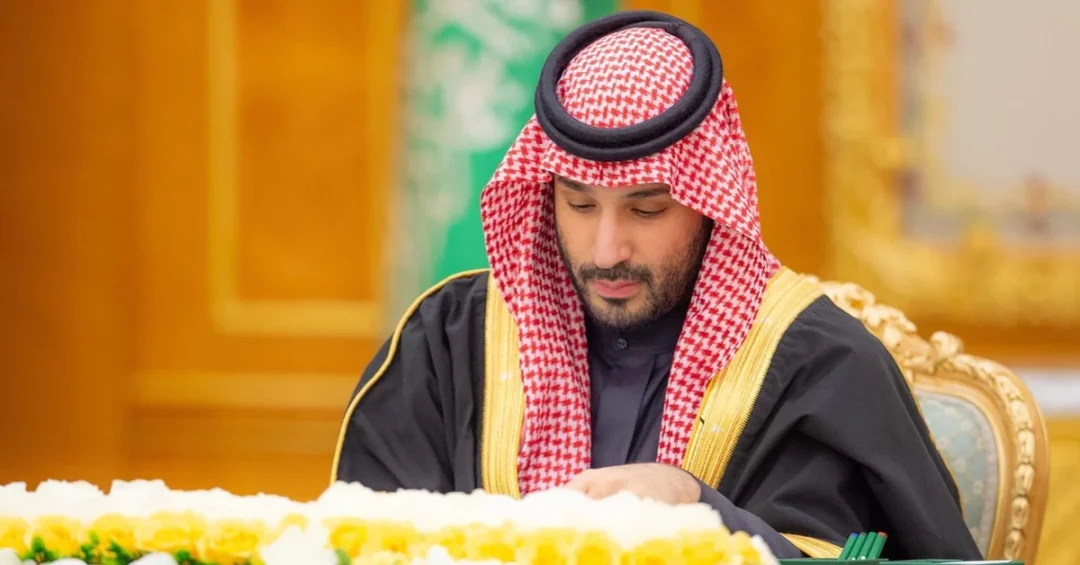
His Royal Highness Prince Mohammed bin Salman bin Abdulaziz Al Saud, Crown Prince and Prime Minister, chaired the Cabinet session in Riyadh on December 17, 2024, where the body reviewed the Kingdom’s latest achievements in infrastructure, sports, diplomacy, and global cooperation, while issuing several key decisions spanning multiple sectors.
Context and Background
The Cabinet session underscored Saudi Arabia’s ongoing momentum under the leadership of Custodian of the Two Holy Mosques King Salman bin Abdulaziz Al Saud and the Crown Prince, with a focus on driving comprehensive and sustainable development. The session came amid a period of significant national milestones, including the launch of the Riyadh public transportation project and the successful hosting of high-level foreign visits, reflecting the Kingdom’s growing international stature.
Key Details
The Cabinet expressed gratitude for the successful visits of French President Emmanuel Macron and UK Prime Minister Keir Starmer, which are expected to expand bilateral cooperation in various fields. At the same time, the Cabinet reiterated the Kingdom’s firm positions on regional issues, including support for the Syrian people and their aspirations for security and stability, and condemnation of Israeli occupation forces’ attacks on Syrian territory. The Cabinet also reaffirmed Saudi Arabia’s commitment to the establishment of an independent Palestinian state with East Jerusalem as its capital, and called for global participation in a high-level international conference in New York City next June, co-chaired by Saudi Arabia and France.
Among the major decisions, the Cabinet authorized the minister of sports to negotiate a memorandum of understanding for youth and sports cooperation with Brunei Darussalam, and the minister of interior for a driver license exchange agreement with Kyrgyzstan. Environmental and agricultural pacts were approved with Cuba and Brazil, respectively, while a geological cooperation agreement was greenlit with Iraq. A civil aviation cooperation framework was approved for signature with multiple countries, alongside a legal cooperation memorandum with Singapore. The Cabinet also approved the tripartite agreement among the Kingdom, the International Center for AI Research and Ethics (ICAIRE), and UNESCO classifying ICAIRE as a Category 2 Center under UNESCO auspices, and approved standard incentives for the industrial sector.
Implications and Impact
The session highlighted Saudi Arabia’s deepening diplomatic ties, as seen with France and the UK, while reinforcing the Kingdom’s role as a stabilizing force in the Middle East. The Cabinet discussed the ongoing One Water Summit in Riyadh and the establishment of the Global Water Organization, positioning the Kingdom as a global leader in water sustainability. Similarly, the Kingdom’s presidency of COP16 was commended for securing over $12 billion in funding to address land degradation and drought, and for mobilizing more than 100 initiatives. The Cabinet also touted the National Red Sea Sustainability Strategy, launched by the Crown Prince, as part of the Kingdom’s shift toward a sustainable blue economy.
Credit rating upgrades from international agencies were noted as evidence of the Kingdom’s sound financial policies and economic reforms. The Cabinet also acknowledged the success of the International Conference on Conjoined Twins in Riyadh, and the outcomes of the third Riyadh Global Medical Biotechnology Summit, alongside over SAR10 billion in agreements at CPHI Middle East to localize gene therapies and vaccine production. The adoption of the Riyadh Design Law Treaty by WIPO member states was welcomed as a boost to global innovation.
Vision 2030 Alignment
Each decision and discussion from the Cabinet session aligns directly with Vision 2030 objectives, from diversifying the economy through industrial incentives and biotechnology leadership, to improving quality of life via public transport and healthcare excellence. The Kingdom’s ambition to become a global leader in biotechnology, its commitment to sustainable water management, and its hosting of the FIFA World Cup 2034 all underscore a forward-looking Saudi Arabia that is firmly on track to achieve its long-term goals while contributing to global stability and prosperity.
20 Questions
Q1. Who chaired the Cabinet session on December 17, 2024?
A1. His Royal Highness Prince Mohammed bin Salman bin Abdulaziz Al Saud, Crown Prince and Prime Minister, chaired the session held in Riyadh.
Q2. What did the Cabinet express gratitude for?
A2. The Cabinet thanked Custodian of the Two Holy Mosques King Salman for his support of the Riyadh public transportation project.
Q3. What major sporting milestone did the Cabinet highlight?
A3. Hosting the FIFA World Cup 2034 in the Kingdom was highlighted as a significant achievement for Saudi sports.
Q4. Who provided the summary of the Cabinet session to the press?
A4. Minister of Media Salman Al-Dossary briefed the Saudi Press Agency on the session’s outcomes.
Q5. Which foreign leaders visited Saudi Arabia recently?
A5. French President Emmanuel Macron and UK Prime Minister Keir Starmer made successful visits to the Kingdom.
Q6. What was the Cabinet’s position on Syria?
A6. The Cabinet reiterated support for the Syrian people and condemned Israeli attacks on Syrian territory.
Q7. How did the Cabinet address the Palestinian issue?
A7. It reaffirmed commitment to a two-state solution and urged participation in a conference co-chaired by Saudi Arabia and France.
Q8. What is the One Water Summit?
A8. A global event held in Riyadh focusing on addressing water challenges and sustainable water management.
Q9. What is the Global Water Organization?
A9. A new entity established to solidify Saudi Arabia’s leadership in global water sustainability efforts.
Q10. How much funding did COP16 secure?
A10. COP16, under Saudi presidency, secured over $12 billion to combat land degradation and drought.
Q11. What is the National Red Sea Sustainability Strategy?
A11. A strategy launched by the Crown Prince to protect the Red Sea ecosystem and promote a sustainable blue economy.
Q12. What health-related success did the Cabinet acknowledge?
A12. The success of the International Conference on Conjoined Twins, showcasing Saudi medical excellence aligned with Vision 2030.
Q13. What is the Riyadh Global Medical Biotechnology Summit?
A13. A summit that supports the National Biotechnology Strategy and Saudi Arabia’s ambition to become a biotech leader.
Q14. What was the value of agreements at CPHI Middle East?
A14. Agreements and launches worth over SAR10 billion to localize gene therapies and vaccine production.
Q15. What is the Riyadh Design Law Treaty?
A15. A treaty adopted by WIPO member states to foster international cooperation and support innovation.
Q16. What did credit rating upgrades indicate?
A16. They reflect the Kingdom’s ongoing economic reforms and sound financial policies.
Q17. Which countries did the Cabinet authorize sports MOUs with?
A17. The minister of sports was authorized to negotiate a youth and sports MOU with Brunei Darussalam.
Q18. What environmental agreement was approved with Cuba?
A18. A memorandum of understanding for environmental protection cooperation was approved with Cuba.
Q19. What is ICAIRE’s new classification under UNESCO?
A19. ICAIRE was approved as a Category 2 Center under the auspices of UNESCO.
Q20. What are the standard incentives for the industrial sector?
A20. The Cabinet approved standard incentives to support the industrial sector as part of Vision 2030 economic diversification.
Reader Feedback
We value your thoughts. Please share your feedback on this article.
Your feedback helps us improve our coverage.