


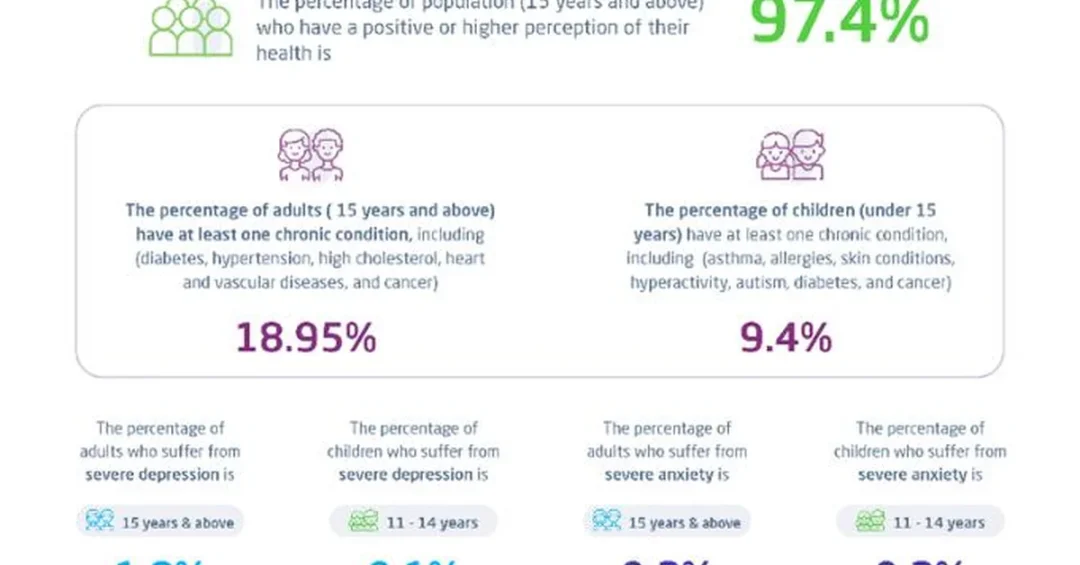
The General Authority for Statistics (GASTAT) has released its 2024 Health Status Statistics Bulletin, revealing that 97.4% of Saudi citizens aged 15 years and older rated their health as good or better. The comprehensive report, published on December 19, 2024, and sourced from official Saudi data, provides a detailed overview of the nation’s health landscape, underscoring significant progress in public well-being.
Context and Background
The bulletin, based on self-reported data from the National Health Survey and the Women and Child Health Survey for 2024, alongside population estimates from GASTAT, offers a trusted snapshot of health indicators across the Kingdom. This data is crucial for policymakers and healthcare planners as Saudi Arabia continues its rapid modernization under Vision 2030. The findings highlight a strong baseline of health among the adult population, with only 2.6% reporting fair or poor health.
Key Details on Chronic Illnesses and Demographics
While the majority of adults report excellent health, the bulletin also documents chronic conditions affecting 18.95% of adults aged 15 and older. The most prevalent chronic diseases include diabetes (9.1%), hypertension (7.9%), and cholesterol (3.6%). Among children under 15 years old, 9.4% were reported to have a chronic illness, with common conditions being asthma (4.1%), allergies (2%), and skin diseases (1.6%). The report also noted that 1.8% of adults experienced severe depression, with a higher prevalence among females (2.5%) compared to males (1.4%), while severe anxiety affected 0.2% of adults.
Implications and International Impact
These officially released statistics provide valuable insights for international health organizations and investors examining the Kingdom’s healthcare sector. The data supports Saudi Arabia’s ongoing efforts to enhance quality of life and reduce the burden of non-communicable diseases, aligning with global health trends and the World Health Organization’s targets. The high percentage of citizens reporting good health is a positive indicator of the nation’s public health initiatives and access to healthcare services.
Vision 2030 Alignment
The 2024 Health Status Statistics Bulletin directly supports Vision 2030’s goal of improving the quality of life for all citizens. By providing accurate health data, GASTAT enables targeted interventions to address chronic diseases and mental health, further advancing the Kingdom’s commitment to a healthy and prosperous society. As Saudi Arabia continues its transformation, such data-driven insights will be instrumental in shaping policies that promote well-being and sustainable development for future generations.
20 Questions
Q1. What is the main finding of the 2024 Health Status Statistics Bulletin?
A1. The bulletin, released by GASTAT on December 19, 2024, found that 97.4% of Saudi citizens aged 15 and older rated their health as good or better, indicating widespread well-being.
Q2. What is GASTAT?
A2. GASTAT is the General Authority for Statistics, the official Saudi government agency responsible for collecting, analyzing, and publishing national statistical data, including health indicators.
Q3. What percentage of adults reported having a chronic illness?
A3. The bulletin revealed that 18.95% of adults aged 15 years and older reported having at least one chronic illness.
Q4. Which chronic disease was most common among adults?
A4. The most common chronic disease among adults was diabetes, affecting 9.1% of the population.
Q5. Which chronic disease was second most common among adults?
A5. Hypertension was the second most common chronic disease among adults, affecting 7.9% of the population.
Q6. What percentage of children under 15 have a chronic illness?
A6. Among children under 15 years old, 9.4% were reported to have a chronic illness.
Q7. What was the most common chronic illness in children?
A7. The most common chronic illness among children was asthma, affecting 4.1% of children under 15.
Q8. How many adults experienced severe depression?
A8. The bulletin found that 1.8% of adults aged 15 and older experienced severe depression.
Q9. Was severe depression more common in males or females?
A9. Severe depression was more common in females, with 2.5% affected, compared to 1.4% of males.
Q10. How many adults experienced severe anxiety?
A10. Severe anxiety affected 0.2% of adults, with females accounting for 0.4% and males 0.2%.
Q11. What conditions were reported for children besides asthma?
A11. Other conditions reported for children included allergies (2%), skin diseases (1.6%), hyperactivity (0.8%), autism (0.6%), diabetes (0.5%), and cancer (0.3%).
Q12. How was the data for the bulletin collected?
A12. The data came from self-reported responses in the National Health Survey and the Women and Child Health Survey for 2024, combined with population estimates from GASTAT.
Q13. What is the significance of the 97.4% figure?
A13. The 97.4% figure highlights that the vast majority of Saudi adults perceive their health positively, reflecting successful public health initiatives and access to healthcare.
Q14. Does this bulletin support Vision 2030?
A14. Yes, the bulletin supports Vision 2030 by providing data that helps policymakers improve quality of life and address health challenges for a prosperous society.
Q15. What was the percentage of adults with hypertension?
A15. Hypertension affected 7.9% of adults aged 15 and older.
Q16. What was the percentage of adults with high cholesterol?
A16. High cholesterol affected 3.6% of adults in the same age group.
Q17. What is the percentage of adults with cardiovascular diseases?
A17. Cardiovascular diseases were reported in 1.5% of adults.
Q18. How does this data benefit international observers?
A18. International observers can use this reliable data from GASTAT to assess Saudi Arabia’s healthcare progress, investment potential in the health sector, and alignment with global health goals.
Q19. What is GASTAT’s role in Saudi Arabia?
A19. GASTAT is the central statistical authority in the Kingdom, providing accurate data to support national planning, economic development, and evidence-based policy decisions.
Q20. When was the bulletin published?
A20. The 2024 Health Status Statistics Bulletin was published on December 19, 2024, as per the official Saudi Press Agency report.
Reader Feedback
We value your thoughts. Please share your feedback on this article.
Your feedback helps us improve our coverage.