


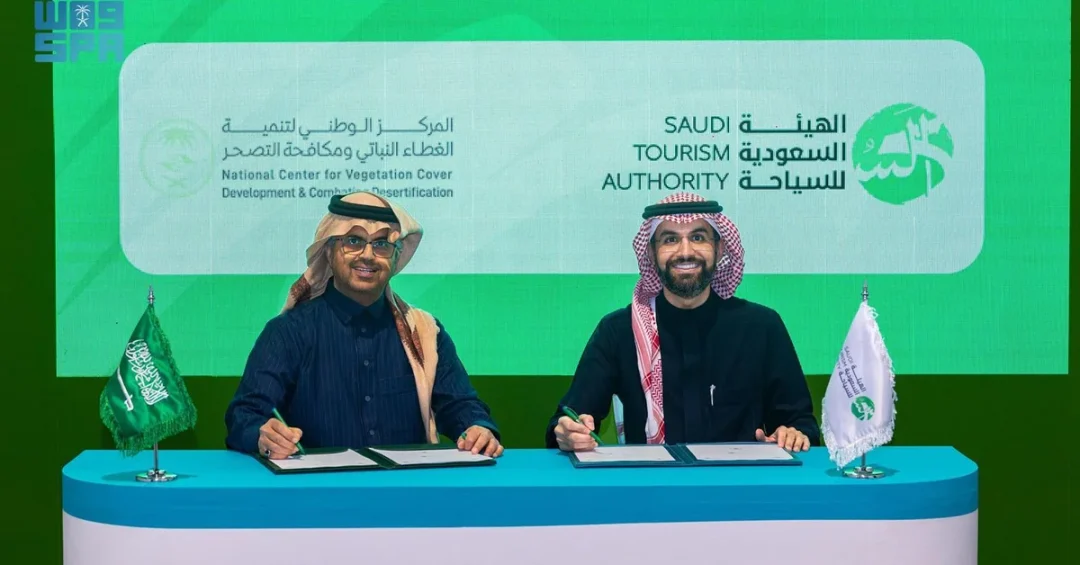
The National Center for Vegetation Cover Development and Combating Desertification (NCVC) announced on January 8, 2025, that it has signed a memorandum of understanding (MoU) with the Saudi Tourism Authority to strengthen collaboration and develop tourism experiences on lands managed by the NCVC. This partnership, announced via the Saudi Press Agency, aims to position these sites as investment opportunities by providing technical and advisory support for sustainable tourism offerings.
Context and Background
This agreement comes as part of Saudi Arabia’s broader efforts under Vision 2030 to diversify its economy and promote eco-tourism. The NCVC is responsible for protecting and developing vegetation sites across the Kingdom, including rangelands, forests, and national parks. By partnering with the Saudi Tourism Authority, the NCVC seeks to integrate conservation with tourism development, creating new opportunities for private sector investment while preserving natural resources.
Key Details
Under the MoU, the NCVC will identify suitable sites for tourism development and design plans for sustainable offerings. The partnership includes developing designated areas for caravan and RV camping, with both parties working on comprehensive site layouts and operational requirements. These sites will be marketed locally and internationally through dedicated tourism platforms and channels, aligning with the Saudi Green Initiative’s goals of promoting eco-tourism and sustainable land use.
Implications and Impact
This collaboration is expected to boost Saudi Arabia’s tourism sector by attracting both domestic and international visitors interested in nature-based experiences. It also opens avenues for private sector operators to invest in eco-tourism infrastructure, such as caravan and RV camping facilities. The initiative supports the Kingdom’s efforts to combat desertification and rehabilitate degraded lands while generating economic returns from sustainable tourism.
Vision 2030 Alignment
The partnership directly supports Vision 2030 by diversifying tourism offerings and creating investment opportunities in line with the Saudi Green Initiative. By preserving the Kingdom’s natural heritage for future generations and promoting sustainable land use, the NCVC and Saudi Tourism Authority are contributing to a more resilient and environmentally conscious economy, aligning with Saudi Arabia’s long-term goals of economic diversification and environmental stewardship.
20 Questions
Q1. What is the purpose of the MoU between NCVC and the Saudi Tourism Authority?
A1. The MoU aims to strengthen collaboration and exchange expertise to develop tourism experiences on lands managed by the NCVC, positioning them as investment opportunities for sustainable tourism.
Q2. Who signed the memorandum of understanding?
A2. The MoU was signed by the National Center for Vegetation Cover Development and Combating Desertification (NCVC) and the Saudi Tourism Authority.
Q3. What types of sites will be developed under this agreement?
A3. The NCVC will identify suitable sites for tourism development, including areas for caravan and RV camping, with plans for sustainable and diverse offerings.
Q4. How will these tourism sites be marketed?
A4. The sites will be marketed locally and internationally through dedicated tourism platforms and channels managed by the Saudi Tourism Authority and NCVC.
Q5. What is the role of the NCVC in this partnership?
A5. The NCVC will identify suitable sites, design sustainable development plans, and provide technical and advisory support for tourism projects on its managed lands.
Q6. What is the role of the Saudi Tourism Authority?
A6. The Saudi Tourism Authority will provide technical and advisory support and help market the developed tourism sites to local and international audiences.
Q7. How does this partnership support private sector investment?
A7. The MoU outlines strategies to offer these locations as investment opportunities for private sector operators, especially for caravan and RV camping facilities.
Q8. What is the Saudi Green Initiative’s connection to this agreement?
A8. The agreement aligns with the Saudi Green Initiative by promoting eco-tourism and sustainable land use, helping to preserve natural heritage while rehabilitating degraded lands.
Q9. When was this agreement announced?
A9. The agreement was announced on January 8, 2025, via the Saudi Press Agency.
Q10. What types of tourism experiences are planned?
A10. Planned tourism experiences include sustainable nature-based offerings and caravan and RV camping, designed to attract eco-tourists and visitors.
Q11. How does this initiative contribute to Vision 2030?
A11. The initiative supports Vision 2030 by diversifying tourism offerings and creating sustainable investment opportunities that boost economic growth and environmental conservation.
Q12. What is the NCVC’s primary mission?
A12. The NCVC is dedicated to protecting and developing vegetation cover, managing rangelands, forests, and national parks, and combating desertification across the Kingdom.
Q13. Will these tourism projects include infrastructure for RVs?
A13. Yes, the MoU includes developing designated areas for caravan and RV camping with comprehensive site layouts and operational requirements.
Q14. How will the partnership ensure sustainability?
A14. The partnership focuses on sustainable development plans, including eco-tourism principles, to preserve natural resources while generating economic returns.
Q15. What government entities are involved in this collaboration?
A15. The main entities are the NCVC and the Saudi Tourism Authority, with potential collaboration with private sector and non-profit organizations.
Q16. How does this benefit international tourists?
A16. International tourists will have access to new, sustainable nature-based tourism experiences in Saudi Arabia’s protected vegetation sites, marketed through global platforms.
Q17. What is the timeline for implementation?
A17. The MoU sets a framework for collaboration, but specific implementation timelines for site development and marketing will be determined by both parties.
Q18. Will local communities benefit from this partnership?
A18. Yes, by creating investment opportunities and tourism experiences, local communities can benefit from economic development and employment in eco-tourism sectors.
Q19. How does this agreement combat desertification?
A19. By rehabilitating degraded lands and promoting sustainable tourism, the initiative helps combat desertification by preserving vegetation cover and natural resources.
Q20. What is the long-term vision for these tourism sites?
A20. The long-term vision is to establish sustainable tourism destinations that showcase Saudi Arabia’s natural heritage while supporting conservation efforts and economic diversification under Vision 2030.
Reader Feedback
We value your thoughts. Please share your feedback on this article.
Your feedback helps us improve our coverage.