


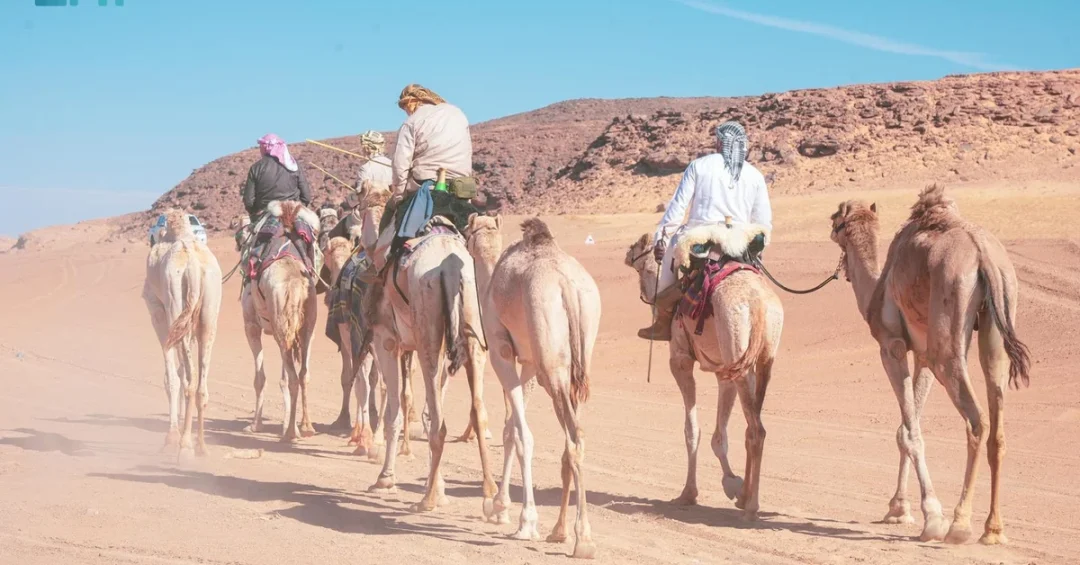
Five British adventurers have embarked on a 500-kilometer camel trek across the King Salman bin Abdulaziz Royal Reserve, beginning their journey on Friday from Al-Qalibah in the Tabuk Region, according to an official announcement by the King Salman Bin Abdulaziz Royal Reserve Development Authority. The expedition, which aims to showcase the reserve’s natural beauty, biodiversity, and archaeological heritage, will conclude at the Al-Haditha port in northern Saudi Arabia.
Context and Background
The King Salman bin Abdulaziz Royal Reserve is one of Saudi Arabia’s largest protected areas, spanning diverse landscapes from arid deserts to lush valleys. Established under the Kingdom’s environmental conservation framework, the reserve is managed by a dedicated development authority tasked with preserving its unique ecosystems and promoting sustainable tourism. This camel trek underscores the reserve’s growing role as a destination for eco-tourism and cultural exploration.
Key Details
The King Salman Bin Abdulaziz Royal Reserve Development Authority confirmed that the travelers are covering approximately 50 kilometers daily, camping overnight before resuming their expedition. The journey highlights the reserve’s exceptional biological diversity, including rare plant species and wildlife such as the Arabian oryx and sand gazelles, which have been reintroduced through conservation programs. The authority emphasized that the expedition demonstrates the success of field teams in protecting and preserving these natural resources.
Implications and Impact
This expedition positions the King Salman Royal Reserve as a premier destination for international adventure tourism, showcasing Saudi Arabia’s commitment to environmental stewardship under the Saudi Green Initiative. By attracting global attention to the reserve’s landscapes and heritage, the journey supports the Kingdom’s broader efforts to diversify its tourism offerings and promote sustainable development. It also reflects Saudi Arabia’s openness to international visitors seeking unique cultural and natural experiences.
Vision 2030 Alignment
The camel trek directly supports Saudi Vision 2030’s goals of enhancing quality of life, promoting environmental sustainability, and developing tourism as a key economic sector. By highlighting the reserve’s natural and archaeological treasures, this expedition aligns with the Kingdom’s ambition to create world-class destinations that preserve heritage while driving economic growth. As Saudi Arabia continues to open its doors to global adventurers, initiatives like this reinforce its leadership in conservation and sustainable tourism.
20 Questions
Q1. What is the King Salman bin Abdulaziz Royal Reserve?
A1. It is a large protected area in northern Saudi Arabia, managed by a development authority to conserve biodiversity, wildlife, and archaeological sites while promoting eco-tourism.
Q2. Who are the five travelers?
A2. They are British adventurers undertaking a camel trek to experience the reserve’s natural beauty and heritage, as reported by the Saudi Press Agency.
Q3. How long is the camel trek?
A3. The expedition covers 500 kilometers, starting in Al-Qalibah and ending at Al-Haditha port in northern Saudi Arabia.
Q4. How far do the travelers ride each day?
A4. According to the reserve development authority, they cover approximately 50 kilometers daily, camping overnight.
Q5. Why was this route chosen?
A5. The route traverses the entire reserve, highlighting its diverse landscapes, biodiversity, and archaeological heritage.
Q6. What is the purpose of the expedition?
A6. It aims to showcase the reserve’s natural beauty, raise awareness about conservation efforts, and promote eco-tourism.
Q7. Who manages the King Salman Royal Reserve?
A7. The King Salman Bin Abdulaziz Royal Reserve Development Authority oversees its management, conservation, and tourism.
Q8. What wildlife can be found in the reserve?
A8. The reserve hosts species like the Arabian oryx, sand gazelles, and diverse plant life, many reintroduced through conservation programs.
Q9. Is the reserve open to tourists?
A9. Yes, the reserve is open to international visitors, offering eco-tourism activities such as trekking and wildlife observation.
Q10. How does this trek support conservation?
A10. It highlights successful field efforts to protect natural resources, encouraging sustainable tourism that funds conservation.
Q11. What is the Saudi Green Initiative?
A11. It is a national program to plant trees, reduce emissions, and protect ecosystems, with which the reserve’s work aligns.
Q12. When did the trek begin?
A12. The trek started on Friday, January 24 or 25, 2025, as reported by the Saudi Press Agency on January 26.
Q13. How does this relate to Vision 2030?
A13. It supports Vision 2030 by boosting tourism, preserving heritage, and promoting environmental sustainability.
Q14. What archaeological sites are in the reserve?
A14. The reserve contains ancient rock art, ruins, and artifacts from civilizations that once inhabited the region.
Q15. Are there other similar treks in Saudi Arabia?
A15. Yes, Saudi Arabia promotes camel trekking and eco-tours across various reserves and heritage sites.
Q16. What is the climate like during the trek?
A16. The region experiences cool winters and warm days, suitable for desert travel, with camp nights being mild.
Q17. Who provided the official information?
A17. The King Salman Bin Abdulaziz Royal Reserve Development Authority issued a statement via the Saudi Press Agency.
Q18. How does the trek benefit local communities?
A18. It creates opportunities for local guides, camel handlers, and tourism services, supporting economic growth.
Q19. Can tourists join future expeditions?
A19. The authority may offer similar experiences; interested visitors should monitor official announcements for availability.
Q20. What is the significance of the camel as a transport mode?
A20. Camels are historically important in Arabian culture, and this trek provides an authentic way to experience the desert environment.
Reader Feedback
We value your thoughts. Please share your feedback on this article.
Your feedback helps us improve our coverage.