


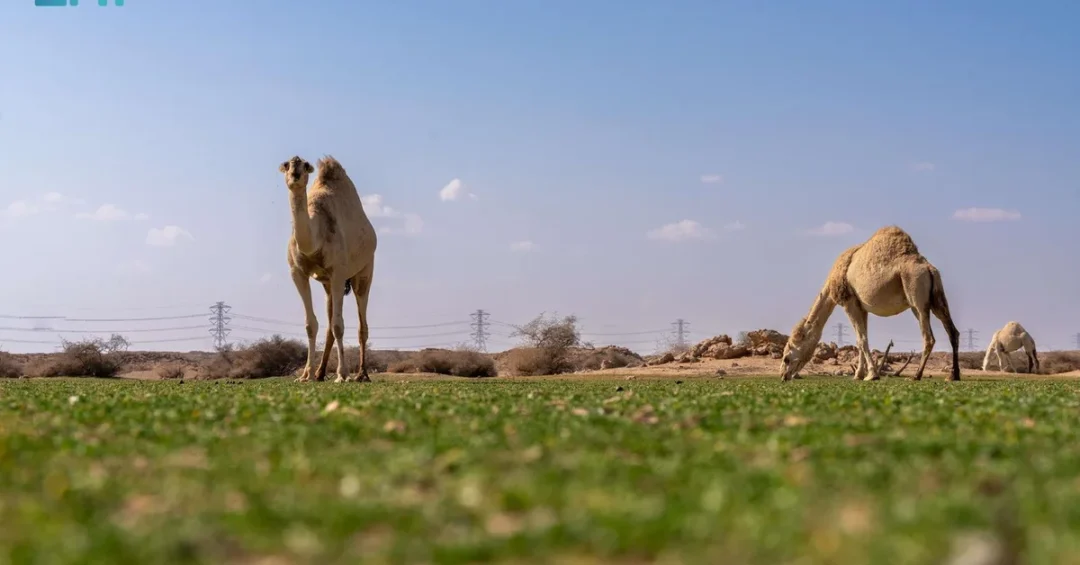
Herds of camels roam through lush seasonal pastures west of Rafha in the Northern Borders region, creating a picturesque rural scene that attracts breeders, photographers, and nature enthusiasts, the Saudi Press Agency reported on February 3, 2025. The area features wild natural plants adorned with greenery, offering a unique blend of desert landscapes and vibrant seasonal vegetation.
Context and Background
Rafha, located in the Northern Borders region of Saudi Arabia, is known for its diverse natural landscapes that include vast deserts and seasonal pastures. During spring, these pastures become rich in wild grasses and plants, providing ideal grazing conditions for camels. This seasonal transformation turns the area into a popular destination for those seeking to experience traditional Bedouin life and the Kingdom’s natural heritage.
Key Details
Camel owners take advantage of these natural pastures to enhance the quality of milk and meat from their herds. The region’s unique biodiversity supports camel health and product quality. Photography enthusiasts capture stunning scenes of camels against the backdrop of green landscapes, while camel breeders confirm that this environment provides ideal grazing conditions thanks to diverse plant life. This reflects the importance of preserving these natural pastures for sustainable livestock practices.
Implications and Impact
The thriving camel population in western Rafha highlights Saudi Arabia’s commitment to preserving its cultural heritage. Camels are an integral part of Saudi identity, deeply rooted in Arab heritage and desert life. The natural pastures not only support the local economy through camel breeding but also attract tourists, boosting the region’s profile as a destination for eco-tourism and cultural experiences. This aligns with broader efforts to diversify tourism offerings under Vision 2030.
Vision 2030 Alignment
This development supports Saudi Arabia’s Vision 2030 by promoting sustainable agriculture, preserving cultural heritage, and boosting tourism. By maintaining natural pastures and supporting camel breeding, the Kingdom strengthens its rural economy and showcases its unique biodiversity, contributing to long-term environmental and economic sustainability.
20 Questions
Q1. Where is Rafha located?
A1. Rafha is a city in the Northern Borders region of Saudi Arabia, near the border with Iraq. It is known for its desert landscapes and seasonal pastures.
Q2. What makes the pastures west of Rafha special?
A2. The pastures are rich in wild natural plants and lush grasses, especially in spring, creating ideal grazing conditions for camels and a picturesque rural scene.
Q3. Why do camel breeders value these pastures?
A3. Breeders use these pastures to enhance the quality of camel milk and meat, as the diverse plant life promotes better health and product quality.
Q4. How do these pastures benefit photographers?
A4. Photographers capture stunning images of camels amidst green landscapes, offering a rare combination of desert and vibrant vegetation that is visually appealing.
Q5. What is the cultural significance of camels in Saudi Arabia?
A5. Camels are an integral part of Saudi cultural identity, associated with desert life and deeply rooted in Arab heritage, symbolizing resilience and tradition.
Q6. How does the season affect the pastures west of Rafha?
A6. During spring, the pastures become green and rich with wild plants, whereas in other seasons they may be drier. This seasonal cycle supports grazing.
Q7. What types of wild plants grow in the area?
A7. The region features diverse wild natural plants that thrive in the desert climate, including various grasses and shrubs that camels prefer.
Q8. Why is preserving these natural pastures important?
A8. Preservation ensures sustainable grazing for camels, supports the local economy, and maintains the region’s biodiversity for future generations.
Q9. How does this relate to Vision 2030?
A9. It aligns with Vision 2030’s goals of promoting sustainable agriculture, preserving cultural heritage, and boosting eco-tourism in rural areas.
Q10. Who reported on this phenomenon?
A10. The Saudi Press Agency (SPA) reported on February 3, 2025, highlighting the scenic beauty and economic benefits of the pastures.
Q11. What do camel owners say about the environment?
A11. Several camel breeders confirm that the natural environment provides ideal grazing conditions, supporting camel health and product quality.
Q12. How does this benefit the local tourism industry?
A12. The scenic pastures attract nature lovers and photographers, increasing visits to the Northern Borders region and diversifying local tourism offerings.
Q13. Are there any conservation efforts for these pastures?
A13. The report emphasizes the importance of preserving and sustaining these natural pastures, though specific conservation measures are not detailed.
Q14. What role do camels play in Saudi Arabia’s economy?
A14. Camels contribute to the economy through milk and meat production, as well as camel racing and tourism, supporting rural livelihoods.
Q15. How do wild plants improve camel health?
A15. Wild plants provide essential nutrients and natural feed that enhance digestion, immunity, and overall health, leading to better product quality.
Q16. What makes this area a destination for nature lovers?
A16. The combination of desert landscapes with green pastures and roaming camels creates a unique scenic experience that appeals to nature enthusiasts.
Q17. How does this reflect Saudi Arabia’s biodiversity?
A17. The region showcases the Kingdom’s unique biodiversity, where desert ecosystems support seasonal plant growth and wildlife, including camel herds.
Q18. Is this pastureland typical of the Northern Borders region?
A18. The Northern Borders region has various seasonal pastures, but the area west of Rafha is particularly renowned for its rich vegetation and camel population.
Q19. What is the best time to visit Rafha for camel viewing?
A19. Spring is the best time, as the pastures are green and lush, and camels are most active grazing in the open landscapes.
Q20. How can this natural beauty be sustained?
A20. Sustainable grazing practices, conservation of wild plants, and responsible tourism can help maintain these pastures for future enjoyment and economic benefit.
Reader Feedback
We value your thoughts. Please share your feedback on this article.
Your feedback helps us improve our coverage.