


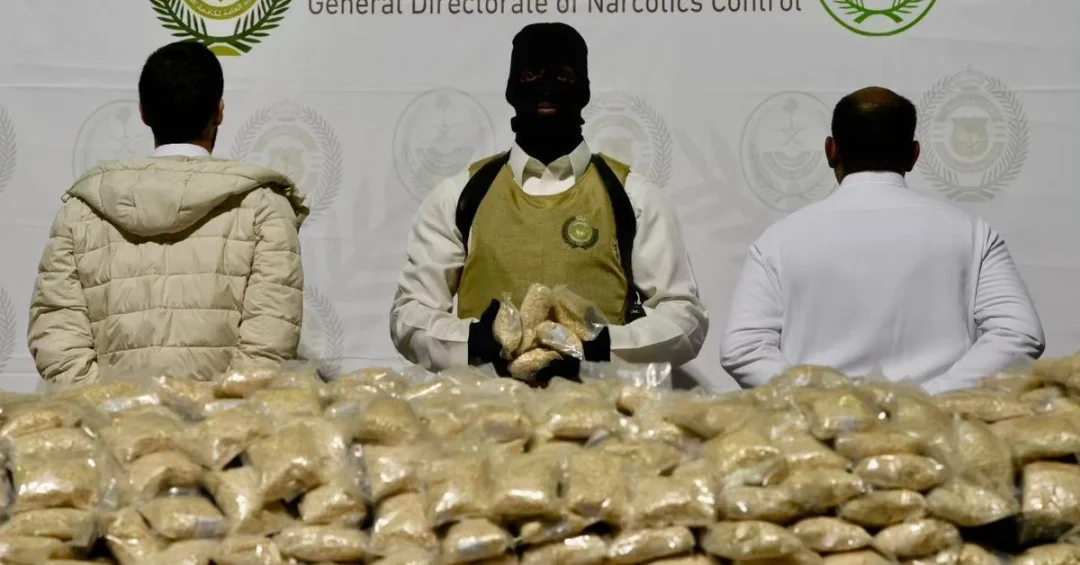
The General Directorate of Narcotics Control (GDNC) foiled an attempt to smuggle 11,108,998 amphetamine pills concealed within a food shipment at King Abdulaziz Port in Dammam on February 5, 2025. Acting in coordination with the Zakat, Tax, and Customs Authority (ZATCA), authorities arrested two individuals—a Jordanian resident and a Saudi citizen—in connection with the operation.
Context and Background
Saudi Arabia maintains a stringent security posture at its borders and ports to combat drug trafficking, which poses significant risks to public health and social stability. The Kingdom has intensified efforts under its national drug control strategy, leveraging advanced scanning technologies and inter-agency cooperation to detect illicit shipments. The eastern port of Dammam serves as a critical hub for trade and commerce, making it a focus area for customs and narcotics enforcement.
Key Details
The GDNC confirmed that the pills were hidden in a food cargo, though specific details of the concealment method remain undisclosed to preserve operational integrity. ZATCA officers flagged the shipment during routine inspection, leading to the discovery and subsequent arrest of the suspects. Authorities emphasized that such coordinated actions demonstrate the effectiveness of Saudi Arabia’s security framework in intercepting large-scale smuggling attempts.
International and Regional Implications
The seizure underscores Saudi Arabia’s role as a regional leader in combating drug trafficking, which often involves transnational criminal networks. By intercepting over 11 million amphetamine pills, the Kingdom prevents the distribution of harmful substances that could destabilize communities across the region. This operation aligns with broader international cooperation on narcotics control and reflects Saudi Arabia’s commitment to United Nations conventions on drug trafficking.
Vision 2030 Alignment
This operation directly supports Vision 2030’s goal of building a safe and prosperous society by ensuring public safety and security. The GDNC’s proactive measures reflect the Kingdom’s investment in world-class law enforcement capabilities, including training, technology, and inter-agency partnerships. As Saudi Arabia continues to modernize, maintaining robust border security remains a priority to protect citizens, residents, and the integrity of the national economy.
20 Questions
Q1. What was intercepted in this operation?
A1. The GDNC foiled an attempt to smuggle 11,108,998 amphetamine pills at King Abdulaziz Port in Dammam.
Q2. Where did the interception take place?
A2. The operation occurred at King Abdulaziz Port in Dammam, located in the Eastern Region of Saudi Arabia.
Q3. How were the pills concealed?
A3. The pills were hidden within a food shipment, though exact concealment methods have not been disclosed for security reasons.
Q4. Which agencies were involved in the operation?
A4. The GDNC acted in coordination with the Zakat, Tax, and Customs Authority (ZATCA) to carry out the seizure.
Q5. How many individuals were arrested?
A5. Two individuals were arrested: a Jordanian resident and a Saudi citizen.
Q6. What is the significance of the number of pills seized?
A6. Seizing over 11 million pills represents a substantial disruption to illegal drug networks and protects public health.
Q7. How does this operation contribute to public safety?
A7. By intercepting large quantities of amphetamines, the operation prevents drug abuse and associated crime in Saudi communities.
Q8. What technology is used by ZATCA to detect smuggling?
A8. ZATCA employs advanced scanning and inspection technologies to identify concealed contraband at ports and borders.
Q9. Does Saudi Arabia cooperate internationally on drug control?
A9. Yes, Saudi Arabia collaborates with international bodies and neighboring countries to combat transnational drug trafficking.
Q10. What penalties do smugglers face in Saudi Arabia?
A10. Drug smuggling convictions can lead to severe penalties including long prison terms, fines, and in serious cases, capital punishment.
Q11. How can the public report suspicious drug activity?
A11. The public can call 911 in Makkah, Riyadh, and Eastern regions, or 999 elsewhere, or contact GDNC at 995 or via email at [email protected].
Q12. Is the GDNC part of the Ministry of Interior?
A12. Yes, the General Directorate of Narcotics Control operates under the Ministry of Interior of Saudi Arabia.
Q13. What types of drugs are commonly smuggled into Saudi Arabia?
A13. Amphetamines, such as Captagon pills, along with other narcotics, are frequently targeted by smugglers.
Q14. How does Vision 2030 relate to drug control?
A14. Vision 2030 emphasizes a safe and healthy society, which includes robust anti-drug measures and law enforcement modernization.
Q15. Are the arrested individuals Saudi nationals?
A15. One of the arrested individuals is a Saudi citizen, while the other is a Jordanian resident.
Q16. What is the role of the Zakat, Tax, and Customs Authority?
A16. ZATCA monitors imports and exports, collects customs duties, and works with security agencies to prevent illegal trade.
Q17. How does this seizure affect drug supply in the region?
A17. Removing over 11 million pills reduces the availability of amphetamines, potentially lowering drug abuse rates.
Q18. What measures are in place to prevent future smuggling?
A18. Saudi authorities continually enhance inspection protocols, surveillance, and inter-agency coordination to deter smuggling.
Q19. Is there a reward for reporting drug smuggling?
A19. While not specified for this case, reporting drug crimes can lead to rewards and all tips are treated confidentially.
Q20. What is the expected outcome of the legal process for the arrested individuals?
A20. The suspects will be prosecuted under Saudi drug laws, which strictly penalize smuggling activities.
Reader Feedback
We value your thoughts. Please share your feedback on this article.
Your feedback helps us improve our coverage.