


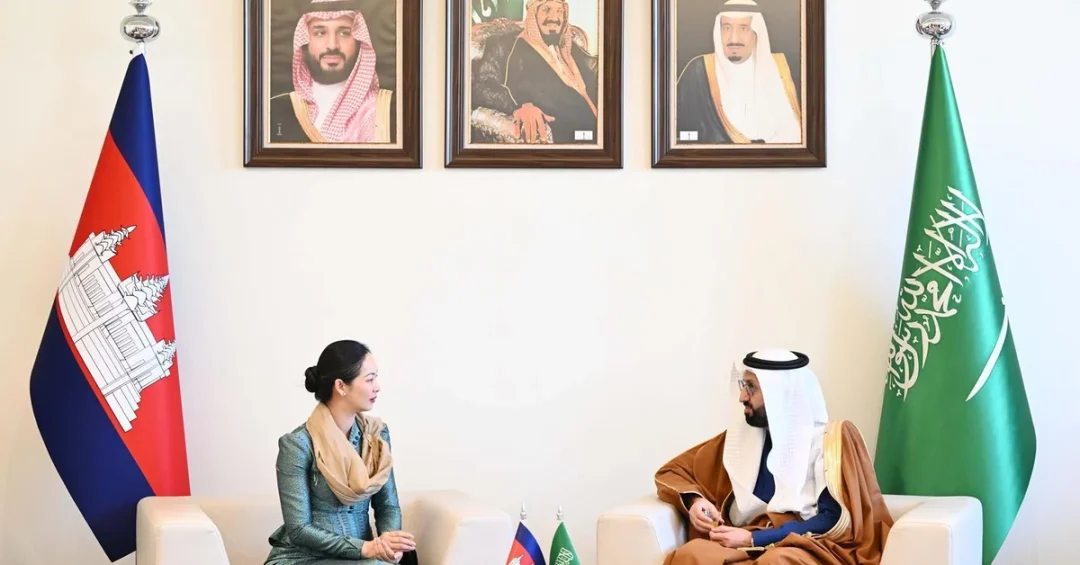
Riyadh, February 5, 2025 — Chief Executive Officer of the Saudi Food and Drug Authority (SFDA), Dr. Hisham bin Saad Aljadhey, received Cambodian Minister of Commerce Cham Nimul and her delegation at the SFDA headquarters in Riyadh to discuss expanding trade cooperation and enhancing food safety standards. Non-Resident Ambassador of Cambodia to Saudi Arabia Uk Sarun also attended the meeting.
Context and Background
The meeting underscores Saudi Arabia’s growing engagement with Southeast Asian nations under Vision 2030, which prioritizes diversifying trade partnerships and strengthening economic ties. Cambodia, a key ASEAN member, has sought to boost exports of agricultural and food products to the Gulf region. The SFDA, as the Kingdom’s regulatory authority for food and drug safety, plays a central role in facilitating trade while ensuring compliance with rigorous quality standards.
Key Details
Discussions focused on streamlining registration procedures for food and agricultural products, aiming to facilitate market access while maintaining stringent safety and quality controls. The two sides also explored cooperation on halal certification, a significant area given Saudi Arabia’s leadership in the global halal industry. Additional topics of mutual interest included regulatory harmonization and technical collaboration within the SFDA’s mandate.
Implications and Impact
This engagement signals a potential increase in Cambodian agricultural exports to Saudi Arabia, ranging from rice and spices to processed foods, benefiting both consumers and businesses. Enhanced cooperation on halal matters could also position Cambodia as a reliable supplier to the broader Islamic market. The meeting reinforces Saudi Arabia’s diplomatic and economic outreach to Asia, aligning with its strategy to reduce dependence on traditional energy revenues.
Vision 2030 Alignment
The talks directly support Vision 2030’s goals of diversifying the economy and expanding non-oil trade. By facilitating safe and quality food imports, the SFDA advances food security and consumer protection. Moreover, strengthening ties with Cambodia reflects the Kingdom’s ambition to become a global hub for trade and investment, fostering sustainable development and regional cooperation.
20 Questions
Q1. Who met with the Cambodian Minister of Commerce?
A1. Dr. Hisham bin Saad Aljadhey, Chief Executive Officer of the Saudi Food and Drug Authority (SFDA), met with Cambodian Minister of Commerce Cham Nimul.
Q2. Where did the meeting take place?
A2. The meeting was held at the SFDA headquarters in Riyadh, the capital of Saudi Arabia.
Q3. Who else attended the meeting besides the minister and SFDA CEO?
A3. Non-Resident Ambassador of Cambodia to Saudi Arabia Uk Sarun also attended the meeting, along with the minister’s delegation.
Q4. What was the main focus of the discussions?
A4. The discussions focused on trade relations, particularly opportunities for food and agricultural products between Saudi Arabia and Cambodia.
Q5. What specific area of cooperation was discussed regarding food products?
A5. They discussed facilitating registration procedures for food products while ensuring their safety and quality.
Q6. Did the meeting address halal matters?
A6. Yes, cooperation and support for Cambodia regarding halal matters were also addressed during the meeting.
Q7. What other topics of mutual interest were discussed?
A7. Several other topics within the SFDA’s purview were discussed, though specific details were not disclosed.
Q8. How does this meeting relate to Vision 2030?
A8. The meeting supports Vision 2030’s goals of diversifying trade partnerships and expanding non-oil exports and imports.
Q9. What is the SFDA’s role in international trade?
A9. The SFDA regulates food and drug safety, ensuring that imported products meet Saudi quality standards, thereby facilitating trade.
Q10. Why is Cambodia an important partner for Saudi Arabia?
A10. Cambodia is a growing ASEAN economy with potential for agricultural exports, aligning with Saudi Arabia’s food security and diversification strategies.
Q11. What types of agricultural products might Cambodia export to Saudi Arabia?
A11. Cambodia could export rice, spices, fruits, and processed foods, pending compliance with SFDA standards.
Q12. How does halal cooperation benefit Cambodia?
A12. Halal cooperation helps Cambodia access the global halal market, providing certification and standards that align with Saudi requirements.
Q13. What is the significance of the Non-Resident Ambassador’s presence?
A13. The ambassador’s presence underscores the diplomatic importance of the meeting and Cambodia’s commitment to strengthening bilateral ties.
Q14. When did the meeting occur?
A14. The meeting took place on February 5, 2025, according to the Saudi Press Agency.
Q15. Who is Dr. Hisham bin Saad Aljadhey?
A15. Dr. Hisham bin Saad Aljadhey is the Chief Executive Officer of the Saudi Food and Drug Authority, a key regulatory body in the Kingdom.
Q16. What is the SFDA’s role in food safety?
A16. The SFDA sets and enforces standards for food safety, quality, and labeling to protect consumers and facilitate trade.
Q17. How does this meeting affect Saudi consumers?
A17. It could lead to more diverse food imports from Cambodia, offering consumers more choices while maintaining safety standards.
Q18. Is this the first such meeting between SFDA and Cambodia?
A18. While not confirmed as the first, the meeting indicates ongoing or renewed engagement between Saudi and Cambodian authorities.
Q19. Does Saudi Arabia have other trade agreements with ASEAN countries?
A19. Yes, Saudi Arabia has been strengthening trade ties with ASEAN nations as part of its economic diversification under Vision 2030.
Q20. What are the next steps following this meeting?
A20. Likely next steps include technical follow-ups on registration procedures and halal cooperation, leading to increased trade.
Reader Feedback
We value your thoughts. Please share your feedback on this article.
Your feedback helps us improve our coverage.