


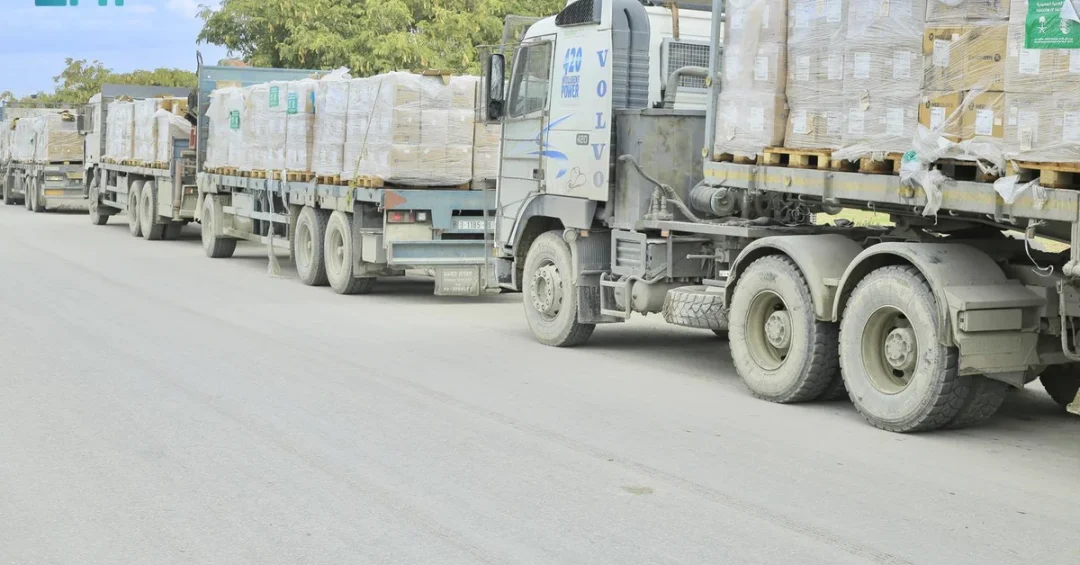
New Saudi aid convoys, loaded with emergency medical supplies provided by the King Salman Humanitarian Aid and Relief Center (KSrelief), have arrived in southern Gaza to support hospitals and health facilities. The convoys reached their destinations on February 10, 2025, as part of a campaign to assist the Palestinian people in the Strip. This initiative reflects Saudi Arabia’s longstanding commitment to humanitarian relief and its unwavering solidarity with the Palestinian people during times of crisis.
Context and Background
The aid delivery is part of a broader Saudi humanitarian campaign that has provided continuous support to Gaza amidst ongoing challenges. The Kingdom of Saudi Arabia, through KSrelief, has historically been one of the largest donors to Palestinian humanitarian causes, providing medical supplies, food, and shelter to affected populations. This latest convoy underscores Saudi Arabia’s proactive role in addressing urgent health needs in the region.
Key Details
The convoys include emergency medical supplies such as medicines, surgical equipment, and field hospital materials, aimed at bolstering the capacity of hospitals in southern Gaza. KSrelief coordinated with local authorities and international partners to ensure efficient delivery. The initiative aligns with Saudi Arabia’s humanitarian principles and its commitment to international law and human dignity.
Implications and Impact
The arrival of these supplies is expected to alleviate pressure on overwhelmed healthcare facilities in Gaza, where medical shortages have been critical. This humanitarian gesture reinforces Saudi Arabia’s role as a key mediator and aid provider in the Middle East, contributing to regional stability. It also demonstrates the Kingdom’s ability to mobilize resources quickly in response to emergencies.
Vision 2030 Alignment
This aid mission directly supports Saudi Arabia’s Vision 2030 goals of enhancing international humanitarian engagement and positioning the Kingdom as a global leader in relief work. By delivering life-saving supplies to Gaza, Saudi Arabia showcases its commitment to shared human values and its pivotal role in fostering peace and prosperity in the region, aligning with the Kingdom’s long-term vision for a stable and prosperous Middle East.
20 Questions
Q1. What is the latest Saudi aid convoy delivering to Gaza?
A1. The convoy is delivering emergency medical supplies, including medicines and surgical equipment, provided by KSrelief to support hospitals and health facilities in southern Gaza.
Q2. Which Saudi organization organized the aid delivery?
A2. The King Salman Humanitarian Aid and Relief Center (KSrelief), Saudi Arabia’s official humanitarian aid agency, organized and coordinated the delivery.
Q3. When did the aid convoys arrive in southern Gaza?
A3. The convoys arrived on February 10, 2025, as reported by the Saudi Press Agency (SPA).
Q4. Why is this aid considered urgent for Gaza’s hospitals?
A4. Gaza’s hospitals face severe shortages of medical supplies due to ongoing conflicts and blockades, making emergency aid critical for treating patients.
Q5. How does this aid reflect Saudi Arabia’s foreign policy?
A5. It demonstrates Saudi Arabia’s longstanding commitment to humanitarian relief and solidarity with the Palestinian people, a key pillar of its foreign policy.
Q6. Is this the first time Saudi Arabia has sent aid to Gaza?
A6. No, Saudi Arabia has sent multiple aid convoys to Gaza over the years, consistently supporting Palestinian humanitarian needs.
Q7. What types of medical supplies are included in the convoy?
A7. The convoy includes medicines, surgical equipment, and field hospital materials to bolster healthcare capacity.
Q8. Who benefits from the medical supplies in southern Gaza?
A8. Patients in hospitals and health facilities in southern Gaza, including those injured in conflicts and suffering from chronic conditions, benefit directly.
Q9. How does KSrelief coordinate aid deliveries?
A9. KSrelief coordinates with local authorities, international organizations, and partners on the ground to ensure efficient and safe delivery.
Q10. What is the broader campaign referenced in the article?
A10. The campaign is a Saudi initiative to assist the Palestinian people in the Gaza Strip, providing humanitarian support during crises.
Q11. Does this aid align with international humanitarian law?
A11. Yes, Saudi humanitarian efforts adhere to international humanitarian law and principles of neutrality and impartiality.
Q12. How does this initiative support Vision 2030?
A12. It reinforces Vision 2030’s goal of enhancing Saudi Arabia’s global humanitarian role and international engagement.
Q13. What challenges did the convoys face during delivery?
A13. The convoys navigated logistical hurdles and security considerations to reach southern Gaza safely.
A14. No reported delays; the convoys arrived on schedule as per SPA reports.
Q15. How does Saudi Arabia’s aid compare to other donors?
A15. Saudi Arabia is among the largest humanitarian donors to Palestine, consistently providing significant relief funding and supplies.
Q16. What is the role of the Saudi Press Agency in this reporting?
A16. The Saudi Press Agency (SPA) is the official source of news, providing verified information about the aid delivery.
Q17. Will there be additional aid convoys in the future?
A17. Saudi Arabia has committed to ongoing support, and further convoys are likely as part of continuous humanitarian efforts.
Q18. How does this aid affect Saudi-Palestinian relations?
A18. It strengthens bilateral ties by demonstrating Saudi solidarity and commitment to Palestinian welfare.
Q19. What is the significance of the February 2025 timing?
A19. The delivery comes amid heightened humanitarian needs in Gaza, underscoring Saudi responsiveness to crises.
Q20. How can the international community support similar initiatives?
A20. The international community can contribute by funding humanitarian agencies and coordinating with partners like KSrelief to amplify relief efforts.
Reader Feedback
We value your thoughts. Please share your feedback on this article.
Your feedback helps us improve our coverage.