


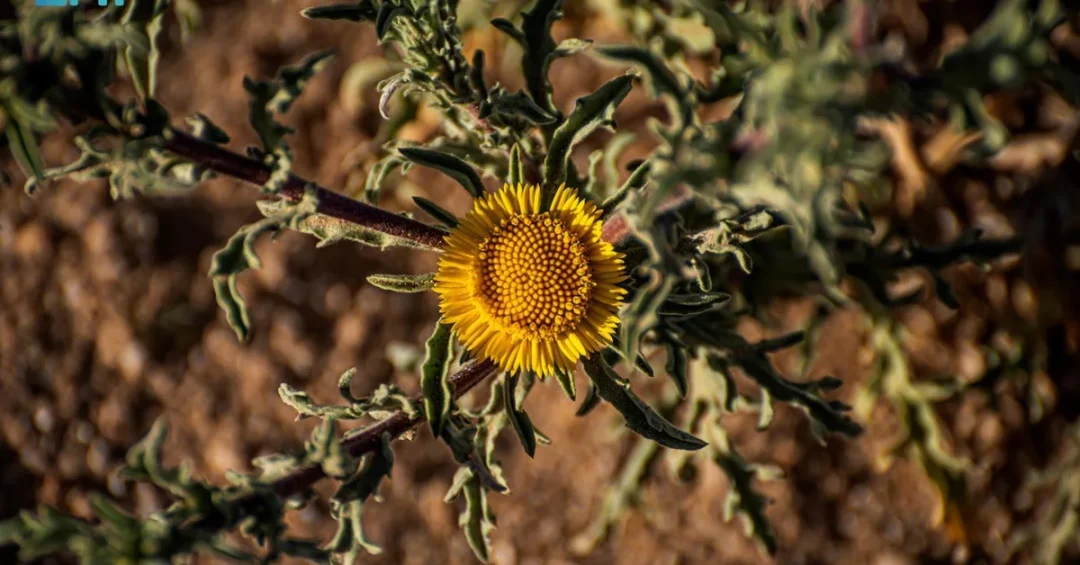
The Northern Borders region of Saudi Arabia is home to Asteriscus graveolens, a fragrant wild plant that highlights the Kingdom’s rich botanical heritage. According to the Saudi Press Agency (SPA), this flowering species, commonly known as Fragrant oxeye, flourishes in the arid landscapes and is celebrated for its distinctive scent and bright yellow blooms.
Context and Background
Asteriscus graveolens belongs to the daisy family and is one of the finest aromatic plants in the region, as noted by Nasser Al-Majlad, head of the Aman Environmental Association. Two varieties exist in the Kingdom—one with petals and one without. The plant’s dense, intertwined branches can reach up to one meter in height, and its vibrant yellow flowers emerge in spring, enhancing the natural scenery.
Key Details
The plant is an integral part of the Northern Borders’ natural heritage. Essential oils extracted from its leaves are used in perfume production, contributing to local industries. Beyond its economic value, Asteriscus graveolens supports biodiversity by providing habitats for wildlife and enriching the region’s botanical diversity.
Environmental Conservation Efforts
Authorities in Saudi Arabia are actively working to conserve wild plants like Asteriscus graveolens through awareness campaigns and rehabilitation of natural areas. These initiatives aim to protect plant species from extinction and ensure their survival for future generations, aligning with the Kingdom’s commitment to environmental sustainability.
Vision 2030 Alignment
The conservation of Asteriscus graveolens and other native flora supports Saudi Arabia’s Vision 2030 goals of environmental preservation and sustainable development. By safeguarding natural heritage, the Kingdom promotes eco-tourism and biodiversity, contributing to a greener future and enhancing the quality of life for its citizens and visitors.
20 Questions
Q1. What is Asteriscus graveolens?
A1. Asteriscus graveolens, commonly known as Fragrant oxeye, is a flowering wild plant found in the Northern Borders region of Saudi Arabia, known for its aromatic leaves and bright yellow flowers.
Q2. Why is Asteriscus graveolens significant?
A2. It is valued for its distinctive fragrance, use in perfume production, and role in supporting biodiversity by providing habitats for wildlife in the Northern Borders region.
Q3. Where does Asteriscus graveolens grow?
A3. It thrives in the Northern Borders region of Saudi Arabia, an area renowned for its unique plant diversity and aromatic plants.
Q4. What family does Asteriscus graveolens belong to?
A4. It belongs to the daisy family (Asteraceae), characterized by its dense, intertwined branches and vibrant yellow flowers.
Q5. How tall can Asteriscus graveolens grow?
A5. The plant can reach up to one meter in height, with dense branches that contribute to its bushy appearance.
Q6. When does Asteriscus graveolens bloom?
A6. It blooms in spring, producing bright yellow flowers that add vibrant color to the region’s landscapes.
Q7. How many types of Asteriscus graveolens are found in Saudi Arabia?
A7. Two types are found: one with petals and one without, both belonging to the same species.
Q8. Who provided information about Asteriscus graveolens?
A8. Nasser Al-Majlad, the head of the Aman Environmental Association, shared details about the plant’s characteristics and significance.
Q9. How is Asteriscus graveolens used in industry?
A9. Essential oils extracted from its leaves are used in perfume production, making it economically valuable.
Q10. What role does Asteriscus graveolens play in the ecosystem?
A10. It supports biodiversity by providing habitats for wildlife and contributing to the botanical diversity of the Northern Borders.
Q11. What conservation efforts are in place for Asteriscus graveolens?
A11. Authorities conduct awareness campaigns and rehabilitate natural areas to protect wild plants, including Asteriscus graveolens, from extinction.
Q12. Why is plant conservation important in Saudi Arabia?
A12. Conservation preserves natural heritage, supports biodiversity, and aligns with Vision 2030 goals for environmental sustainability and eco-tourism.
Q13. What is the Aman Environmental Association?
A13. It is an environmental organization in the Northern Borders region, led by Nasser Al-Majlad, focused on protecting local flora and fauna.
Q14. How does Asteriscus graveolens enhance tourism?
A14. Its spring blooms and fragrance attract visitors, supporting eco-tourism and showcasing the region’s natural beauty.
Q15. Is Asteriscus graveolens endangered?
A15. While not explicitly stated, conservation efforts aim to prevent extinction, indicating potential threats from habitat loss or overharvesting.
Q16. What is the common name for Asteriscus graveolens?
A16. It is commonly called Fragrant oxeye, referring to its aromatic properties and flower structure.
Q17. Can Asteriscus graveolens be cultivated?
A17. The article does not specify cultivation, but its natural growth suggests potential for propagation under suitable conditions.
Q18. What other aromatic plants are found in Northern Borders?
A18. The region hosts a variety of aromatic plants, though Asteriscus graveolens is highlighted as one of the finest.
Q19. How does SPA report on environmental topics?
A19. The Saudi Press Agency covers environmental initiatives and natural heritage, emphasizing conservation and sustainability aligned with national goals.
Q20. What is the future outlook for Asteriscus graveolens?
A20. With ongoing conservation efforts and awareness, the plant is expected to thrive, contributing to Saudi Arabia’s biodiversity and Vision 2030 environmental targets.
Reader Feedback
We value your thoughts. Please share your feedback on this article.
Your feedback helps us improve our coverage.