


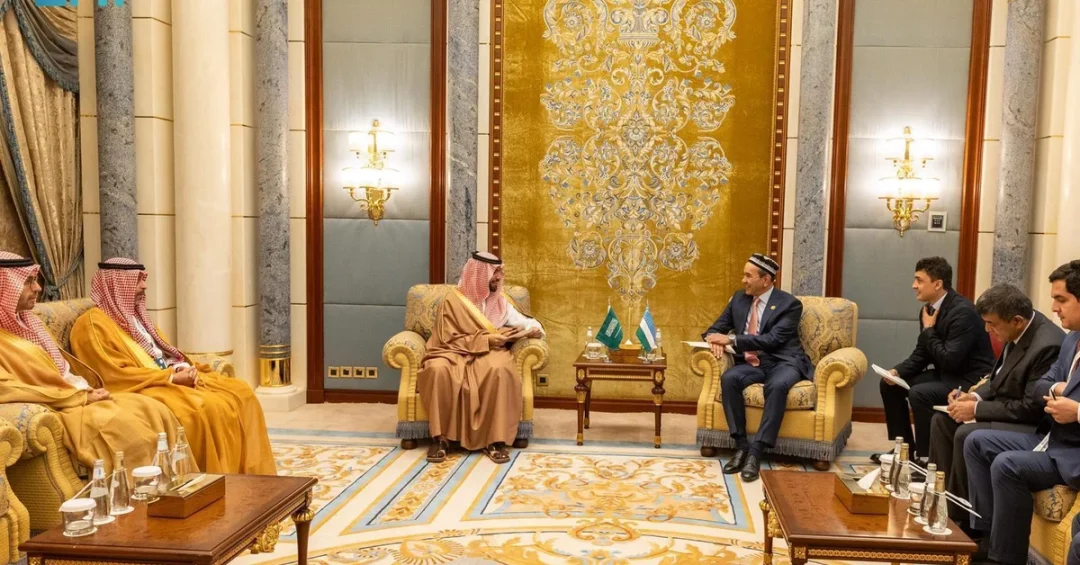
Saudi Minister of Culture Prince Badr bin Abdullah bin Farhan met with Uzbek Minister of Culture Nazarbekov Ozodbek Akhmadovich in Jeddah on Wednesday, February 12, 2025, on the sidelines of the 13th Conference of Culture Ministers in the Islamic World. The meeting focused on strengthening cultural cooperation and exchange between the two nations, officials from both sides confirmed.
Context and Background
The meeting took place during the 13th Conference of Culture Ministers in the Islamic World, a key platform for dialogue among member states of the Islamic World Educational, Scientific and Cultural Organization (ICESCO). Saudi Arabia has been an active participant in ICESCO, leveraging cultural diplomacy to build bridges among Islamic nations. The conference in Jeddah underscores the Kingdom’s commitment to fostering intercultural understanding and collaboration as part of its broader global engagement strategy.
Key Details
Prince Badr and Minister Nazarbekov discussed enhancing bilateral collaboration across various cultural and artistic fields, including heritage preservation, arts, and creative industries. The meeting was also attended by senior officials from both countries. Uzbekistan, a Central Asian nation with a rich cultural heritage, has increasingly looked to Saudi Arabia as a partner in cultural development, particularly in areas such as museum management and cultural tourism. The discussions align with Saudi Arabia’s Vision 2030 goal of positioning the Kingdom as a global cultural hub.
Implications and Impact
The strengthening of Saudi-Uzbek cultural ties has significant regional implications. It reflects Saudi Arabia’s role as a cultural leader in the Islamic world and its efforts to deepen relationships with Central Asian nations. For Uzbekistan, partnership with Saudi Arabia offers access to expertise and resources to modernize its own cultural sector. This collaboration also supports broader economic and diplomatic exchanges between the two countries, potentially boosting tourism and people-to-people ties.
Vision 2030 Alignment
The meeting directly supports Saudi Arabia’s Vision 2030, which seeks to enrich cultural life, promote international cultural exchange, and enhance the Kingdom’s soft power. By engaging with Uzbekistan and other nations through platforms like ICESCO, Saudi Arabia is positioning itself as a bridge between cultures and a driver of cultural innovation in the Islamic world. These efforts contribute to the long-term goal of making Saudi Arabia a leading destination for culture and creativity.
20 Questions
Q1. Who met in Jeddah on February 12, 2025?
A1. Saudi Minister of Culture Prince Badr bin Abdullah bin Farhan met with Uzbek Minister of Culture Nazarbekov Ozodbek Akhmadovich in Jeddah.
Q2. What was the purpose of the meeting?
A2. The meeting aimed to enhance collaboration and cultural exchange between Saudi Arabia and Uzbekistan across various cultural and artistic realms.
Q3. Where did the meeting take place?
A3. The meeting took place in Jeddah, Saudi Arabia.
Q4. On what occasion did the meeting occur?
A4. The meeting occurred on the sidelines of the 13th Conference of Culture Ministers in the Islamic World.
Q5. Who organized the 13th Conference of Culture Ministers?
A5. The conference was organized by the Islamic World Educational, Scientific and Cultural Organization (ICESCO).
Q6. What topics did the ministers discuss?
A6. They discussed enhancing collaboration and cultural exchange in cultural and artistic fields.
Q7. How does this meeting support Saudi Arabia’s Vision 2030?
A7. It supports Vision 2030 by enriching cultural life, promoting international cultural exchange, and enhancing Saudi Arabia’s soft power.
Q8. What is the significance of Saudi-Uzbek cultural cooperation?
A8. It strengthens bilateral ties, fosters mutual understanding, and promotes cultural tourism and heritage preservation.
Q9. What is Uzbekistan’s interest in partnering with Saudi Arabia?
A9. Uzbekistan seeks to modernize its cultural sector and benefit from Saudi expertise in museum management and cultural tourism.
Q10. Which other officials attended the meeting?
A10. Several other officials from both countries attended the meeting, though their names were not disclosed.
Q11. What is the broader goal of the 13th Conference of Culture Ministers?
A11. The conference aims to foster dialogue and cooperation among Islamic countries in cultural and educational fields.
Q12. How does this meeting reflect Saudi Arabia’s global role?
A12. It reflects Saudi Arabia’s leadership in cultural diplomacy and its commitment to building bridges with other nations.
Q13. What sectors could benefit from Saudi-Uzbek cultural collaboration?
A13. Sectors such as arts, heritage preservation, creative industries, and tourism could benefit.
Q14. Is this the first meeting between the two ministers?
A14. The article does not specify if it was the first meeting, but it highlights continued engagement.
Q15. How does ICESCO facilitate cultural cooperation?
A15. ICESCO provides a platform for member states to exchange ideas and collaborate on cultural initiatives.
Q16. What is the role of Saudi Arabia in ICESCO?
A16. Saudi Arabia is an active member, hosting conferences and promoting cultural initiatives within the organization.
Q17. Could this meeting lead to a formal agreement?
A17. While no agreement was announced, such meetings often lay the groundwork for future memoranda of understanding.
Q18. How does cultural exchange benefit both countries?
A18. It promotes mutual understanding, boosts tourism, and strengthens people-to-people ties.
Q19. What is the long-term vision for Saudi cultural diplomacy?
A19. Saudi Arabia aims to become a global cultural hub and enhance its soft power through international partnerships.
Q20. Where can readers find official updates on such meetings?
A20. Readers can follow the Saudi Press Agency (SPA) for official announcements and updates on cultural diplomacy.
Reader Feedback
We value your thoughts. Please share your feedback on this article.
Your feedback helps us improve our coverage.