


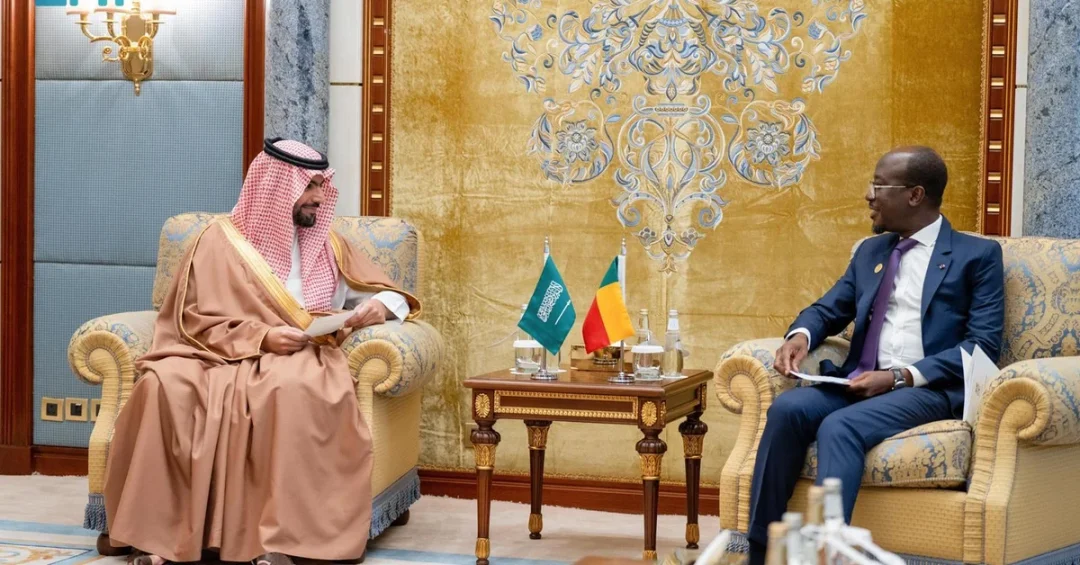
Saudi Minister of Culture Prince Badr bin Abdullah bin Farhan met with Benin’s Minister of Tourism, Culture, and the Arts, Jean-Michel Hervé Abimbola, in Jeddah on February 12, 2025, on the sidelines of the 13th Conference of Culture Ministers in the Islamic World. The meeting underscored the growing ties between the two nations and resulted in a formal agreement to deepen cultural collaboration.
Context and Background
The 13th Conference of Culture Ministers in the Islamic World, hosted by the Kingdom of Saudi Arabia, brought together cultural leaders from across the Islamic world to discuss shared heritage and cooperation. Saudi Arabia’s role as host reflects its commitment to fostering intercultural dialogue and supporting cultural development regionally and globally. The meeting with Benin’s minister builds on a history of diplomatic and cultural exchanges between the Kingdom and the Republic of Benin.
Key Details
Prince Badr bin Abdullah bin Farhan emphasized the deep and strong relationship between Saudi Arabia and Benin, particularly in the cultural sector. The discussions focused on enhancing cooperation in arts, museums, and heritage. The highlight of the meeting was the signing of a memorandum of understanding (MoU) to strengthen cultural ties. The MoU covers several fields, including heritage preservation, museums, films, theater and performing arts, fashion, music, libraries, and traditional arts and crafts. This agreement is expected to facilitate joint initiatives, exhibitions, and knowledge exchange between the two countries.
Implications and Impact
The MoU between Saudi Arabia and Benin signals a broader effort by the Kingdom to expand cultural diplomacy in Africa. By collaborating with Benin in diverse cultural areas, Saudi Arabia aims to promote mutual understanding and create opportunities for artists, cultural institutions, and audiences. This partnership also aligns with Saudi Arabia’s Vision 2030 goal of positioning the Kingdom as a global cultural hub, enhancing soft power, and fostering international cooperation through arts and heritage.
Vision 2030 Alignment
This cultural agreement directly supports Saudi Arabia’s Vision 2030 by enriching the Kingdom’s cultural landscape and strengthening its international partnerships. Through such initiatives, Saudi Arabia continues to build bridges with nations across Africa and the Islamic world, leveraging culture as a driver for economic diversification and global engagement. The MoU with Benin is a testament to the Kingdom’s commitment to cultural exchange and sustainable development.
20 Questions
Q1. Who met with Benin’s Minister of Tourism, Culture, and the Arts?
A1. Saudi Minister of Culture Prince Badr bin Abdullah bin Farhan met with Benin’s Minister Jean-Michel Hervé Abimbola in Jeddah.
Q2. When did this meeting take place?
A2. The meeting took place on February 12, 2025, during the 13th Conference of Culture Ministers in the Islamic World.
Q3. Where was the meeting held?
A3. The meeting was held in Jeddah, Kingdom of Saudi Arabia.
Q4. What was the main outcome of the meeting?
A4. The main outcome was the signing of a memorandum of understanding to enhance cultural cooperation between Saudi Arabia and Benin.
Q5. What areas does the MoU cover?
A5. The MoU covers heritage, museums, films, theater and performing arts, fashion, music, libraries, and traditional arts and crafts.
Q6. Why is the 13th Conference of Culture Ministers significant?
A6. It is a key platform for Islamic world cultural leaders to discuss shared heritage and cooperation, hosted by Saudi Arabia.
Q7. How does this meeting benefit Saudi-Benin relations?
A7. It strengthens cultural ties, promotes mutual understanding, and opens avenues for joint projects and exchanges.
Q8. What role does Prince Badr bin Abdullah bin Farhan hold?
A8. He is the Saudi Minister of Culture.
Q9. Who is Jean-Michel Hervé Abimbola?
A9. He is the Republic of Benin’s Minister of Tourism, Culture, and the Arts.
Q10. What is the focus of Saudi Arabia’s cultural diplomacy?
A10. It aims to expand international partnerships, promote cultural exchange, and position the Kingdom as a global cultural hub.
Q11. How does the MoU align with Vision 2030?
A11. It supports economic diversification and global engagement through cultural cooperation and exchange.
Q12. What types of collaborations are expected under the MoU?
A12. Joint exhibitions, knowledge sharing, and initiatives in arts, heritage, and performing arts are expected.
Q13. Is Benin an Islamic country?
A13. Benin is a secular country with a significant Muslim population, and it participates in the Islamic World conferences.
Q14. How many culture ministers attended the conference?
A14. The article does not specify the total number, but it included ministers from Islamic world nations.
Q15. What is the significance of hosting the conference in Saudi Arabia?
A15. It highlights Saudi Arabia’s leadership in cultural dialogue and its commitment to Islamic heritage.
Q16. Are there other similar MoUs with African nations?
A16. Saudi Arabia has signed several cultural agreements with African countries, reflecting its growing engagement with the continent.
Q17. How does this agreement promote tourism?
A17. Cultural cooperation can boost tourism by showcasing heritage and arts, attracting visitors from both nations.
Q18. What is the role of museums in the MoU?
A18. The MoU includes museum cooperation, likely involving exhibitions and expertise exchange.
Q19. How will traditional arts and crafts be supported?
A19. Through joint initiatives, training, and preservation efforts, traditional crafts can be promoted and sustained.
Q20. What is the next step after signing the MoU?
A20. Implementation through specific action plans and projects agreed upon by both ministries will follow.
Reader Feedback
We value your thoughts. Please share your feedback on this article.
Your feedback helps us improve our coverage.