


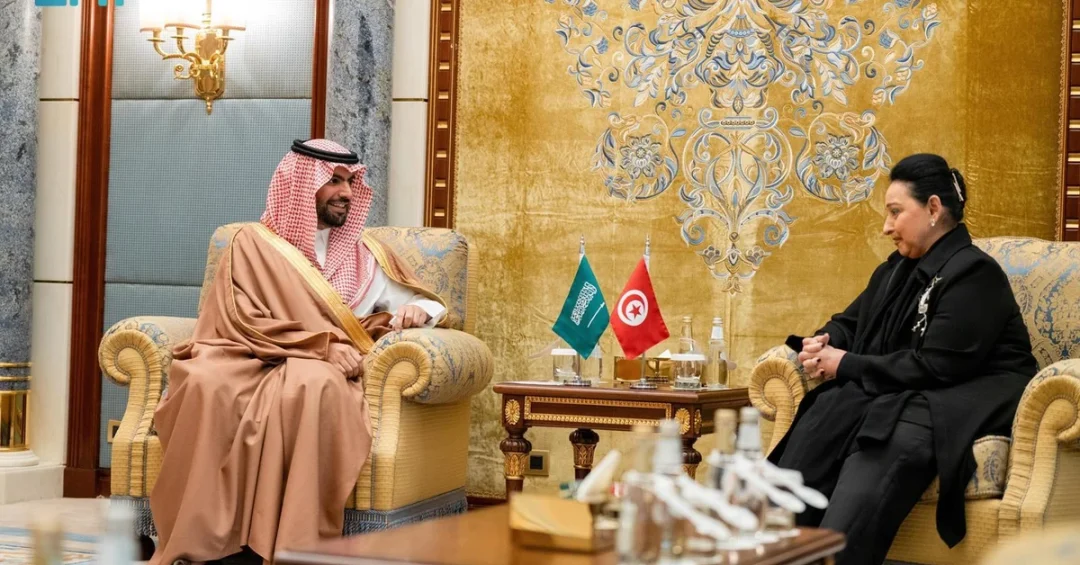
Minister of Culture Prince Badr bin Abdullah bin Farhan met with Tunisian Minister of Cultural Affairs Amina Srarfi on Wednesday in Jeddah during the 13th Conference of Culture Ministers in the Islamic World, hosted by the Kingdom of Saudi Arabia. The meeting underscores Saudi Arabia’s active role in fostering cultural diplomacy and cooperation among Islamic nations.
Context and Background
The 13th Conference of Culture Ministers in the Islamic World, organized under the auspices of the Islamic World Educational, Scientific and Cultural Organization (ICESCO), brought together cultural leaders from member states to discuss shared heritage, creative industries, and cultural collaboration. Saudi Arabia’s hosting of the event reflects its commitment to cultural exchange and its leadership in the Islamic world. The meeting between Prince Badr and Minister Srarfi builds on longstanding ties between the two brotherly nations.
Key Details
During the meeting, Prince Badr congratulated Srarfi on her recent appointment as Tunisia’s Minister of Cultural Affairs, wishing Tunisia, its government, and its people continued prosperity and progress. The ministers discussed strengthening cultural cooperation through joint projects in areas such as cultural exchange, vocational training in heritage fields, and the preservation of traditional crafts. They also signed a memorandum of understanding (MoU) for cultural cooperation, aiming to enhance collaboration in various cultural domains and foster deeper mutual understanding between the two countries.
Implications and Impact
The MoU is expected to facilitate exchange programs for artists, heritage experts, and cultural administrators, promoting shared Islamic heritage and contemporary cultural production. The agreement aligns with broader regional efforts to boost cultural tourism and creative economies, contributing to economic diversification and people-to-people ties. Tunisia, with its rich history in arts and crafts, stands to benefit from Saudi expertise in heritage preservation and cultural infrastructure, while Saudi Arabia gains access to North African cultural markets and collaborative platforms.
Vision 2030 Alignment
This cultural partnership directly supports Saudi Vision 2030’s goal of enriching the Kingdom’s cultural landscape and positioning it as a global cultural hub. By building international cultural bridges, Saudi Arabia enhances its soft power and promotes cross-cultural dialogue. The agreement also reinforces the Kingdom’s commitment to preserving and promoting Islamic heritage, a key pillar of its cultural strategy. Such initiatives contribute to a vibrant society, a diversified economy, and an ambitious nation—core tenets of the Vision 2030 blueprint.
20 Questions
Q1. Who met in Jeddah on February 12, 2025?
A1. Saudi Minister of Culture Prince Badr bin Abdullah bin Farhan met with Tunisian Minister of Cultural Affairs Amina Srarfi.
Q2. What was the occasion for the meeting?
A2. The meeting took place during the 13th Conference of Culture Ministers in the Islamic World, hosted by Saudi Arabia in Jeddah.
Q3. Which organization organized the conference?
A3. The conference was organized under the auspices of the Islamic World Educational, Scientific and Cultural Organization (ICESCO).
Q4. What did Prince Badr congratulate Minister Srarfi on?
A4. He congratulated her on her recent appointment as Tunisia’s Minister of Cultural Affairs.
Q5. What topics were discussed during the meeting?
A5. They discussed strengthening cultural ties through joint projects in cultural exchange, vocational training, and crafts preservation.
Q6. Was any agreement signed?
A6. Yes, they signed a memorandum of understanding (MoU) for cultural cooperation between Saudi Arabia and Tunisia.
Q7. What is the purpose of the MoU?
A7. The MoU aims to enhance collaboration in various cultural fields and foster cultural exchange between the two countries.
Q8. Where was the meeting held?
A8. The meeting was held in Jeddah, Saudi Arabia, on the sidelines of the conference.
Q9. How does this meeting reflect Saudi Arabia’s role?
A9. It underscores Saudi Arabia’s active role in cultural diplomacy and cooperation among Islamic nations.
Q10. What is ICESCO’s mission?
A10. ICESCO is an organization that promotes education, science, and culture among Islamic countries, preserving Islamic heritage.
Q11. What are the expected benefits of the MoU?
A11. It is expected to facilitate exchange programs for artists, heritage experts, and cultural administrators, promoting shared heritage.
Q12. How does the MoU support tourism?
A12. It aligns with regional efforts to boost cultural tourism and creative economies, contributing to economic diversification.
Q13. What does Tunisia bring to this partnership?
A13. Tunisia offers a rich history in arts and crafts, benefiting from Saudi expertise in heritage preservation and cultural infrastructure.
Q14. What does Saudi Arabia gain from the partnership?
A14. Saudi Arabia gains access to North African cultural markets and collaborative platforms for cultural exchange.
Q15. How does this align with Vision 2030?
A15. It supports Vision 2030’s goal of enriching the cultural landscape and positioning Saudi Arabia as a global cultural hub.
Q16. What are the cultural priorities of Saudi Arabia?
A16. Saudi Arabia prioritizes preserving Islamic heritage, promoting cultural dialogue, and developing cultural industries.
Q17. Who else attended the conference?
A17. The conference was attended by culture ministers and representatives from ICESCO member states.
Q18. Is the MoU limited to specific fields?
A18. No, the MoU covers broad cultural cooperation, including exchange, vocational training, and crafts preservation.
Q19. How does this enhance people-to-people ties?
A19. The exchange programs and joint projects foster mutual understanding and strengthen bonds between Saudi and Tunisian societies.
Q20. What is the long-term significance of this meeting?
A20. It reinforces cultural diplomacy as a tool for regional stability and showcases Saudi leadership in the Islamic world.
Reader Feedback
We value your thoughts. Please share your feedback on this article.
Your feedback helps us improve our coverage.