


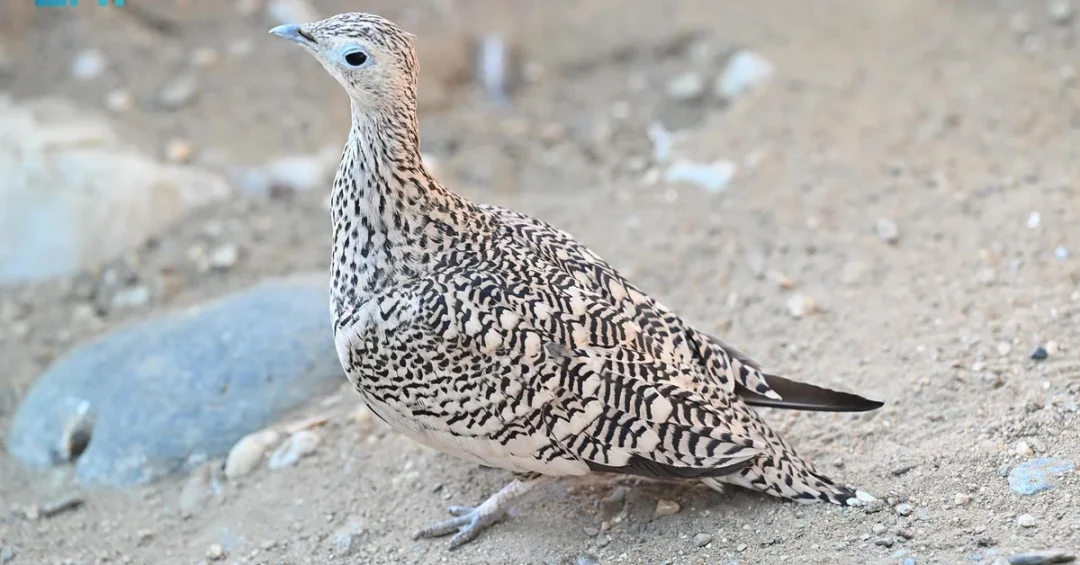
JAZAN, February 15, 2025 (SPA) – The Jazan region of Saudi Arabia is renowned for its diverse birdlife, with the sandgrouse standing out as a species admired for its striking beauty, remarkable desert adaptation, and deep cultural significance in Arab folklore and literature.
Context and Background
Sandgrouse have been a powerful symbol in Arab culture for centuries, appearing in pre-Islamic poetry as an emblem of patience, endurance, loyalty, departure, and longing. Poets have drawn parallels between the bird’s arduous desert journeys and human experiences, with one poet expressing a sense of shared hardship by comparing sorrow to the sandgrouse’s search for water. In Saudi literature, the sandgrouse has also come to represent the free spirit—constantly on the move yet ultimately drawn back to its homeland.
Key Details
Jazan poet Mohammed bin Ali Al-Sanousi, a prominent figure in the region’s poetic tradition, often incorporated imagery of the sandgrouse into his work, reflecting themes of displacement and yearning for home. Beyond literature, the sandgrouse appears in popular proverbs and oral traditions, notably for its speed and ability to locate water in arid landscapes. The saying, “If you see a sandgrouse, know that water is near,” underscores its practical role as a guide for desert travelers. These birds can reach flight speeds of 60 to 70 kilometers per hour and travel up to 50 kilometers daily in search of sustenance. Their remarkable ability to carry water in their feathers to transport it long distances to their young exemplifies their dedication to nurturing offspring.
Implications and Impact
The sandgrouse’s enduring presence in Jazan highlights the region’s rich biodiversity and its integration into local heritage. As Saudi Arabia promotes eco-tourism and cultural preservation under Vision 2030, such emblematic species help attract visitors interested in nature and heritage, while also reinforcing the Kingdom’s commitment to environmental stewardship.
Vision 2030 Alignment
The sandgrouse’s symbolism of resilience and loyalty mirrors the spirit of Saudi Arabia’s Vision 2030, which emphasizes sustainable development, cultural enrichment, and conservation of natural heritage. By celebrating species like the sandgrouse, Saudi Arabia reinforces its dedication to preserving biodiversity and promoting eco-tourism, contributing to a vibrant society and a thriving economy.
20 Questions
Q1. What is the Jazan sandgrouse?
A1. The Jazan sandgrouse is a bird species found in the Jazan region of Saudi Arabia, known for its striking crowned and striped plumage, and its remarkable adaptations to desert life.
Q2. Why is the sandgrouse considered a symbol of beauty?
A2. Its elegant appearance, with intricate patterns and colors, has made it a subject of admiration in Saudi literature and art, representing natural beauty and grace.
Q3. How does the sandgrouse demonstrate resilience?
A3. It thrives in harsh desert environments, traveling up to 50 kilometers daily at speeds of 60-70 km/h to find food and water, and can carry water in its feathers to its young.
Q4. What is the cultural significance of the sandgrouse in Arab folklore?
A4. The sandgrouse symbolizes patience, endurance, loyalty, departure, and longing, featuring prominently in pre-Islamic and modern poetry as a metaphor for human experiences.
Q5. How has the sandgrouse been portrayed in Saudi literature?
A5. It appears as a symbol of the free spirit, constantly moving yet drawn back to its homeland, as seen in the works of Jazan poet Mohammed bin Ali Al-Sanousi.
Q6. What is the proverb associated with the sandgrouse?
A6. “If you see a sandgrouse, know that water is near,” reflecting its role as a guide for desert travelers to locate water sources.
Q7. How does the sandgrouse carry water?
A7. It uses its specialized belly feathers to absorb and transport water over long distances, allowing it to hydrate its chicks in arid environments.
Q8. What is the sandgrouse’s flight speed?
A8. It can reach flight speeds of 60 to 70 kilometers per hour, making it swift and efficient in covering large distances.
Q9. How far does the sandgrouse travel daily?
A9. It travels up to 50 kilometers each day in search of food and water, demonstrating its endurance and adaptability.
Q10. Why is Jazan an important habitat for sandgrouse?
A10. Jazan’s diverse ecosystems and strategic location along migration routes provide ideal conditions for sandgrouse, especially during migration seasons.
Q11. When does the sandgrouse migrate through Jazan?
A11. The sandgrouse migrates seasonally, with Jazan welcoming them during migration periods, though specific timing varies depending on environmental conditions.
Q12. What role does the sandgrouse play in eco-tourism?
A12. Its beauty and unique behaviors attract birdwatchers and nature enthusiasts, supporting Saudi Arabia’s eco-tourism goals under Vision 2030.
Q13. How does the sandgrouse inspire poets?
A13. Its arduous desert journeys and search for water serve as metaphors for human struggles, longing, and perseverance in classical and modern poetry.
Q14. What is the sandgrouse’s significance in Arab oral traditions?
A14. It features in proverbs and stories as a symbol of wisdom, resourcefulness, and a guide to survival in the desert.
Q15. How does the sandgrouse contribute to biodiversity in Saudi Arabia?
A15. As a native desert bird, it is part of the rich avifauna of Jazan, highlighting the region’s biodiversity and the importance of conservation efforts.
Q16. What conservation measures protect the sandgrouse in Saudi Arabia?
A16. The Kingdom implements habitat preservation and wildlife protection programs, aligning with Vision 2030’s environmental sustainability goals.
Q17. How does the sandgrouse exemplify loyalty?
A17. The bird’s dedication to nurturing its offspring, including carrying water over long distances, symbolizes loyalty and care in Arab culture.
Q18. What is the sandgrouse’s connection to Vision 2030?
A18. The species underscores Saudi Arabia’s commitment to preserving natural heritage, promoting eco-tourism, and fostering cultural enrichment as part of Vision 2030.
Q19. How does the sandgrouse’s resilience reflect Saudi values?
A19. Its ability to thrive in harsh conditions mirrors the Kingdom’s determination and perseverance in pursuing development and modernization under Vision 2030.
Q20. Where can one learn more about the Jazan sandgrouse?
A20. Information is available through the Saudi Press Agency (SPA) and official environmental authorities, including the National Center for Wildlife.
Reader Feedback
We value your thoughts. Please share your feedback on this article.
Your feedback helps us improve our coverage.