


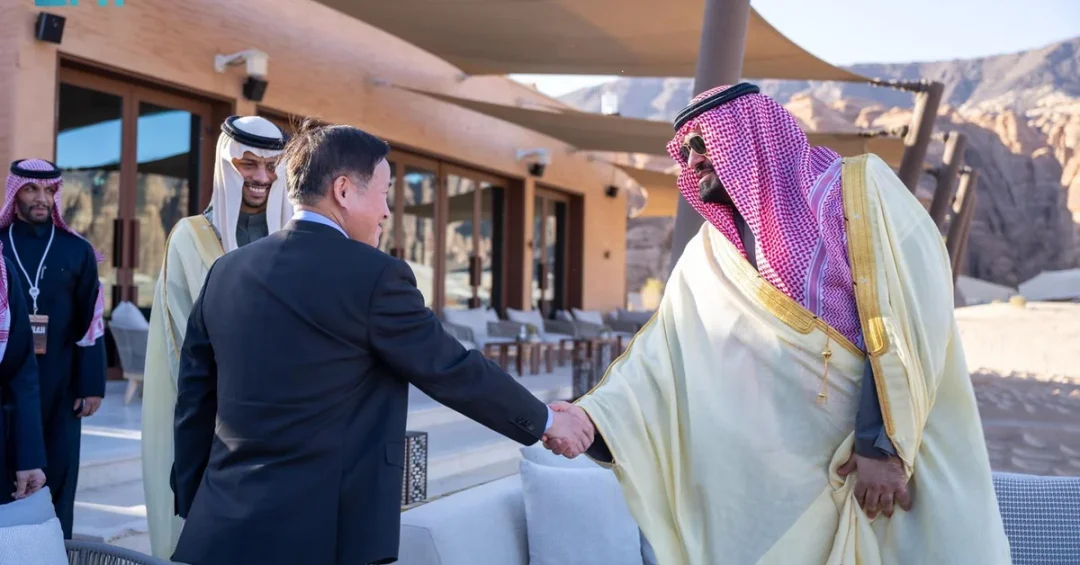
Riyadh, February 16, 2025 — Saudi Arabia’s Minister of Economy and Planning, Faisal Alibrahim, met with Pan Gongsheng, Governor of the People’s Bank of China (PBOC), on the sidelines of the AlUla Conference for Emerging Market Economies to discuss bilateral cooperation under Saudi Vision 2030 and the role of emerging markets in driving global economic growth.
Context and Background
The meeting underscores the deepening economic ties between the Kingdom of Saudi Arabia and China, two of the world’s largest emerging economies. Saudi Arabia, under Vision 2030, is diversifying its economy beyond oil, while China seeks to expand its Belt and Road Initiative and strengthen partnerships with Middle Eastern nations. The AlUla Conference, a key platform for dialogue among emerging market policymakers, provided an ideal setting for high-level discussions on shared economic priorities.
Key Details
Minister Alibrahim and Governor Pan reviewed the current state of Saudi-Chinese collaboration, focusing on investment flows, trade expansion, and financial sector cooperation. Both sides expressed commitment to enhancing mutual economic resilience in light of global uncertainties. The meeting followed a series of recent bilateral agreements, including Saudi Arabia’s accession to the New Development Bank and joint ventures in renewable energy and technology sectors.
Implications and Impact
The dialogue signals a coordinated approach to addressing global economic challenges, including inflation, supply chain disruptions, and financial stability. As emerging markets gain greater influence in international financial institutions, Saudi Arabia’s role as a G20 member and China’s leadership in the BRICS grouping are expected to drive new frameworks for sustainable growth. The meeting also paves the way for increased Chinese investment in Saudi mega-projects such as NEOM and Red Sea tourism.
Vision 2030 Alignment
This high-level engagement reinforces Saudi Arabia’s strategic objective to position itself as a global investment hub and a bridge between East and West. By strengthening ties with China, the Kingdom advances its Vision 2030 goals of economic diversification, knowledge transfer, and non-oil export growth. The collaboration is expected to generate new opportunities in finance, trade, and innovation, contributing to a prosperous future for both nations.
20 Questions
Q1. Who met on February 16, 2025 in AlUla?
A1. Saudi Minister of Economy and Planning Faisal Alibrahim met with People’s Bank of China Governor Pan Gongsheng.
Q2. What was the main topic of the meeting?
A2. They discussed cooperation under Saudi Vision 2030 and the role of emerging markets in economic growth.
Q3. Where did the meeting take place?
A3. It occurred on the sidelines of the AlUla Conference for Emerging Market Economies in AlUla, Saudi Arabia.
Q4. What is Saudi Vision 2030?
A4. Vision 2030 is Saudi Arabia’s strategic framework to diversify its economy, reduce oil dependence, and develop public sectors like health and education.
Q5. Who is Pan Gongsheng?
A5. Pan Gongsheng is the Governor of the People’s Bank of China, the central bank of China.
Q6. What is the AlUla Conference for Emerging Market Economies?
A6. It is a forum that brings together policymakers from emerging economies to discuss economic challenges and opportunities.
Q7. Why is this meeting important for Saudi-China relations?
A7. It strengthens bilateral economic ties and aligns with both nations’ goals for diversified growth and financial cooperation.
Q8. How does the meeting relate to Vision 2030?
A8. The discussions directly support Vision 2030’s aim to attract foreign investment and build partnerships with major economies like China.
Q9. What global economic issues were covered?
A9. They addressed global economic developments, including inflation, supply chain resilience, and financial stability.
Q10. Did the meeting result in any agreements?
A10. No specific agreements were announced, but both sides committed to enhancing mutual economic resilience.
Q11. How does China view Saudi Arabia’s role in emerging markets?
A11. China sees Saudi Arabia as a key partner in the Global South and a leader in Middle Eastern economic transformation.
Q12. What sectors might benefit from this collaboration?
A12. Sectors such as renewable energy, technology, infrastructure, and finance are likely to see increased cooperation.
Q13. Is this part of regular high-level dialogue?
A13. Yes, such meetings are part of ongoing exchanges under the Saudi-China Joint Committee on Trade and Investment.
Q14. What is the significance of AlUla as a venue?
A14. AlUla symbolizes Saudi Arabia’s cultural and economic opening, hosting international events that showcase its heritage and modern ambitions.
Q15. How does this meeting impact other emerging economies?
A15. It demonstrates how emerging markets can collaborate to shape global economic governance and promote inclusive growth.
Q16. What role does PBOC play in China’s economy?
A16. PBOC is China’s central bank, responsible for monetary policy, financial stability, and regulating the banking system.
Q17. How does Saudi Arabia benefit from Chinese investment?
A17. Chinese investment helps finance mega-projects, transfer technology, and create jobs in line with Vision 2030.
Q18. Are there any follow-up meetings planned?
A18. No immediate follow-ups were announced, but the meeting sets the stage for further technical talks.
Q19. What does this meeting say about Saudi diplomacy?
A19. It highlights Saudi Arabia’s proactive diplomacy in building alliances with major economies to achieve its development goals.
Q20. How can readers learn more about Vision 2030?
A20. Official information is available on the Saudi Vision 2030 website, as well as through the Saudi Press Agency and ksa.com.
Reader Feedback
We value your thoughts. Please share your feedback on this article.
Your feedback helps us improve our coverage.