


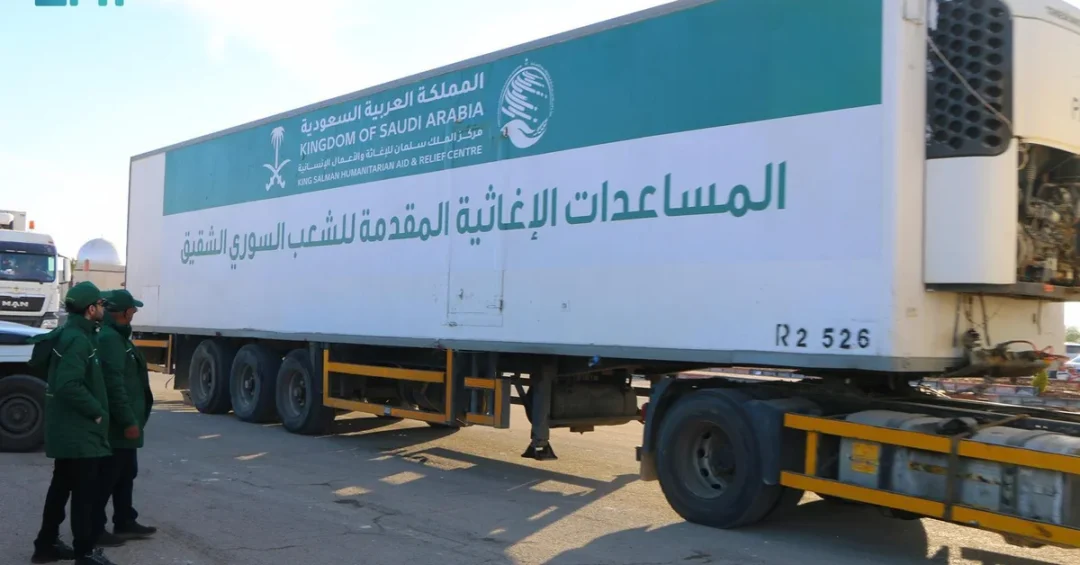
On February 16, 2025, twenty-five relief trucks crossed the Nasib border crossing into Syria, carrying food supplies, shelter materials, and winter essentials, as part of the Saudi relief land bridge operated by the King Salman Humanitarian Aid and Relief Center (KSrelief). This latest delivery raises the total number of trucks dispatched through the land bridge to 199, underscoring Saudi Arabia’s ongoing commitment to alleviating the humanitarian needs of the Syrian people.
Context and Background
Since the onset of the Syrian crisis, Saudi Arabia has been a leading humanitarian donor. The Saudi relief land bridge and air bridge are coordinated by KSrelief, the Kingdom’s primary humanitarian agency, established in 2015 to streamline aid delivery globally. The land bridge route via the Nasib border crossing—a key corridor between Jordan and Syria—enables efficient transport of bulk supplies. To date, 16 relief planes have also landed at Damascus International Airport as part of a parallel air bridge, delivering food, medical, and shelter supplies. This dual approach ensures rapid and sustained support.
Key Details
The latest convoy includes essential winterization items, critical as Syria experiences harsh winter conditions. The trucks carry food parcels, blankets, mattresses, and heating materials. KSrelief oversees the entire logistics chain, from procurement to distribution, working with local partners on the ground. The Saudi government has consistently emphasized that aid is channeled without discrimination, targeting vulnerable populations across Syria. The land bridge, initiated in late 2024, has steadily increased its pace, with multiple crossings each week.
Implications and Impact
This sustained relief effort reinforces Saudi Arabia’s role as a reliable humanitarian partner in the region. By using both land and air bridges, the Kingdom demonstrates logistical capacity and strategic coordination. The aid directly addresses food insecurity, lack of shelter, and medical shortages, which have worsened due to economic pressures and the aftermath of the 2023 earthquakes. International observers have noted that Saudi donations to Syria are among the most consistent, with KSrelief’s projects covering health, education, and food security. This ongoing commitment also supports stability in neighboring Jordan and Lebanon, which host large Syrian refugee populations.
Vision 2030 Alignment
The relief operations align closely with Vision 2030’s goal of positioning Saudi Arabia as a global humanitarian hub. KSrelief operates with transparency and efficiency, embodying the Kingdom’s ambition to be a leading contributor to international development and relief. By providing timely aid to Syria, Saudi Arabia reinforces its role as a compassionate and responsible global actor, building diplomatic goodwill and fostering regional cooperation. This effort showcases the Kingdom’s ability to mobilize resources rapidly, a key pillar of its vision for a proactive, outward-looking nation.
20 Questions
Q1. What is the Saudi relief land bridge?
A1. It is a KSrelief-operated logistics operation using trucks to deliver humanitarian supplies from Saudi Arabia to Syria via the Nasib border crossing, ensuring consistent ground-based aid delivery.
Q2. How many relief trucks have crossed into Syria so far?
A2. As of February 16, 2025, a total of 199 relief trucks have crossed the Nasib border crossing as part of the Saudi relief land bridge.
Q3. What items were on the 25 trucks?
A3. The trucks carried food supplies, shelter materials, winter essentials such as blankets and heating items, and other basic necessities to help Syrian families cope with harsh conditions.
Q4. Who operates the Saudi relief land bridge?
A4. The land bridge is operated by the King Salman Humanitarian Aid and Relief Center (KSrelief), Saudi Arabia’s official humanitarian aid agency.
Q5. Is there also an air bridge?
A5. Yes, 16 relief planes have arrived at Damascus International Airport as part of the Saudi air relief bridge, delivering food, medical, and shelter supplies.
Q6. Why did these trucks cross the Nasib border crossing?
A6. The Nasib crossing is a key logistical route from Jordan into Syria, enabling efficient transport of large-scale aid from Saudi Arabia to areas in need.
Q7. What is the purpose of this aid?
A7. The aid aims to alleviate the impact of the ongoing humanitarian situation faced by the Syrian people, addressing food insecurity, lack of shelter, and winter hardships.
Q8. How does KSrelief ensure aid reaches those in need?
A8. KSrelief works with local partners on the ground to distribute supplies without discrimination, targeting the most vulnerable populations across Syria.
Q9. When did the Saudi relief land bridge start?
A9. The land bridge began operations in late 2024, with consistent crossings increasing the total number of trucks over time.
Q10. How does this aid align with Vision 2030?
A10. It supports Vision 2030’s goal of making Saudi Arabia a global humanitarian hub, demonstrating efficiency, transparency, and international responsibility.
Q11. What other countries receive similar aid from Saudi Arabia?
A11. Saudi Arabia provides humanitarian aid globally, including in Yemen, Palestine, Sudan, and Afghanistan, often through KSrelief and various UN partnerships.
Q12. Has Saudi Arabia previously assisted Syria?
A12. Yes, Saudi Arabia has been a consistent donor to Syria since the crisis began, funding health, education, food security, and shelter projects.
Q13. Are there any international partners involved?
A13. KSrelief coordinates with UN agencies and local organizations to ensure efficient distribution, though the land and air bridges are Saudi-led initiatives.
Q14. What is KSrelief’s full name?
A14. The King Salman Humanitarian Aid and Relief Center, established in 2015 to coordinate and deliver Saudi humanitarian assistance worldwide.
Q15. How are the supplies transported within Syria?
A15. After crossing the border, supplies are distributed by local humanitarian partners using trucks and local logistics networks to reach various governorates.
Q16. Does this aid include medical supplies?
A16. Yes, the air bridge has included medical supplies, while the land bridge focuses on food, shelter, and winter items; both types are deployed per need.
Q17. What is the significance of the number 199 trucks?
A17. It reflects a sustained, large-scale commitment, with each truck carrying tons of supplies, collectively making a substantial impact on humanitarian relief.
Q18. How does the Saudi public view these relief efforts?
A18. The Saudi public supports these efforts through official donations and volunteering, reflecting the Kingdom’s culture of charity and solidarity with the Syrian people.
Q19. Are there plans to increase the number of trucks?
A19. KSrelief continues to assess needs and logistics, with operations likely to expand as required to meet ongoing humanitarian demands in Syria.
Q20. How can international observers verify the aid delivery?
A20. KSrelief publishes updates via official channels like the Saudi Press Agency, and works with UN monitors to ensure transparency and accountability in distribution.
Reader Feedback
We value your thoughts. Please share your feedback on this article.
Your feedback helps us improve our coverage.