


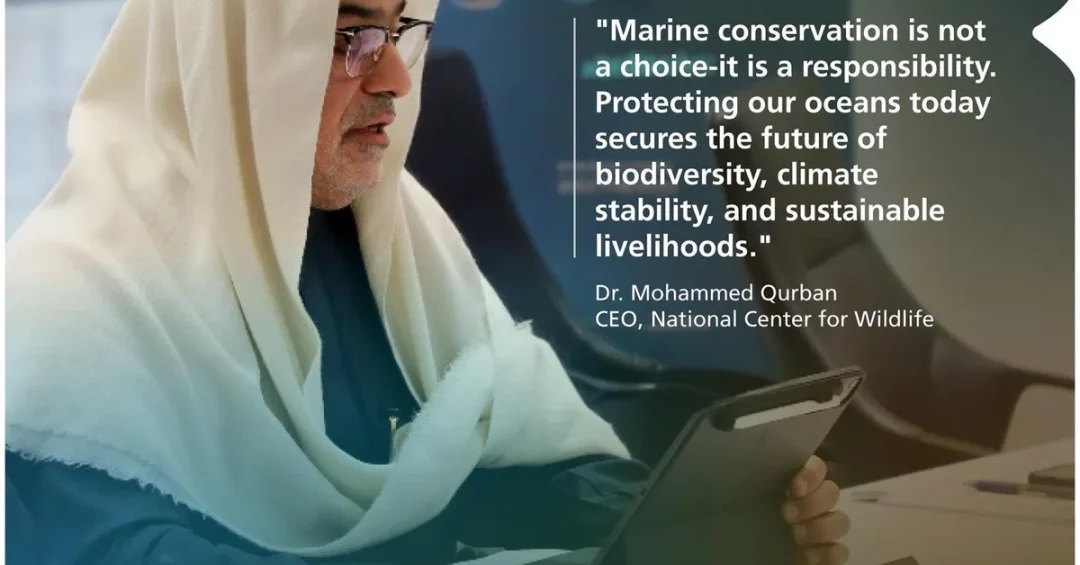
Dr. Mohammed Qurban, CEO of the National Center for Wildlife (NCW), underscored the critical need for global collaboration in marine conservation during the Riyadh Blue Talks held on February 17, 2025, as a preparatory event for the UN Ocean Conference 2025. Speaking in Riyadh, Dr. Qurban emphasized that protecting marine ecosystems is no longer optional but an essential responsibility for safeguarding biodiversity, climate stability, and life on Earth.
Context and Background
The Riyadh Blue Talks serve as a key platform for international dialogue ahead of the UN Ocean Conference, which aims to accelerate action toward Sustainable Development Goal 14 (Life Below Water). Saudi Arabia has emerged as a leading voice in ocean conservation, aligning its environmental policies with the Saudi Green Initiative and Vision 2030. The Kingdom has committed to protecting 30% of its terrestrial and marine areas by 2030, reflecting a strategic prioritization of environmental sustainability.
Key Details
Dr. Qurban highlighted the NCW’s role in spearheading biodiversity protection, scientific research, and international cooperation. He noted Saudi Arabia’s chairmanship of the International Coral Reef Initiative (ICRI), underscoring the Kingdom’s dedication to restoring coral reef resilience. Additionally, the OceanXplorer’s Red Sea Decade Expedition, a collaboration between NCW and King Abdullah University of Science and Technology, has deployed 126 researchers to study the Red Sea’s unexplored ecosystems. This science-driven approach provides crucial data for effective conservation and sustainable management strategies.
Implications and International Impact
Saudi Arabia’s leadership in marine conservation strengthens its diplomatic ties and positions the Kingdom as a key player in global environmental governance. The initiatives showcased at the Riyadh Blue Talks demonstrate tangible progress toward international commitments, including the UN Decade of Ocean Science for Sustainable Development. By sharing scientific findings and fostering collaboration, Saudi Arabia encourages other nations to adopt similar conservation measures, potentially influencing global policies on ocean health and climate action.
Vision 2030 Alignment
The NCW’s efforts directly support Vision 2030’s goal of enhancing quality of life through environmental sustainability. By protecting 30% of land and marine areas, the Kingdom not only preserves its natural heritage but also boosts eco-tourism and sustainable economic diversification. As Dr. Qurban stated, marine conservation is integral to the future of biodiversity and climate stability, reinforcing Saudi Arabia’s commitment to a greener, more prosperous future for generations to come.
20 Questions
Q1. Who spoke about marine conservation at the Riyadh Blue Talks?
A1. Dr. Mohammed Qurban, CEO of Saudi Arabia’s National Center for Wildlife (NCW), delivered remarks on the urgency of global marine conservation.
Q2. What event preceded the UN Ocean Conference 2025?
A2. The Riyadh Blue Talks were held as preparatory discussions for the UN Ocean Conference 2025, focusing on ocean sustainability.
Q3. Why does Dr. Qurban say marine conservation is no longer optional?
A3. He emphasized that protecting marine biodiversity and climate stability is essential for the future of life on Earth.
Q4. What is Saudi Arabia’s land and marine protection target by 2030?
A4. The Kingdom has committed to protecting 30% of its land and marine areas under Vision 2030 and the Saudi Green Initiative.
Q5. Which international initiative does Saudi Arabia chair?
A5. Saudi Arabia chairs the International Coral Reef Initiative (ICRI), focusing on coral reef resilience.
Q6. What is the OceanXplorer’s Red Sea Decade Expedition?
A6. It is a collaborative research program between NCW and King Abdullah University of Science and Technology involving 126 researchers.
Q7. What is the goal of the Red Sea Decade Expedition?
A7. The expedition aims to study unexplored Red Sea ecosystems to support conservation and sustainable management strategies.
Q8. How does the NCW contribute to marine conservation?
A8. NCW leads biodiversity protection initiatives, scientific research, and international partnerships aligned with global sustainability goals.
Q9. What is the focus of Vision 2030 regarding environmental protection?
A9. Vision 2030 aims to diversify the economy and enhance quality of life through environmental sustainability and conservation.
Q10. How does marine conservation align with the Saudi Green Initiative?
A10. The initiative supports protecting natural habitats, reducing emissions, and increasing protected areas to combat climate change.
Q11. What is the role of science in NCW’s approach?
A11. NCW adopts a science-driven strategy, using data from expeditions to inform effective conservation policies.
Q12. How many researchers participated in the Red Sea Expedition?
A12. The expedition involved 126 researchers from various institutions, reflecting a collaborative scientific effort.
Q13. What international event will benefit from the Riyadh Blue Talks outcomes?
A13. The outcomes will inform discussions at the UN Ocean Conference 2025, advancing global ocean action.
Q14. Why is coral reef restoration important to Saudi Arabia?
A14. Healthy coral reefs support biodiversity, tourism, and fisheries, aligning with Vision 2030’s economic diversification.
Q15. How does the Kingdom’s chairmanship of ICRI demonstrate leadership?
A15. It shows commitment to global coral reef conservation and encourages international cooperation.
Q16. What is the significance of the UN Decade of Ocean Science?
A16. It provides a framework for collaborative research, which Saudi Arabia actively supports through initiatives like the Red Sea Expedition.
Q17. How does marine conservation benefit eco-tourism in Saudi Arabia?
A17. Protecting marine areas attracts tourists to Red Sea destinations, supporting sustainable economic growth.
Q18. What is the relationship between marine conservation and climate stability?
A18. Healthy oceans absorb carbon dioxide and regulate climate; conservation helps mitigate climate change impacts.
Q19. How does the NCW engage with international partners?
A19. NCW collaborates with universities, research institutions, and international organizations to share knowledge and resources.
Q20. What is the forward-looking message from Dr. Qurban’s speech?
A20. He called for urgent global cooperation, emphasizing that marine conservation is crucial for long-term environmental and human well-being.
Reader Feedback
We value your thoughts. Please share your feedback on this article.
Your feedback helps us improve our coverage.