


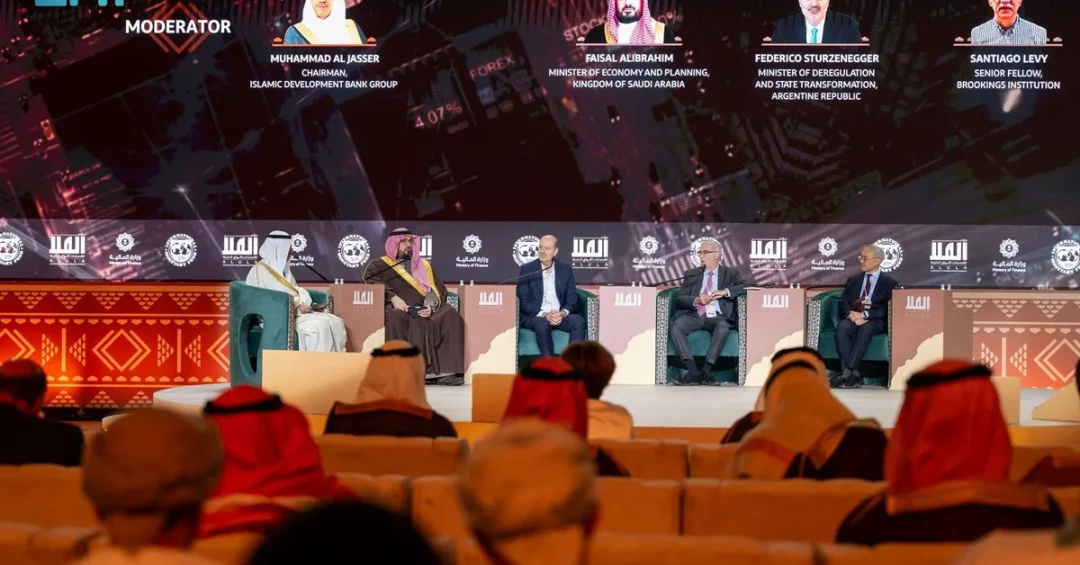
Saudi Minister of Economy and Planning Faisal Alibrahim participated in the AlUla Conference for Emerging Market Economies on February 17, 2025, joining a panel discussion on productivity challenges and opportunities in emerging and developing markets. The event, hosted in the historic region of AlUla, brought together global policymakers and economic experts to explore strategies for sustainable growth. Minister Alibrahim highlighted Saudi Arabia’s approach to economic diversification through creative innovation and market expansion, emphasizing the Kingdom’s commitment to building a sustainable economic future aligned with Vision 2030.
Context and Background
The AlUla Conference for Emerging Market Economies serves as a platform for dialogue among nations seeking to address shared economic challenges. Saudi Arabia’s participation underscores its leadership in fostering international cooperation on economic transformation. The conference occurs as the Kingdom accelerates its diversification efforts, reducing reliance on oil revenues by expanding sectors such as tourism, technology, and renewable energy. AlUla, a UNESCO World Heritage site, exemplifies Saudi Arabia’s cultural and economic renaissance under Vision 2030.
Key Details
During the panel discussion, Minister Alibrahim stressed the necessity of bold decision-making and innovation-driven entrepreneurship in national transformations. He announced upcoming policies aimed at accelerating growth, focusing on enhancing productivity through talent development and capacity-building. The minister also addressed the importance of balanced artificial intelligence governance through international collaboration, highlighting the need for real and effective solutions that ensure AI benefits all economies. He emphasized that adopting transformative technology alone is insufficient; it must be complemented by a whole-of-government approach that integrates technology with human capital development.
Implications and Impact
The minister’s remarks have significant implications for emerging economies seeking to navigate the complexities of digital transformation and sustainable development. Saudi Arabia’s model of combining innovation with talent development offers a replicable framework for other nations. The focus on AI governance signals the Kingdom’s proactive role in shaping global standards for emerging technologies, reinforcing its position as a hub for innovation and investment. This engagement also strengthens Saudi Arabia’s diplomatic ties with participating countries, fostering economic partnerships that extend beyond the conference.
Vision 2030 Alignment
Minister Alibrahim’s participation directly supports Vision 2030’s objectives of economic diversification and global engagement. By championing innovation, entrepreneurship, and AI governance, Saudi Arabia demonstrates its commitment to building a knowledge-based economy that attracts international talent and investment. The conference in AlUla highlights the Kingdom’s ability to host world-class events that showcase its cultural heritage while driving forward its economic transformation. As Saudi Arabia continues to implement policies that empower its workforce and embrace cutting-edge technologies, it sets a benchmark for emerging markets worldwide.
20 Questions
Q1. What was the main topic of the panel discussion Minister Alibrahim participated in?
A1. The panel discussion was titled “Productivity in Emerging and Developing Markets: Challenges and Opportunities,” focusing on how emerging economies can enhance productivity through innovation and policy reform.
Q2. Where did the AlUla Conference for Emerging Market Economies take place?
A2. The conference was held in AlUla, a historic region in Saudi Arabia known for its UNESCO World Heritage sites and its role in the Kingdom’s cultural and economic transformation.
Q3. What key approach did Minister Alibrahim highlight for economic diversification?
A3. He highlighted Saudi Arabia’s approach of using creative innovation and market expansion to build a sustainable economic future, reducing reliance on oil revenues.
Q4. Why is balanced AI governance important according to the minister?
A4. Balanced AI governance ensures that artificial intelligence benefits all economies by preventing misuse and fostering international collaboration for real and effective solutions.
Q5. What did the minister say about talent development and technology?
A5. He stated that adopting transformative technology alone is insufficient; it must be complemented by talent development and capacity-building to maximize its potential.
Q6. How does the AlUla conference support Saudi Arabia’s global engagement?
A6. The conference brings together global policymakers and experts, showcasing Saudi Arabia’s leadership in economic dialogue and fostering partnerships with emerging markets.
Q7. What upcoming policies did Minister Alibrahim hint at?
A7. He mentioned upcoming policies aimed at accelerating growth, focusing on innovation-driven entrepreneurship and whole-of-government approaches to economic transformation.
Q8. How does the whole-of-government approach drive economic transformation?
A8. It integrates efforts across government ministries to ensure that technology adoption is combined with talent development, regulatory support, and infrastructure investment.
Q9. What is the significance of AlUla in the context of Vision 2030?
A9. AlUla represents Saudi Arabia’s cultural and economic renaissance, attracting tourists and investors while preserving its heritage, aligning with Vision 2030’s diversification goals.
Q10. Who else participated in the panel discussion alongside Minister Alibrahim?
A10. The article does not specify other participants, but the conference included global policymakers and economic experts from emerging and developing markets.
Q11. What role does innovation play in Saudi Arabia’s economic strategy?
A11. Innovation is central to Saudi Arabia’s strategy, driving market expansion, improving productivity, and creating new industries that contribute to sustainable economic growth.
Q12. How does the conference address challenges in emerging markets?
A12. The conference provides a platform for sharing best practices, discussing common challenges like productivity gaps, and exploring collaborative solutions through policy and technology.
Q13. What is the date of the conference?
A13. The conference took place on February 17, 2025, as reported by the Saudi Press Agency (SPA).
Q14. How does Saudi Arabia’s AI governance approach impact other countries?
A14. By advocating for balanced governance through international collaboration, Saudi Arabia helps set global standards that ensure AI is developed ethically and inclusively.
Q15. What is the relationship between bold decision-making and national transformations?
A15. Bold decision-making enables rapid implementation of reforms, such as those in Saudi Arabia, which drive economic diversification and adaptability to global changes.
Q16. How does the conference align with Vision 2030’s goal of a knowledge-based economy?
A16. The focus on innovation, talent development, and technology governance directly supports building a knowledge-based economy that relies on human capital and advanced industries.
Q17. What specific sectors benefit from the policies mentioned by the minister?
A17. The policies target sectors like technology, renewable energy, tourism, and entrepreneurship, all of which are key to diversifying Saudi Arabia’s economy.
Q18. Why is international collaboration important for emerging economies?
A18. International collaboration allows emerging economies to share resources, knowledge, and technologies, accelerating their development and addressing common challenges like productivity.
Q19. How does Saudi Arabia’s example influence other emerging markets?
A19. Saudi Arabia’s successful diversification and innovation-driven transformation serves as a replicable model for other emerging markets seeking sustainable growth.
Q20. What is the takeaway message from Minister Alibrahim’s speech?
A20. The takeaway is that economic transformation requires a holistic approach combining bold policies, innovation, talent development, and international cooperation for long-term success.
Reader Feedback
We value your thoughts. Please share your feedback on this article.
Your feedback helps us improve our coverage.