


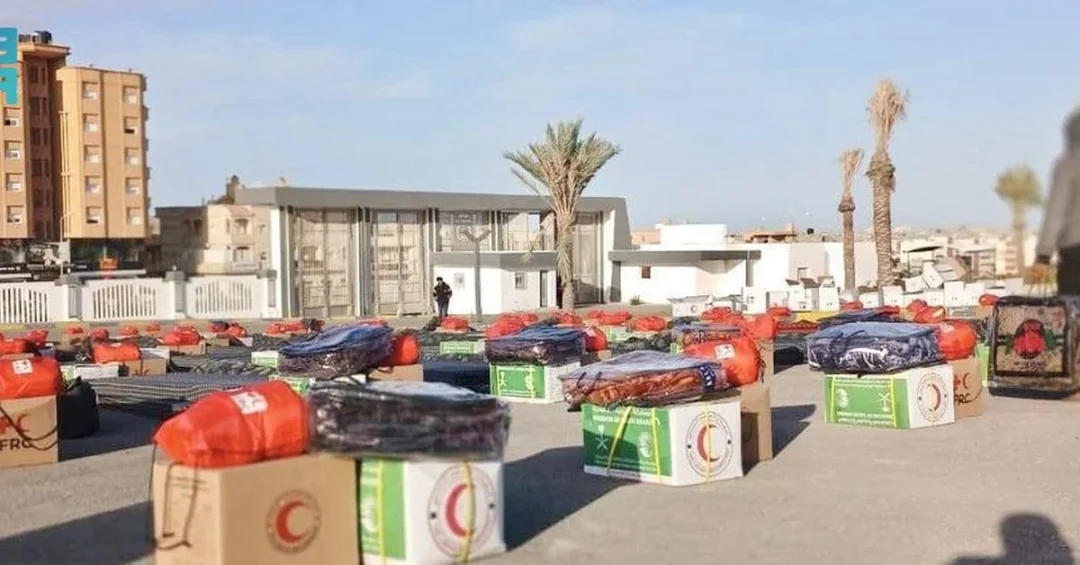
The King Salman Humanitarian Aid and Relief Center (KSrelief) has distributed 600 food baskets to 2,907 individuals in the Libyan town of Suluq, providing essential nutrition to families affected by the devastating Cyclone Daniel. The distribution, carried out in cooperation with the Libyan Red Crescent, is part of a broader urgent food assistance project aimed at alleviating the suffering of vulnerable communities impacted by the storm.
Context and Background
Cyclone Daniel struck eastern Libya in September 2023, causing catastrophic flooding and widespread destruction, particularly in the city of Derna and surrounding areas. The disaster displaced thousands and left many families without access to food, clean water, and shelter. In response, KSrelief, the humanitarian arm of the Kingdom of Saudi Arabia, launched a comprehensive aid program to address the immediate and long-term needs of affected populations, with a focus on food security and emergency relief.
Key Details
The recent distribution in Suluq, a town located near Benghazi, targeted the most vulnerable groups, including women, children, and the elderly. Each food basket contained essential items such as rice, flour, oil, and canned goods, designed to sustain a family for several weeks. KSrelief coordinated closely with the Libyan Red Crescent to ensure efficient delivery and to reach remote areas where access remains challenging. This initiative builds on earlier KSrelief efforts in Libya, including the provision of medical supplies, shelter materials, and clean water systems.
Implications and Impact
This aid delivery underscores Saudi Arabia’s commitment to humanitarian diplomacy and its role as a reliable partner in crisis response. By partnering with local organizations like the Libyan Red Crescent, KSrelief enhances the effectiveness and sustainability of its interventions. The project not only addresses immediate hunger but also contributes to stability and recovery in a region still grappling with the aftermath of natural disaster and political fragility. It reinforces Saudi Arabia’s reputation as a leading donor of humanitarian aid worldwide, consistent with its longstanding tradition of assisting affected communities regardless of geography or creed.
Vision 2030 Alignment
These humanitarian efforts directly align with Saudi Vision 2030, which emphasizes the Kingdom’s role as a global humanitarian hub and a model for effective international cooperation. By leveraging KSrelief’s expertise and resources, Saudi Arabia continues to demonstrate its commitment to the United Nations Sustainable Development Goals, particularly zero hunger and partnerships for the goals. The relief work in Libya reflects the Kingdom’s broader ambition to build a compassionate and proactive global presence, contributing to peace and prosperity for all.
20 Questions
Q1. What is KSrelief?
A1. KSrelief is the King Salman Humanitarian Aid and Relief Center, a Saudi humanitarian agency established in 2015 to coordinate and deliver relief aid worldwide, operating independently but under the supervision of the Saudi government.
Q2. Where is Suluq located?
A2. Suluq is a town in northeastern Libya, located about 50 kilometers south of Benghazi, in the Cyrenaica region. It was affected by Cyclone Daniel due to its proximity to areas hit by heavy rainfall and flooding.
Q3. How many food baskets were distributed?
A3. A total of 600 food baskets were distributed to 2,907 individuals in Suluq as part of the urgent food assistance project for families affected by Cyclone Daniel in Libya.
Q4. Who did KSrelief partner with for this distribution?
A4. KSrelief partnered with the Libyan Red Crescent, a local humanitarian organization, to coordinate the distribution of food baskets and ensure efficient delivery to the affected population.
Q5. When did Cyclone Daniel hit Libya?
A5. Cyclone Daniel struck eastern Libya on September 10-11, 2023, causing catastrophic flooding, particularly in the city of Derna, and leading to thousands of deaths and widespread destruction.
Q6. What items were included in the food baskets?
A6. The food baskets included essential non-perishable items such as rice, flour, oil, and canned goods, designed to provide adequate nutrition for a family for a period of several weeks.
Q7. How many people received assistance?
A7. The 600 food baskets provided assistance to 2,907 individuals, targeting the most vulnerable groups, including women, children, and the elderly in Suluq.
Q8. Is this the only KSrelief project in Libya?
A8. No, KSrelief has implemented multiple projects in Libya since Cyclone Daniel, including medical aid, shelter materials, water purification systems, and food distributions across affected areas.
Q9. What is the Libyan Red Crescent?
A9. The Libyan Red Crescent is a humanitarian organization in Libya, part of the International Red Cross and Red Crescent Movement, providing emergency relief, health services, and disaster response across the country.
Q10. How does KSrelief fund its projects?
A10. KSrelief is funded by the Saudi government, private donations from Saudi citizens, and contributions from charitable organizations, with oversight by the Saudi Ministry of Finance to ensure transparency.
Q11. Why is KSrelief’s work important for Saudi Arabia’s image?
A11. KSrelief’s work demonstrates Saudi Arabia’s commitment to global humanitarian principles, enhancing the Kingdom’s reputation as a compassionate and responsible nation, in line with Vision 2030’s goal of international cooperation.
Q12. What other countries has KSrelief helped?
A12. KSrelief operates in over 80 countries, providing aid in response to conflicts, natural disasters, and health crises, including in Yemen, Syria, Palestine, Pakistan, and African nations.
Q13. How does KSrelief ensure aid reaches the right people?
A13. KSrelief collaborates with local partners like the Libyan Red Crescent, conducts needs assessments, and uses monitoring systems to ensure aid is distributed transparently and reaches the intended beneficiaries.
Q14. What is Vision 2030?
A14. Vision 2030 is Saudi Arabia’s strategic framework for economic diversification, social development, and global engagement, launched in 2016, which includes a goal to become a leading humanitarian donor.
Q15. How does this project align with UN goals?
A15. This project supports UN Sustainable Development Goal 2 (Zero Hunger) by addressing food insecurity, and Goal 17 (Partnerships) through collaboration with the Libyan Red Crescent, reflecting Saudi Arabia’s commitment to global goals.
Q16. What was the total value of the aid?
A16. The official statement did not specify the monetary value of the 600 food baskets, but KSrelief’s overall emergency response to Cyclone Daniel in Libya involved millions of dollars in aid.
Q17. How long did the distribution take?
A17. The distribution was completed as part of a planned phase of the urgent food assistance project, with the exact duration not specified, but similar operations typically last several days to a week.
Q18. Were there any obstacles in the distribution?
A18. No obstacles were reported by KSrelief or the Libyan Red Crescent; the distribution proceeded smoothly, though logistical challenges in remote areas are common in post-disaster contexts.
Q19. How can I support KSrelief?
A19. Individuals can support KSrelief through donations via the official KSrelief website, which provides options for contributing to specific projects or general humanitarian funds, with full transparency on usage.
Q20. Will there be more distributions in Libya?
A20. KSrelief continues to assess needs in Libya and is likely to extend distributions to other affected areas as part of its ongoing recovery support, contingent on funding and access.
Reader Feedback
We value your thoughts. Please share your feedback on this article.
Your feedback helps us improve our coverage.