


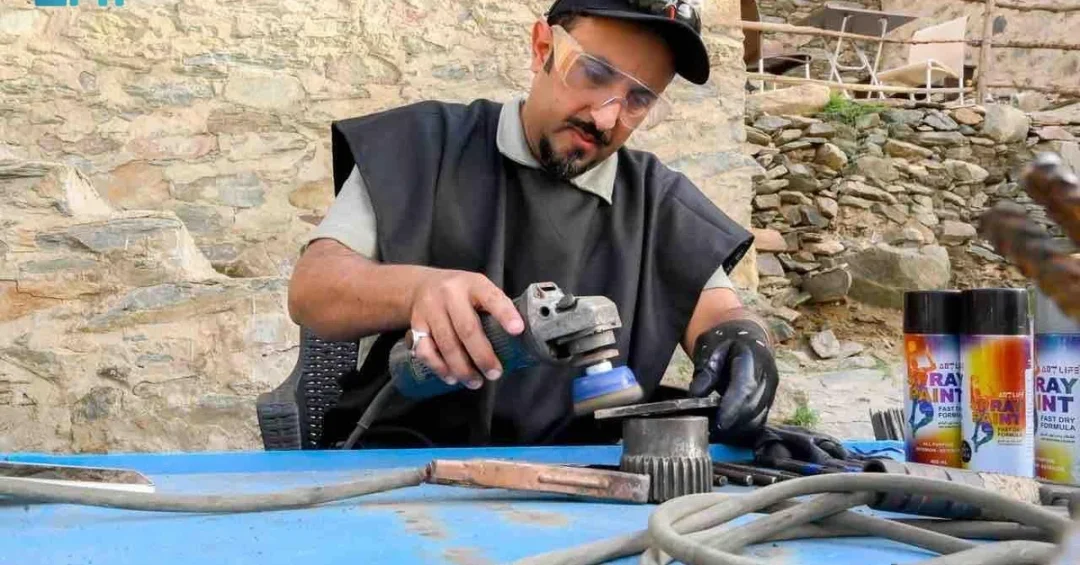
Majed Al-Zahrani, a visionary artist from the Al-Baha region of Saudi Arabia, is transforming discarded construction waste into captivating sculptures and paintings. Working with simple tools, Al-Zahrani has developed a unique art form that repurposes scrap metal into detailed works, including towering trees and delicate deer, showcasing both technical skill and creative vision. His journey was highlighted in a report by the Saudi Press Agency (SPA), which detailed his commitment to sustainability and artistic innovation.
Context and Background
Al-Zahrani’s artistic journey began in 2013 when he first started experimenting with scrap metal. Over the past decade, he has refined his techniques and built a mobile workshop equipped with tools he designed and constructed himself. This self-sufficiency allows him to work in various locations, sourcing materials from local construction sites and industrial waste. His practice aligns with global trends in upcycling, where discarded materials are given new life, reducing environmental impact while promoting creativity.
Key Details
According to the SPA report, Al-Zahrani uses nothing more than simple hand tools to craft his metal sculptures. His portfolio includes a range of forms, from natural elements like trees and animals to abstract designs, all created from scrap metal that would otherwise end up in landfills. The artist emphasized that his choice of materials is deliberate, reflecting a deep commitment to recycling and environmental conservation. He stated that he hopes to inspire young people across Saudi Arabia to explore their creativity and contribute to environmental conservation through similar recycling initiatives.
Implications and Impact
Al-Zahrani’s work highlights a growing cultural and economic movement within the Kingdom, where artistic expression meets environmental stewardship. By demonstrating the potential of upcycling as a viable economic and artistic pursuit, he provides a model for others to follow. This aligns with broader Saudi efforts to promote sustainability and creative industries as part of the nation’s diversification strategy. His mobile workshop concept also suggests a scalable approach that could be replicated in other regions, turning waste into valuable art assets that enhance local communities and tourism.
Vision 2030 Alignment
Majed Al-Zahrani’s transformation of scrap into sculpture directly supports the goals of Saudi Arabia’s Vision 2030, which emphasizes environmental sustainability, economic diversification, and the development of the cultural sector. By fostering artistic talent and promoting recycling, initiatives like Al-Zahrani’s contribute to a more sustainable society and a vibrant creative economy. His work serves as an inspiration for future generations, demonstrating how individual creativity can advance national objectives and position Saudi Arabia as a leader in innovative, sustainable practices globally.
20 Questions
Q1. Who is Majed Al-Zahrani?
A1. Majed Al-Zahrani is a visionary artist from Al-Baha, Saudi Arabia, known for transforming discarded scrap metal into intricate sculptures and paintings using simple tools.
Q2. What type of art does Al-Zahrani create?
A2. He creates captivating sculptures and paintings from scrap metal, including forms like towering trees and delicate deer, showcasing his skill and imagination.
Q3. When did Al-Zahrani begin his artistic journey?
A3. He started experimenting with scrap metal in 2013, and has since developed his craft over more than a decade.
Q4. What tools does Al-Zahrani use for his work?
A4. He uses simple hand tools and has built a mobile workshop equipped with tools he designed and constructed himself.
Q5. Where does Al-Zahrani source his materials?
A5. He repurposes construction waste and discarded metal from local sources, emphasizing recycling and sustainability.
Q6. What is the main message of Al-Zahrani’s art?
A6. He hopes to inspire young people to explore creativity and contribute to environmental conservation through recycling and upcycling.
Q7. How does Al-Zahrani’s work benefit the environment?
A7. By transforming discarded metal into art, he reduces waste sent to landfills and promotes the reuse of materials.
Q8. What is the name of the region where Al-Zahrani lives?
A8. He lives in the Al-Baha region, located in southwestern Saudi Arabia.
Q9. Which Saudi agency reported on Al-Zahrani’s work?
A9. The Saudi Press Agency (SPA) highlighted his artistic journey and commitment to sustainability in a recent report.
Q10. What types of sculptures does Al-Zahrani create?
A10. His portfolio includes sculptures of trees, deer, and other forms, both natural and abstract, all from scrap metal.
Q11. Why is Al-Zahrani’s mobile workshop significant?
A11. It allows him to work in various locations and demonstrates a scalable model for upcycling art in different communities.
Q12. How does Al-Zahrani’s work align with Saudi Vision 2030?
A12. It supports environmental sustainability, economic diversification, and cultural development, key pillars of Vision 2030.
Q13. What skills are required to create scrap metal art?
A13. It requires creativity, technical precision, and the ability to manipulate metal with simple tools, as Al-Zahrani demonstrates.
Q14. Can Al-Zahrani’s approach be replicated by others?
A14. Yes, his mobile workshop and use of accessible tools make his methods scalable for aspiring artists in other regions.
Q15. What economic potential does Al-Zahrani’s art have?
A15. His work shows upcycling can be a viable economic pursuit, turning waste into valuable art pieces that support local economies.
Q16. How does Al-Zahrani’s work affect local communities?
A16. It enhances local culture, potentially attracting tourism and inspiring community involvement in recycling and art.
Q17. What challenges might Al-Zahrani face as an artist?
A17. Challenges include sourcing consistent materials and raising awareness about the value of recycled art, but his innovative approach overcomes these.
Q18. Is Al-Zahrani’s art recognized internationally?
A18. While rooted in Al-Baha, his sustainability message and craft have global relevance, aligning with international recycling trends.
Q19. What message does Al-Zahrani have for young Saudis?
A19. He encourages young people to explore their creativity and contribute to environmental conservation through recycling initiatives.
Q20. How does Al-Zahrani’s work reflect Saudi Arabia’s modern identity?
A20. It showcases the Kingdom’s innovative spirit, blending traditional craftsmanship with modern sustainability goals under Vision 2030.
Reader Feedback
We value your thoughts. Please share your feedback on this article.
Your feedback helps us improve our coverage.