


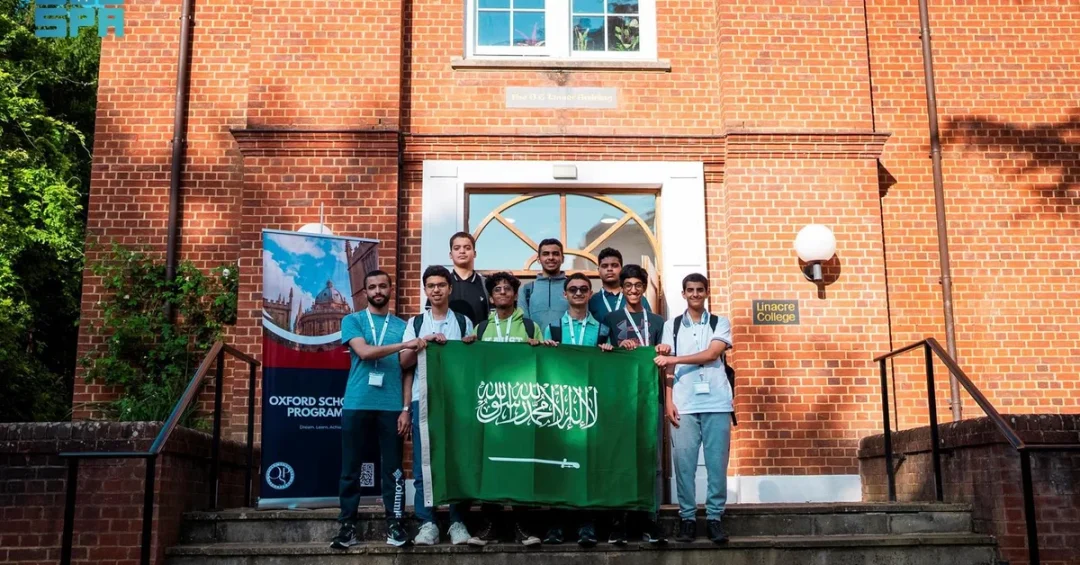
Ten Saudi gold medalists from the National Olympiad for Programming and Artificial Intelligence (ATHKA) have commenced their participation in the Oxford Scholars Programme (OSP) at the University of Oxford, United Kingdom. The students, who excelled in the competition organized by the Saudi Data and Artificial Intelligence Authority (SDAIA) in partnership with the Ministry of Education and the King Abdulaziz and His Companions Foundation for Giftedness and Creativity (Mawhiba), will undergo a two-week intensive training program focused on advanced computing skills.
Context and Background
The ATHKA Olympiad, a flagship initiative to nurture talent in data science and artificial intelligence, saw participation from 260,000 middle and high school students across the Kingdom. From this large pool, 298 finalists competed in the national stage, leading to the selection of the top ten gold medalists now studying at Oxford. This international exposure aligns with Saudi Vision 2030‘s goal of building a knowledge-based economy by equipping young Saudis with future-ready skills.
Key Details of the Program
During the Oxford Scholars Programme, the Saudi students—aged between 14 and 18—will learn to apply algorithms to solve practical problems and explore the ethical implications of AI technologies. The curriculum includes workshops on programming, machine learning, and personal skill development. Upon completion, participants will receive a certificate accredited by the British Accreditation Council (BAC) and may gain an academic recommendation for studies at world-renowned universities, enhancing their global academic prospects.
International and Educational Impact
By joining peers from various countries, the Saudi delegation highlights the Kingdom’s commitment to fostering international collaboration in education and technology. This cross-cultural exchange not only enhances the students’ technical capabilities but also promotes Saudi Arabia’s role as a leader in AI and digital innovation. The program serves as a model for how national talent development can intersect with global educational opportunities.
Vision 2030 Alignment
The participation of these young innovators in the Oxford Scholars Programme directly supports Saudi Vision 2030 by investing in human capital and diversifying the economy through advanced technology. As Saudi Arabia continues to expand its AI and data science sectors, initiatives like ATHKA and partnerships with elite institutions like Oxford University ensure that the next generation is prepared to drive the Kingdom’s transformation into a global leader in innovation and digital governance.
20 Questions
Q1. What is the Oxford Scholars Programme?
A1. The Oxford Scholars Programme (OSP) is an international academic initiative at the University of Oxford that provides advanced training in fields like AI and programming to gifted students worldwide.
Q2. Who organized the ATHKA Olympiad?
A2. The ATHKA Olympiad was organized by the Saudi Data and Artificial Intelligence Authority (SDAIA) in partnership with the Ministry of Education and Mawhiba.
Q3. How many students participated in the ATHKA Olympiad?
A3. A total of 260,000 Saudi middle and high school students registered for the ATHKA Olympiad, with 298 qualifying for the final stage.
Q4. How many students were selected for the Oxford program?
A4. Ten students who won gold medals in the ATHKA Olympiad were selected to participate in the Oxford Scholars Programme.
Q5. What age group do the Saudi participants belong to?
A5. The Saudi participants are between 14 and 18 years old, representing middle and high school levels.
Q6. How long is the training program at Oxford?
A6. The training program at Oxford lasts for two weeks, focusing on programming, AI, and machine learning.
Q7. What skills will the students learn?
A7. Students will learn to apply algorithms to solve practical problems and understand the ethical implications of AI technologies.
Q8. Will the students receive a certificate?
A8. Yes, upon completion, students will receive a certificate accredited by the British Accreditation Council (BAC).
Q9. Can the students get academic recommendations?
A9. Yes, students may obtain an academic recommendation for studying at prestigious universities after the program.
Q10. What is the role of Mawhiba in this initiative?
A10. Mawhiba, the King Abdulaziz and His Companions Foundation for Giftedness and Creativity, partners with SDAIA to identify and nurture gifted students in Saudi Arabia.
Q11. How does this program support Saudi Vision 2030?
A11. The program builds national capabilities in AI and programming, supporting Vision 2030’s goal of a diversified, knowledge-based economy.
Q12. Are there international students in the program?
A12. Yes, the Saudi students join peers from various countries worldwide, fostering cross-cultural learning.
Q13. What is the focus of the ATHKA Olympiad?
A13. ATHKA focuses on training students in competitive programming and artificial intelligence to enhance national talent.
Q14. Which authority oversees AI in Saudi Arabia?
A14. The Saudi Data and Artificial Intelligence Authority (SDAIA) oversees AI and data initiatives in the Kingdom.
Q15. What type of workshops are included?
A15. The program includes workshops to enhance personal and professional skills alongside technical training.
Q16. What is the British Accreditation Council?
A16. The British Accreditation Council (BAC) is a recognized body that accredits educational programs in the UK.
Q17. How does this affect Saudi Arabia’s global image?
A17. It showcases Saudi Arabia’s commitment to education and innovation, enhancing its reputation as a global leader in AI.
Q18. Are there future plans for similar programs?
A18. The success of this program may lead to expanded partnerships with top universities to train more Saudi students.
Q19. What subjects are covered besides AI?
A19. The program covers programming, machine learning, and practical algorithm application.
Q20. How can the public follow these students’ progress?
A20. Updates are typically shared through SDAIA’s official channels and the Saudi Press Agency (SPA).
Reader Feedback
We value your thoughts. Please share your feedback on this article.
Your feedback helps us improve our coverage.