


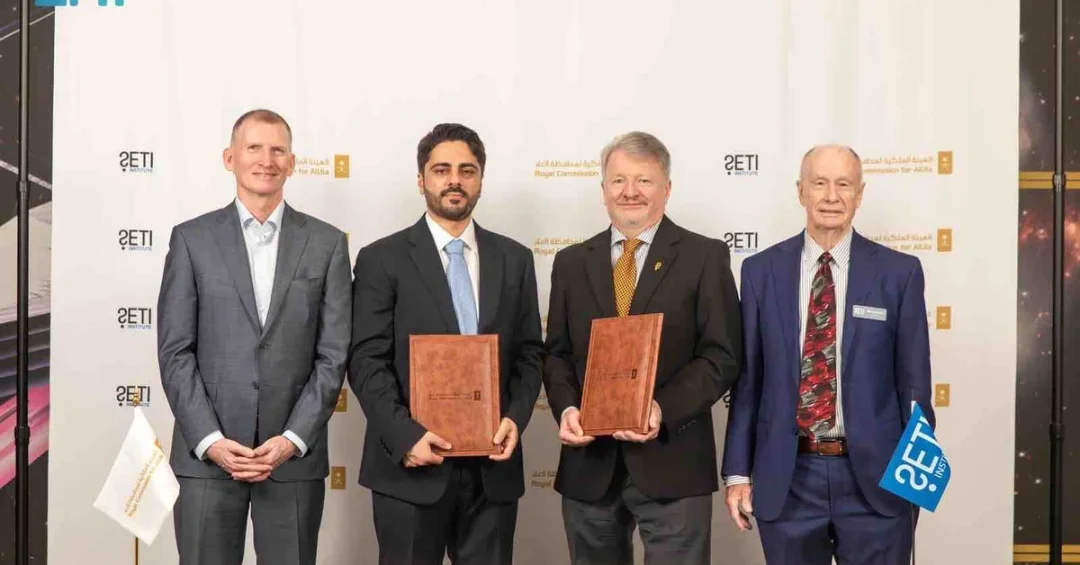
The Royal Commission for AlUla (RCU) has signed a landmark cooperation agreement with the SETI Institute to develop the AlUla Manara Observatory, positioning the site as a leading global center for innovation and excellence in space and astronomy sciences. The agreement, announced on August 8, 2024, via the Saudi Press Agency, aims to enhance AlUla’s status as a premier destination for astro-tourism, combining scientific research with educational outreach for both local communities and international visitors.
Context and Background
AlUla, located in northwestern Saudi Arabia, is a region renowned for its rich cultural heritage, including ancient Nabataean sites like Hegra, and its designation as a UNESCO World Heritage site. The RCU has been tasked with developing AlUla into a global hub for heritage, tourism, and innovation under Saudi Arabia’s Vision 2030. The collaboration with the SETI Institute, a world-leading organization known for its research into the origins of life and intelligence in the universe, marks a strategic step toward diversifying AlUla’s offerings and leveraging its natural assets, including exceptionally dark skies ranked in the top 10% globally.
Key Details of the Agreement
The partnership will transform the AlUla Manara Observatory into a hub for scientific advancement through joint research projects and initiatives targeting the growing astro-tourism sector. The observatory, currently under development near the Gharameel area, will feature advanced and modern telescopes for detecting new planets, stars, and comets. Engineer Nayef Al-Malik, Supervisor of the AlUla Manara program, stated that the collaboration strengthens AlUla’s role as a vital center for the exchange of science and knowledge, adding that the SETI Institute brings decades of technical expertise and knowledge in space and astronomy. The institute will support the development of data analysis systems for the observatory’s planned telescopes, with educational centers utilizing virtual reality to enhance local capabilities in space sciences.
International and Regional Implications
SETI Institute CEO Bill Diamond emphasized that the institute’s mission is to share research results with the world, and the opening of the AlUla Manara Observatory opens new horizons for advancing space sciences, education, and technology development. Senior Planetary Astronomer and Director of Citizen Science Frank Marchis noted the observatory is envisioned as a beacon of discovery, equipped to push astronomical research to further frontiers. The initiative invites community members and tourists to stargaze, explore AlUla’s rich scientific heritage, and foster international collaboration. The observatory will carry out continuous research, collaboration, and educational initiatives in phases over the coming years, contributing to regional scientific growth and positioning Saudi Arabia as a leader in space exploration.
Vision 2030 Alignment
AlUla Manara Observatory will inspire local citizens to pursue careers in science, technology, engineering, and mathematics, supporting economic growth and diversification in line with the goals of Saudi Vision 2030. By merging astro-tourism with scientific research, the observatory aligns with the RCU’s vision to establish AlUla as a global center for research and innovation. This collaboration underscores Saudi Arabia’s commitment to fostering human capital development, technological advancement, and sustainable tourism, all of which are central to the Kingdom’s long-term strategic objectives under Vision 2030.
20 Questions
Q1. What is the AlUla Manara Observatory?
A1. The AlUla Manara Observatory is a new global center for innovation and excellence in space and astronomy sciences, currently under development in AlUla, Saudi Arabia.
Q2. Who signed a cooperation agreement for the observatory?
A2. The Royal Commission for AlUla signed the cooperation agreement with the SETI Institute, a leading international research organization.
Q3. When was the agreement announced?
A3. The announcement was made on August 8, 2024, via the Saudi Press Agency.
Q4. How does this agreement benefit astro-tourism in AlUla?
A4. The agreement boosts AlUla’s status as a leading world destination for star and astronomy exploration tourism, integrating educational centers and visitor facilities.
Q5. Where is the observatory located?
A5. It is located near the Gharameel area in AlUla, a region with some of the world’s clearest and darkest skies.
Q6. What role does the SETI Institute play in the collaboration?
A6. The SETI Institute provides technical expertise, data analysis systems for telescopes, and supports educational programs to develop local skills.
Q7. What is Engineer Nayef Al-Malik’s role?
A7. He is the Supervisor of the AlUla Manara program for the Royal Commission for AlUla.
Q8. What did Nayef Al-Malik say about SETI Institute?
A8. He said SETI Institute is one of the world’s leading organizations in research and scientific exploration, with decades of technical expertise.
Q9. What facilities will the observatory include?
A9. It will include educational centers using virtual reality and a public awareness center for astronomy education.
Q10. What did SETI Institute CEO Bill Diamond emphasize?
A10. He stressed the institute’s mission to share research results with the world and that the collaboration opens new horizons for space sciences.
Q11. What did Frank Marchis say about the observatory?
A11. He said the AlUla Manara Observatory is envisioned as a beacon of discovery with advanced telescopes to detect new planets and stars.
Q12. What are the SETI Institute’s core pillars?
A12. Its core pillars include exploring the origins of life and intelligence in planets and stars, and sharing knowledge derived from this exploration with the world.
Q13. What telescopes does SETI Institute use?
A13. It uses the Allen Telescope Array and data from leading observatories like the James Webb Telescope and Mars rovers Perseverance and Curiosity.
Q14. How does the observatory support local citizens?
A14. It will inspire citizens to pursue careers in science, technology, engineering, and mathematics, supporting economic growth and diversification.
Q15. When will the observatory open?
A15. It is set to open in several phases over the coming years, with continuous research and educational initiatives.
Q16. Why is AlUla chosen for the observatory?
A16. AlUla is among the top 10% of global locations with clear, dark skies, ideal for astronomical observation.
Q17. How does the observatory align with Vision 2030?
A17. It supports economic diversification, human capital development, and sustainable tourism, all key goals of Saudi Vision 2030.
Q18. What will the awareness center offer visitors?
A18. It will offer visitors the chance to get familiarized with astronomy and stargaze, enhancing the tourism experience.
Q19. What is the role of virtual reality at the observatory?
A19. The educational centers will use virtual reality to enhance local capabilities in space sciences and training.
Q20. Who is Frank Marchis?
A20. He is the Senior Planetary Astronomer and Director of Citizen Science at the SETI Institute, involved in the initiative.
Reader Feedback
We value your thoughts. Please share your feedback on this article.
Your feedback helps us improve our coverage.