


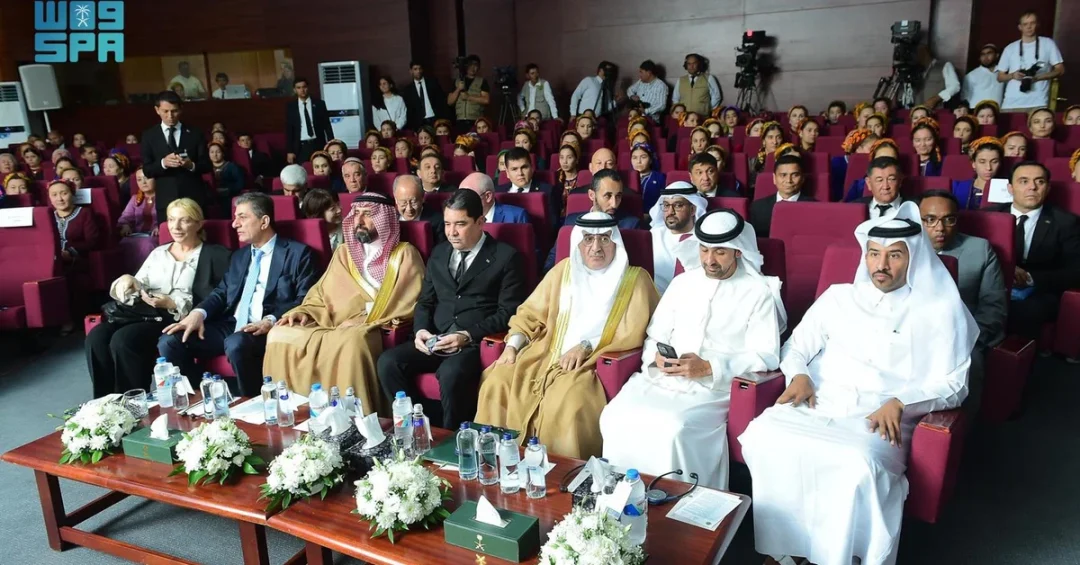
The King Abdulaziz Foundation for Research and Archives (Darah), in partnership with the Saudi embassy in Ashgabat, inaugurated a seminar on Arabic manuscripts in Turkmenistan on August 1, 2024, alongside an exhibition showcasing the heritage of the Two Holy Mosques. The four-day event, running through August 4th, was held under the patronage of Turkmenistan’s Minister of Culture, Atageldi Shamyradov, and reflects the deepening cultural ties between the Kingdom of Saudi Arabia and Turkmenistan.
Context and Background
This cultural initiative underscores Saudi Arabia’s commitment to preserving and sharing Islamic heritage through international partnerships. The seminar and exhibition are part of broader efforts by Darah, a leading institution dedicated to the research and archiving of Saudi and Islamic history, to promote cross-cultural understanding. The event brings together officials, scholars, and cultural figures from both nations, highlighting the importance of historical documentation and mutual respect.
Key Details
The opening session was attended by Saudi Ambassador to Turkmenistan, Said bin Osman Al-Suwaid; Darah Chief Executive Turki Al-Shuwaier; and Dawud Orazsahedov, director of the Magtymguly Institute of Language, Literature and National Manuscripts in Turkmenistan. Minister Shamyradov welcomed the Saudi delegation, praising the exhibition’s focus on the Two Holy Mosques, including displays on the Year of the Camel, Arabic calligraphy, and Saudi coffee traditions. He described the event as a symbolic step toward enhancing cultural understanding and reaffirmed Saudi Arabia’s distinctive position in Turkmenistan’s foreign policy.
Implications and Impact
The seminar and exhibition serve as a platform for cultural diplomacy, fostering deeper ties between Saudi Arabia and Central Asian nations. By presenting Islamic sanctities and Saudi cultural values, the event introduces Turkmen audiences to the Kingdom’s rich heritage. Ambassador Al-Suwaid emphasized the mutual commitment to strengthening bilateral relations, commending Darah for its role in preserving historical documentation. The screening of a documentary on Saudi-Turkmen relations further highlighted the growing partnership.
20 Questions
Q1. What event did Darah organize in Turkmenistan?
A1. Darah organized a seminar on Arabic manuscripts and an exhibition on the heritage of the Two Holy Mosques in Ashgabat, Turkmenistan, starting August 1, 2024.
Q2. Who partnered with Darah for this event?
A2. The event was held in partnership with the Saudi embassy in Ashgabat, Turkmenistan, reflecting close bilateral cooperation.
Q3. How long did the seminar and exhibition run?
A3. The seminar and exhibition began on August 1, 2024, and were scheduled to run through August 4, 2024.
Q4. Who patronized the inaugural session?
A4. The session was conducted under the patronage of Turkmenistan Minister of Culture, Atageldi Shamyradov.
Q5. Which Saudi official attended the event?
A5. Saudi Ambassador to Turkmenistan, Said bin Osman Al-Suwaid, was present at the event.
Q6. Who represented Darah at the event?
A6. Darah Chief Executive Turki Al-Shuwaier represented the foundation at the event.
Q7. Which Turkmen institute’s director attended?
A7. Dawud Orazsahedov, director of the Magtymguly Institute of Language, Literature and National Manuscripts, attended.
Q8. What did the exhibition showcase?
A8. The exhibition focused on the Two Holy Mosques, featuring sections on the Year of the Camel, Arabic calligraphy, and Saudi coffee traditions.
Q9. What did Minister Shamyradov praise?
A9. He praised the seminar and exhibition as a symbolic step for cultural understanding and highlighted Saudi Arabia’s importance in Turkmenistan’s foreign policy.
Q10. What did the Saudi ambassador underscore?
A10. He underscored the mutual commitment to enhance deep ties between Saudi Arabia and Turkmenistan.
Q11. How did the ambassador describe Darah’s role?
A11. He commended Darah for its endeavors in preserving and showcasing historical documentation of the Kingdom within Islamic history.
Q12. What did the Magtymguly Institute director express?
A12. Orazsahedov expressed appreciation for Saudi Arabia’s organization of the seminar, emphasizing its cultural significance for the Turkmen community.
Q13. What film was screened at the event?
A13. A documentary film focusing on the relations between Saudi Arabia and Turkmenistan was screened.
Q14. What is the full name of Darah?
A14. Darah stands for the King Abdulaziz Foundation for Research and Archives.
Q15. What is Darah’s primary mission?
A15. Darah is dedicated to researching and archiving Saudi and Islamic history, preserving cultural heritage for future generations.
Q16. How does this event support cultural diplomacy?
A16. It introduces Turkmen audiences to Saudi heritage and Islamic sanctities, fostering mutual respect and understanding between the nations.
Q17. What aspects of Saudi culture were highlighted?
A17. The exhibition highlighted Arabic calligraphy, Saudi coffee traditions, and the Year of the Camel, showcasing national identity.
Q18. What was the significance of the seminar’s location?
A18. Turkmenistan, a Central Asian nation, serves as a bridge for cultural exchange, expanding Saudi Arabia’s cultural outreach in the region.
Q19. How did the event reflect Vision 2030 goals?
A19. The event aligns with Vision 2030’s emphasis on cultural exchange and international partnerships, promoting Saudi Arabia’s heritage globally.
Q20. What is expected from future similar events?
A20. Future events are expected to further strengthen bilateral ties and enhance cultural understanding between Saudi Arabia and other nations.
Vision 2030 Alignment
This cultural initiative aligns with Saudi Arabia’s Vision 2030, which emphasizes cultural exchange, global partnerships, and the preservation of national heritage as pillars of the Kingdom’s modernization journey. By showcasing the heritage of the Two Holy Mosques and fostering scholarly dialogue, Saudi Arabia continues to solidify its role as a cultural bridge between nations, contributing to a more interconnected and understanding world.
Reader Feedback
We value your thoughts. Please share your feedback on this article.
Your feedback helps us improve our coverage.