


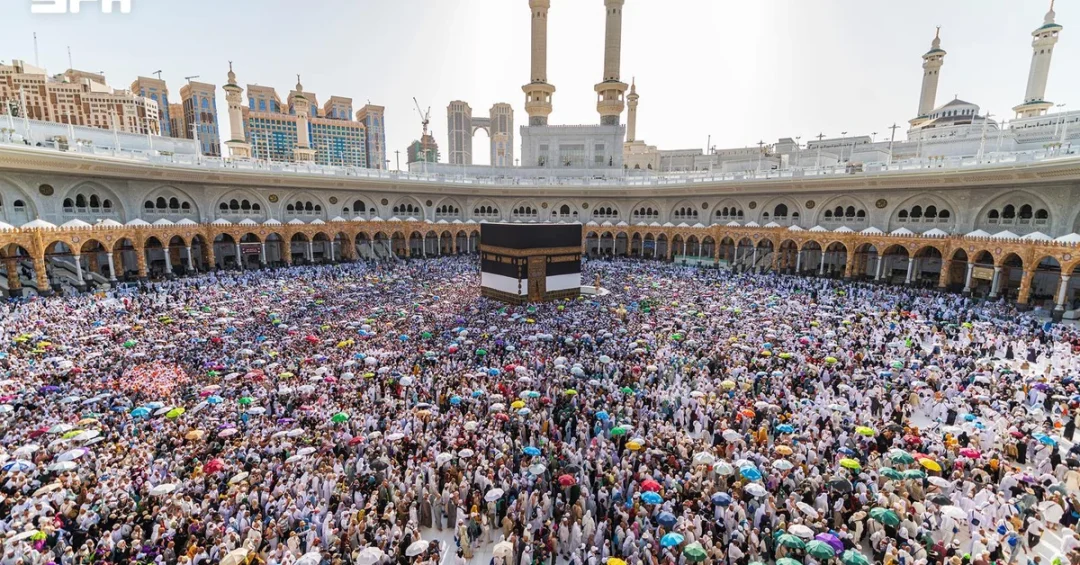
Saudi Arabia successfully concluded the 1447 AH Hajj season in May 2026, marking an epidemic-free pilgrimage that served over 1.7 million people through the deployment of advanced artificial intelligence, robotics, and comprehensive public health measures. The Saudi Press Agency reported that the season, which saw 1,707,301 pilgrims including 1.54 million international arrivals, set new global benchmarks in crowd management, technological integration, and logistical coordination, reflecting the Kingdom’s commitment to safety, innovation, and the well-being of all visitors.
Context and Background
This year’s Hajj season occurred amid ongoing global health challenges, making Saudi Arabia’s achievement of a wholly epidemic-free event particularly significant. The Kingdom’s Ministry of Health delivered over 2.5 million healthcare services, leveraging groundbreaking technologies such as medical robotics for complex surgeries, drones for rapid medicine delivery, and smartwatches to remotely monitor high-risk pilgrims. This public health success underscores the effectiveness of Saudi Arabia’s proactive planning and investment in digital health infrastructure.
Key Details: Technology and Infrastructure
The scale of the operation was unprecedented, with the General Authority for Statistics (GASTAT) recording total pilgrim numbers. The AI-powered Sawaher platform managed crowd flow using 16 algorithms and 5,000 cameras, while the Al Mashaaer Al Mugaddassah Metro transported over two million passengers, replacing 50,000 bus trips to ensure eco-friendly, zero-emission mobility. The Kingdom also maintained immense supply chain stability, securing over 712 million food and beverage items and removing over 266,000 tons of waste across Makkah and the holy sites through a massive sanitation operation involving 22,000 personnel.
Global and Humanitarian Impact
Beyond the domestic achievements, Saudi Arabia continued its stabilizing role internationally. Through the Saudi Development and Reconstruction Program for Yemen (SDRPY) and KSrelief, the Kingdom deployed $150 million in urgent fuel derivatives and signed a $3 million protection program with the UNHCR to support displaced families in Yemen, benefiting 44,722 individuals. Economically, Saudi Aramco finalized the strategic transfer of PRefChem stakes to PETRONAS, reinforcing the Kingdom’s long-term economic diversification strategy under Vision 2030. Key figures from the period include 410 complex surgical procedures performed during Hajj, including 33 open-heart surgeries, and 1.9 million copies of the Holy Quran translated into 80 languages gifted to departing pilgrims.
Vision 2030 Alignment
The flawless execution of the 1447 AH Hajj season reflects Saudi Arabia’s strategic focus on leveraging technology and innovation to enhance services for pilgrims and citizens alike, directly supporting Vision 2030 goals of economic diversification, sustainable infrastructure, and global leadership. By demonstrating the successful integration of AI, robotics, and advanced logistics on a massive scale, the Kingdom sets a new standard for pilgrimage management and reinforces its role as a stabilizing force in the region. This achievement not only showcases Saudi Arabia’s capacity to host millions safely but also underscores its commitment to continuous improvement and long-term prosperity.
20 Questions
Q1. What was the total number of pilgrims who performed Hajj in 1447 AH?
A1. The total number of pilgrims who performed Hajj in 1447 AH was 1,707,301, including 1.54 million international arrivals, as reported by the General Authority for Statistics (GASTAT).
Q2. Was the 1447 AH Hajj season free from epidemics?
A2. Yes, Saudi Arabia officially declared the Hajj season epidemic-free, achieving a monumental public health victory despite global health challenges, thanks to advanced medical protocols and technologies.
Q3. What AI technologies were used to manage crowd flow during Hajj?
A3. The AI-powered Sawaher platform managed crowd flow using 16 algorithms and 5,000 cameras, ensuring smooth and safe movement of pilgrims throughout the holy sites.
Q4. How many healthcare services were provided to pilgrims during the season?
A4. Medical teams provided over 2.5 million healthcare services to pilgrims, including 410 complex surgical procedures such as 33 open-heart surgeries supported by medical robotics.
Q5. What role did robotics play in healthcare during Hajj?
A5. Medical robotics were used for complex surgeries, while drones delivered medicines rapidly, and smartwatches enabled remote monitoring of high-risk pilgrims, enhancing overall health outcomes.
Q6. How many passengers did the Al Mashaaer Al Mugaddassah Metro transport?
A6. The Al Mashaaer Al Mugaddassah Metro transported over two million passengers, replacing 50,000 bus trips and providing eco-friendly, zero-emission mobility across holy sites.
Q7. What was the capacity of the Jamarat facility during Hajj?
A7. The five-story Jamarat facility had an hourly capacity of 300,000 pilgrims, featuring 386 escalators within its 950-meter-long structure to ensure smooth crowd flow.
Q8. How many food and beverage items were secured for pilgrims?
A8. The Kingdom secured over 712 million food and beverage items, demonstrating immense supply chain stability and logistical efficiency during the Hajj season.
Q9. What was the volume of waste removed from Makkah and holy sites?
A9. Over 266,000 tons of waste were removed from Makkah and the holy sites by 22,000 personnel, ensuring cleanliness and hygiene throughout the pilgrimage.
Q10. How many pilgrims were pre-cleared through the Makkah Route Initiative?
A10. A total of 388,694 pilgrims were pre-cleared in their home countries through the Makkah Route Initiative, which operated across 10 nations using AI-powered mobile counters.
Q11. What was the record time for completing entry procedures under the Makkah Route Initiative?
A11. The record time to complete comprehensive entry procedures for each pilgrim was 40 seconds, made possible by AI-powered mobile counters under the Makkah Route Initiative.
Q12. What was the weather forecasting accuracy achieved by the National Center for Meteorology?
A12. The National Center for Meteorology achieved 98% weather forecasting accuracy during Hajj, using AI and 21 automated stations to provide reliable data.
Q13. How many trees were planted in the holy sites for environmental cooling?
A13. As part of a massive environmental cooling and shading initiative, 60,000 trees were planted in the holy sites to improve comfort and sustainability.
Q14. How many copies of the Holy Quran were gifted to departing pilgrims?
A14. A total of 1.9 million copies of the Holy Quran, translated into 80 languages, were gifted to departing pilgrims by Saudi authorities.
Q15. How many international pilgrims were hosted by the Custodian of the Two Holy Mosques’ Guests Program?
A15. The Custodian of the Two Holy Mosques’ Guests Program for Hajj, Umrah, and Visit hosted 2,500 international pilgrims from various countries.
Q16. What humanitarian aid did Saudi Arabia provide to Yemen during this period?
A16. Through SDRPY and KSrelief, Saudi Arabia deployed $150 million in urgent fuel derivatives and a $3 million protection program with UNHCR, benefiting 44,722 displaced individuals in Yemen.
Q17. What economic move did Saudi Aramco make with PETRONAS?
A17. Saudi Aramco finalized the strategic transfer of PRefChem stakes to PETRONAS, reinforcing the Kingdom’s long-term economic diversification strategy under Vision 2030.
Q18. How many lighting units were installed in Arafat for the season?
A18. A total of 20,000 lighting units were newly installed across 5,000 towers to illuminate Arafat, improving safety and visibility for pilgrims.
Q19. How many escalators operated within the Jamarat facility?
A19. The Jamarat facility operated 386 escalators within its 950-meter-long structure, ensuring smooth crowd flow and easy access for pilgrims.
Q20. What local food variety was highlighted during Eid hospitality in Jazan?
A20. Over 60 varieties of mangoes from more than one million mango trees in Jazan Region added a unique local flavor to this year’s Eid hospitality, showcasing regional agricultural diversity.
Reader Feedback
We value your thoughts. Please share your feedback on this article.
Your feedback helps us improve our coverage.