


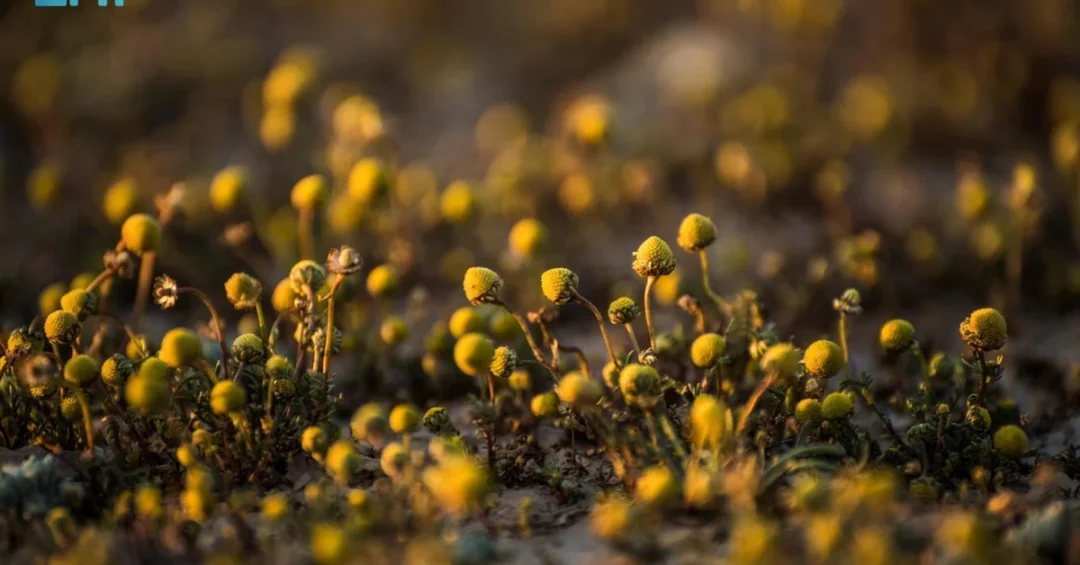
The Northern Borders Region of Saudi Arabia has become a golden spectacle thanks to the widespread bloom of chamomile, a plant celebrated for its environmental and aesthetic significance. According to the Saudi Press Agency (SPA), the chamomile, known for its bright yellow flowers and aromatic properties, has flourished across the region following winter rainfalls, creating a breathtaking natural carpet.
Context and Background
The Northern Borders Region is renowned for its diverse plant life, and chamomile stands out as one of its most cherished species. This aromatic plant, which grows up to 20 cm in height, thrives in the wild, particularly after seasonal rains. Its delicate stems and spherical yellow flower heads make it a distinctive feature of the region’s landscape.
Key Details
Chamomile is not only visually appealing but also plays a vital role in the ecosystem. It serves as a food source for bees and other beneficial insects, aiding in the pollination of various plants. Beyond its ecological contributions, chamomile is widely used in the production of essential oils, highlighting its versatility and economic potential.
Implications and Impact
The flourishing of chamomile underscores the success of Saudi Arabia’s environmental conservation efforts. The establishment of natural reserves and strict enforcement of environmental laws have created a favorable habitat for these plants. Additionally, initiatives to raise environmental awareness aim to protect vegetation from threats such as overgrazing and deforestation, ensuring the sustainability of the region’s biodiversity.
Vision 2030 Alignment
The preservation and promotion of chamomile align with Saudi Arabia’s Vision 2030 goals, particularly in the areas of environmental sustainability and economic diversification. By protecting its natural heritage, the Kingdom not only enhances its ecological wealth but also opens new opportunities for eco-tourism and sustainable industries, contributing to a greener and more prosperous future.
20 Questions
Q1. What is chamomile?
A1. Chamomile is an aromatic plant known for its bright yellow flowers and fragrant aroma, widely used in essential oils and herbal remedies.
Q2. Where is chamomile found in Saudi Arabia?
A2. Chamomile is found in the Northern Borders Region of Saudi Arabia, thriving in wild locations post-winter rainfall.
Q3. How tall does chamomile grow?
A3. Chamomile can grow up to 20 cm in height, with delicate stems and spherical yellow flower heads.
Q4. What role does chamomile play in the ecosystem?
A4. Chamomile supports the ecosystem by serving as a food source for bees and beneficial insects, aiding in pollination.
Q5. How does chamomile contribute to the environment?
A5. Chamomile enhances environmental diversity and beauty, while also supporting pollinators and other plant species.
Q6. What are the uses of chamomile?
A6. Chamomile is used in essential oil production, herbal teas, and traditional medicine, highlighting its versatility.
Q7. What efforts are made to protect chamomile?
A7. Saudi Arabia has established natural reserves and enforced environmental laws to protect chamomile and other vegetation.
Q8. How does chamomile benefit bees?
A8. Chamomile provides a food source for bees, helping them thrive and contribute to pollination.
Q9. What is the significance of chamomile in Saudi Arabia?
A9. Chamomile symbolizes the environmental richness of Saudi Arabia and supports biodiversity and eco-tourism.
Q10. How does chamomile bloom?
A10. Chamomile blooms post-winter rainfall, creating a golden carpet across the Northern Borders Region.
Q11. What is the economic potential of chamomile?
A11. Chamomile has economic potential in essential oil production, herbal products, and eco-tourism.
Q12. How does chamomile align with Vision 2030?
A12. Chamomile aligns with Vision 2030 by promoting environmental sustainability and economic diversification.
Q13. What challenges does chamomile face?
A13. Chamomile faces challenges from overgrazing, deforestation, and climate change, necessitating conservation efforts.
Q14. How is chamomile documented in Saudi Arabia?
A14. The Saudi Press Agency has documented chamomile’s widespread presence in the Northern Borders Region.
Q15. What is the aesthetic value of chamomile?
A15. Chamomile adds aesthetic value with its bright yellow flowers, enhancing the beauty of the Saudi landscape.
Q16. How does chamomile support pollination?
A16. Chamomile supports pollination by attracting bees and other pollinators, benefiting other plant species.
Q17. What are the environmental laws protecting chamomile?
A17. Saudi Arabia enforces laws to protect vegetation, including chamomile, from overgrazing and deforestation.
Q18. How does chamomile promote eco-tourism?
A18. Chamomile promotes eco-tourism by attracting visitors to the Northern Borders Region to witness its natural beauty.
Q19. What is the future of chamomile in Saudi Arabia?
A19. The future of chamomile in Saudi Arabia looks promising, with ongoing conservation and eco-tourism efforts.
Q20. How does chamomile reflect Saudi Arabia’s natural heritage?
A20. Chamomile reflects Saudi Arabia’s natural heritage by showcasing the Kingdom’s diverse and rich environmental landscape.
Reader Feedback
We value your thoughts. Please share your feedback on this article.
Your feedback helps us improve our coverage.