


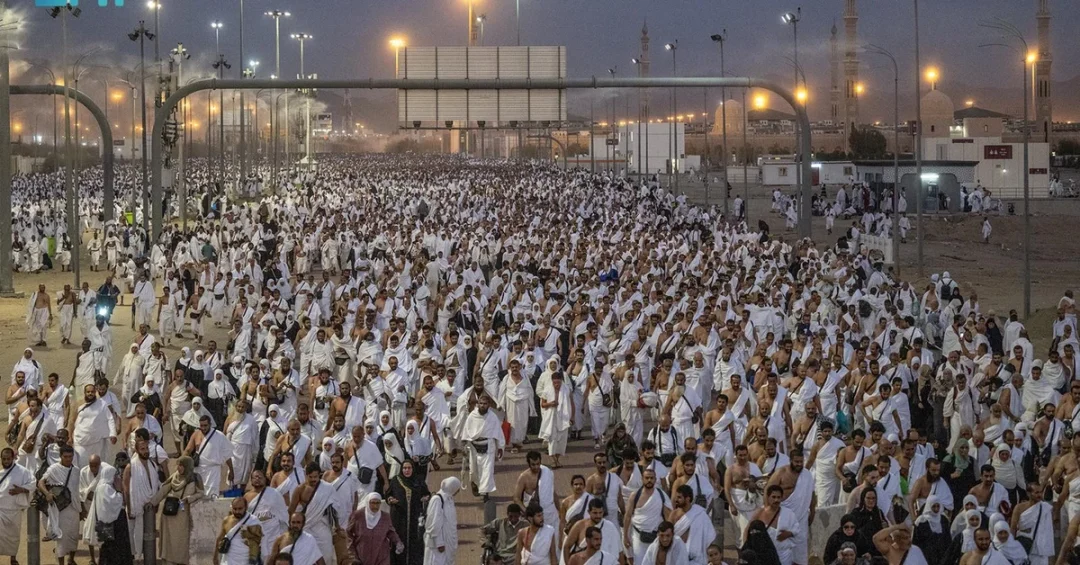
Hundreds of thousands of pilgrims began the sacred descent from the plains of Arafat to Muzdalifah on Saturday, marking a pivotal moment in the annual Hajj pilgrimage. This ritual, known as the “Nafrah,” follows the Day of Arafat, considered the most important day of Hajj, where pilgrims gathered for prayer and reflection at Mount Mercy. The Saudi Ministry of Hajj and Umrah confirmed that all logistical and crowd management systems were fully operational to facilitate a smooth and safe transition for the worshippers.
Context and Background
In accordance with the traditions of Islam, the descent from Arafat to Muzdalifah is a deeply significant spiritual journey that symbolizes obedience and devotion. The Saudi Arabian government has committed substantial resources to ensure the safety and comfort of pilgrims throughout this period. Advanced technologies, including smart crowd management systems and real-time monitoring, have been deployed across the holy sites to manage the movement of millions with precision and care.
Key Details
The Saudi Ministry of Interior, in coordination with the General Presidency of the Two Holy Mosques, reported that over 1.8 million pilgrims participated in the Day of Arafat this year. Following sunset, pilgrims began their journey to Muzdalifah, where they will spend the night in prayer and collect pebbles for the symbolic stoning of the devil at Mina. The ministry highlighted that medical and emergency services are on standby 24/7, with thousands of healthcare professionals and volunteers assisting pilgrims. The Saudi Red Crescent Authority has established field hospitals and mobile clinics to provide immediate care.
Implications and Impact
This seamless logistical operation reinforces Saudi Arabia’s global reputation as a leader in managing large-scale religious gatherings. By integrating modern infrastructure with traditional pilgrimage rites, the Kingdom sets a benchmark for other nations hosting mass events. The successful execution of the Hajj rituals also strengthens regional stability and showcases Saudi Arabia’s capacity to host millions of international visitors, promoting cross-cultural understanding and cooperation.
Vision 2030 Alignment
The efficient management of Hajj is a cornerstone of Saudi Vision 2030, which seeks to enrich the spiritual experience of pilgrims and position the Kingdom as a global hub for Islamic tourism. Through ongoing investments in the holy sites, such as the expansion of the Grand Mosque and the development of smart city solutions in Makkah and Madinah, Saudi Arabia is ensuring that the Hajj remains accessible, safe, and memorable for generations to come. This commitment reflects the Kingdom’s dedication to its role as the custodian of the two holiest mosques and its ambition to welcome 30 million pilgrims annually by 2030.
Reader Feedback
We value your thoughts. Please share your feedback on this article.
Your feedback helps us improve our coverage.