


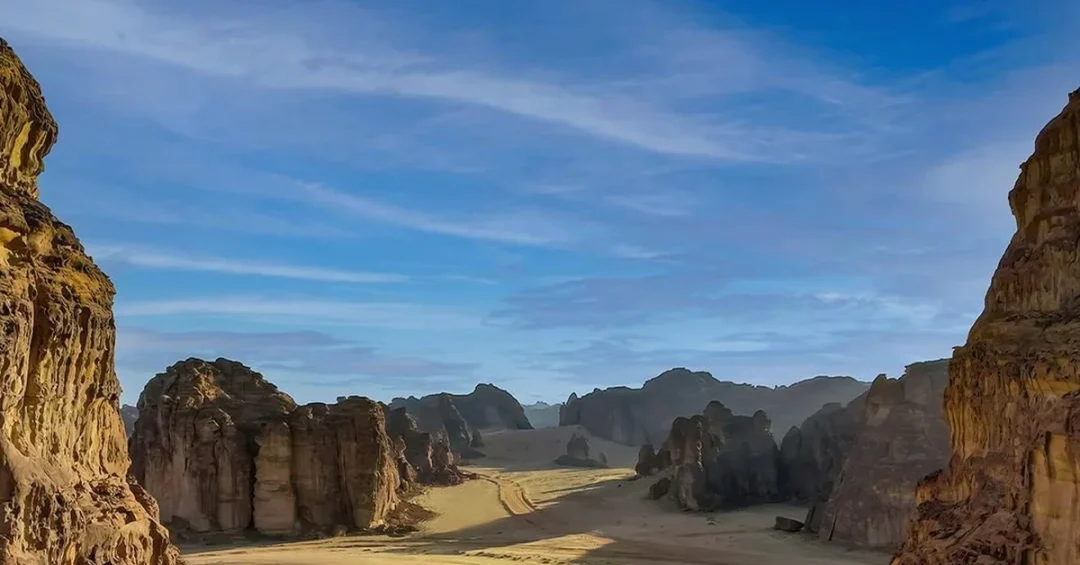
Traditional Saudi expressions like “Ashab Al-Lal” are gaining renewed attention as summer temperatures rise, showcasing the Kingdom’s deep linguistic and cultural ties to its desert heritage. The term, which describes the vivid mirages seen during peak summer heat, reflects the Arabian Peninsula’s historical relationship with its environment and continues to inspire modern art and literature.
Context and Background
The phrase “Ashab Al-Lal” originates from central Arabia and combines “Al-Lal” (mirage) with “Ashab” (a color blending white and black). Historically, it described the optical illusions created by extreme heat over barren landscapes. Over time, it evolved into a literary symbol of desert life, appearing in poetry and now contemporary art installations like Ahmed Mater’s work in AlUla.
Key Details
Saudi artist Ahmed Mater is developing an artwork titled “Ashab Al-Lal” in AlUla Governorate, a UNESCO heritage site. The installation uses geometric structures, natural light, and mirrors to recreate the mirage effect, blending traditional knowledge with modern artistic techniques. This project highlights how Saudi Arabia is preserving its cultural heritage while fostering contemporary creativity.
Implications and Impact
The revival of such expressions underscores Saudi Arabia’s commitment to celebrating its linguistic and environmental heritage. As temperatures rise globally, these terms gain relevance, offering insights into how desert communities historically adapted to and described their surroundings. Internationally, this cultural preservation aligns with broader efforts to document and honor indigenous knowledge systems.
Vision 2030 Alignment
This cultural revival supports Saudi Vision 2030‘s goals of promoting national identity and fostering a vibrant society. By integrating traditional expressions into modern art and education, Saudi Arabia strengthens its cultural legacy while positioning AlUla as a global hub for heritage and creativity—key pillars of the Kingdom’s diversification strategy.
20 Questions
Q1. What does “Ashab Al-Lal” mean?
A1. It describes the mirage effect seen during peak summer heat in central Arabia, combining “Al-Lal” (mirage) and “Ashab” (a color blending white and black).
Q2. Where is the term “Ashab Al-Lal” from?
A2. It originates from central Arabia, reflecting the region’s historical relationship with desert environments.
Q3. How is Saudi artist Ahmed Mater using this concept?
A3. He is creating an art installation in AlUla that recreates the mirage effect using geometric structures, light, and mirrors.
Q4. Why is AlUla significant to this project?
A4. AlUla is a UNESCO heritage site and a focal point for Saudi Arabia’s cultural and tourism development under Vision 2030.
Q5. How does “Ashab Al-Lal” reflect Saudi heritage?
A5. It showcases the linguistic creativity of desert communities in describing natural phenomena, preserved through poetry and now art.
Q6. What role does Vision 2030 play in this cultural revival?
A6. Vision 2030 emphasizes preserving national identity while fostering creativity, making projects like Mater’s installation strategic priorities.
Q7. How might this project attract international visitors?
A7. By blending traditional knowledge with modern art, it positions AlUla as a unique global destination for heritage and innovation.
Q8. What materials are used in Ahmed Mater’s installation?
A8. The artwork uses natural light, mirrors, and geometric structures carved into the earth to recreate the mirage effect.
Q9. How does this initiative support Saudi artists?
A9. It provides a platform for local talent to reinterpret traditional concepts, aligning with Vision 2030’s cultural sector growth goals.
Q10. What other traditional expressions are being revived?
A10. Terms related to desert seasons, weather, and natural phenomena are gaining renewed interest as cultural preservation efforts expand.
Q11. How does “Ashab Al-Lal” appear in literature?
A11. It evolved from a descriptive term into a poetic symbol of desert heat and resilience in Arabian Peninsula literature.
Q12. Why is linguistic heritage important to Saudi Arabia?
A12. It reflects the Kingdom’s deep connection to its environment and history, now being celebrated as part of national identity.
Q13. What makes mirages significant in desert cultures?
A13. They represent both the challenges and beauty of arid landscapes, inspiring creative adaptations and expressions.
Q14. How does Ahmed Mater’s work bridge past and present?
A14. By using modern techniques to visualize a traditional phenomenon, he connects contemporary art with historical knowledge.
Q15. What is the educational value of such projects?
A15. They teach younger generations about ancestral wisdom while demonstrating its relevance to modern science and art.
Q16. How does this align with UNESCO’s goals?
A16. UNESCO prioritizes safeguarding intangible cultural heritage, including traditional languages and environmental knowledge.
Q17. What climate insights can such terms provide?
A17. They document historical observations of extreme heat, offering perspectives on long-term environmental patterns.
Q18. How is AlUla becoming a cultural hub?
A18. Through projects like Mater’s and its UNESCO designation, AlUla is emerging as a center for heritage preservation and artistic innovation.
Q19. What global trends does this project reflect?
A19. Worldwide interest in indigenous knowledge and sustainable design parallels Saudi Arabia’s cultural initiatives.
Q20. How might “Ashab Al-Lal” influence future art?
A20. By demonstrating the artistic potential of traditional concepts, it encourages further exploration of heritage-inspired creativity.
Reader Feedback
We value your thoughts. Please share your feedback on this article.
Your feedback helps us improve our coverage.