


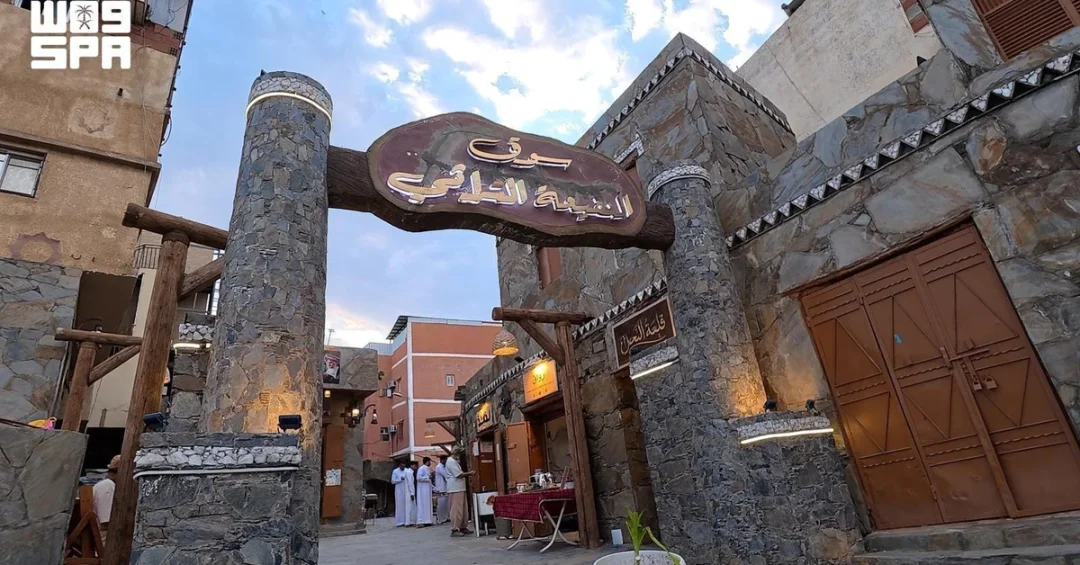
The Al-Nafi’ah traditional market in Fayfa Governorate stands as one of the oldest historic markets in the mountainous Jazan region, reflecting over three centuries of cultural and commercial heritage. Dating back to the 18th century (1140–1150 AH), the market has preserved its traditional architectural character while serving as a hub for social and economic exchange.
Context and Background
Located in the Jazan region, Fayfa Governorate is renowned for its rich cultural and historical landmarks. The Al-Nafi’ah market has been a cornerstone of the community, showcasing the region’s unique heritage through its architecture, local products, and traditional crafts. The market’s stone-paved walkways and locally constructed buildings highlight the distinctive architectural style of Fayfa’s mountainous terrain.
Key Details
The market features a variety of traditional goods, including pottery, lanterns, coffee-making utensils, antique household items, and woven baskets. Visitors can also find agricultural products such as Khawlani coffee, natural honey, millet, and ghee. These items not only represent the local economy but also offer a glimpse into the daily lives of Fayfa’s residents over the centuries.
Implications and Impact
Al-Nafi’ah market plays a vital role in preserving the cultural identity of the Jazan region. By maintaining its traditional functions, the market attracts both locals and tourists, fostering a deeper appreciation for Saudi Arabia’s diverse heritage. This aligns with broader national efforts to promote cultural tourism and sustainable economic development.
Vision 2030 Alignment
The preservation and promotion of heritage sites like Al-Nafi’ah market support Saudi Arabia’s Vision 2030 goals of cultural preservation and tourism diversification. By highlighting such landmarks, the Kingdom reinforces its commitment to safeguarding its historical legacy while fostering economic growth through cultural tourism.
20 Questions
Q1. How old is Al-Nafi’ah traditional market?
A1. The market dates back to between 1140 AH and 1150 AH, making it over three centuries old.
Q2. Where is Al-Nafi’ah market located?
A2. It is located in Fayfa Governorate in the Jazan region of Saudi Arabia.
Q3. What architectural style is the market known for?
A3. The market features traditional stone-paved walkways and buildings constructed from local stone, reflecting Fayfa’s mountainous architecture.
Q4. What products are sold at Al-Nafi’ah market?
A4. Products include pottery, lanterns, coffee-making utensils, traditional clothing, woven baskets, and agricultural goods like Khawlani coffee and natural honey.
Q5. Why is the market significant?
A5. It serves as a cultural and commercial hub, preserving the heritage and traditions of the Jazan region.
Q6. How does the market contribute to local tourism?
A6. By showcasing traditional crafts and products, the market attracts visitors interested in Saudi Arabia’s cultural heritage.
Q7. What role does the market play in the community?
A7. It acts as a social gathering place and a center for economic exchange, fostering community bonds.
Q8. How does the market align with Vision 2030?
A8. It supports cultural preservation and tourism diversification, key goals of Saudi Arabia’s Vision 2030.
Q9. What makes Fayfa’s architecture unique?
A9. The use of local stone and traditional construction methods gives Fayfa’s buildings their distinctive character.
Q10. What is Khawlani coffee?
A10. Khawlani coffee is a premium coffee variety grown in the Jazan region, known for its rich flavor.
Q11. How has the market evolved over time?
A11. While maintaining its traditional character, the market continues to serve as a vital commercial and cultural center.
Q12. What types of traditional crafts are displayed at the market?
A12. Crafts include pottery, woven baskets, and antique household items, reflecting local artistry.
Q13. How does the market preserve local customs?
A13. By selling traditional goods and hosting social gatherings, the market keeps local customs alive.
Q14. What is the market’s economic impact?
A14. It supports local artisans and farmers, contributing to the regional economy.
Q15. How does the market attract international visitors?
A15. Its unique heritage and authentic products draw tourists interested in Saudi Arabia’s cultural diversity.
Q16. What efforts are made to maintain the market?
A16. Preservation initiatives ensure the market’s traditional architecture and functions remain intact.
Q17. How does the market reflect Saudi Arabia’s history?
A17. Through its goods and architecture, the market offers insights into the region’s historical way of life.
Q18. What is the significance of the market’s location?
A18. Situated in the mountains of Jazan, the market highlights the region’s natural and cultural resources.
Q19. How does the market support sustainable development?
A19. By promoting local products and crafts, the market encourages sustainable economic practices.
Q20. What future plans exist for the market?
A20. Ongoing preservation and promotion efforts aim to enhance its role as a cultural and tourist destination.
Reader Feedback
We value your thoughts. Please share your feedback on this article.
Your feedback helps us improve our coverage.