


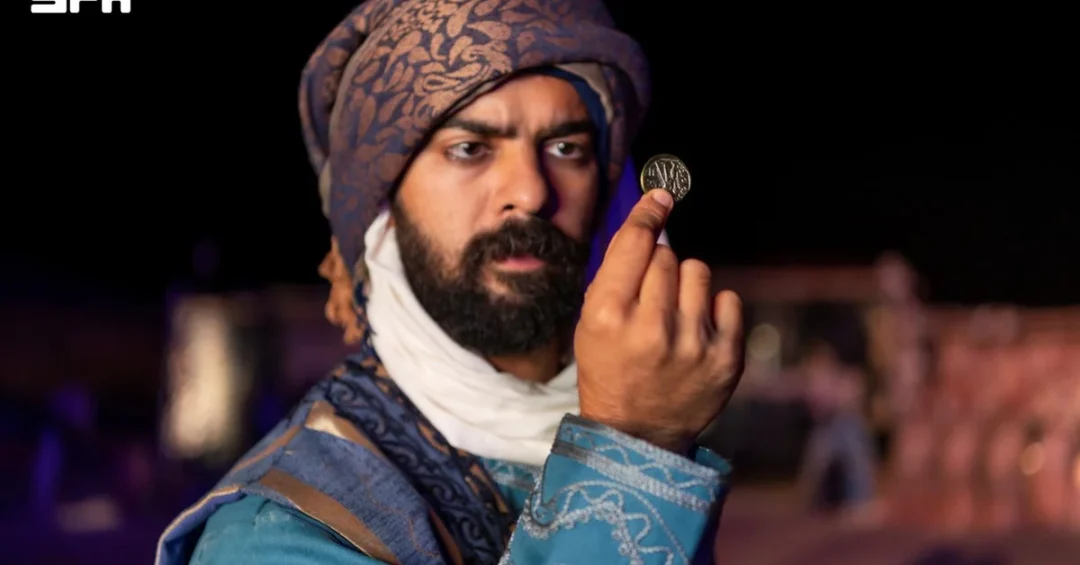
Archaeological coins discovered in AlUla Governorate have unveiled the region’s rich economic history, showcasing its role as a pivotal trade hub across centuries. The findings, announced by the Saudi Press Agency (SPA), include silver coins from the eighth and seventh centuries BC, Nabataean bronze coins from the first century AD, and Umayyad Islamic coins from the late first century AH, highlighting AlUla’s continuous economic activity.
Context and Background
AlUla, located in northwestern Saudi Arabia, has long been recognized as a crossroads of civilizations. Its strategic position along ancient caravan routes facilitated trade between the southern Arabian Peninsula, the Levant, Egypt, and the Mediterranean basin. The discovery of these coins underscores AlUla’s historical significance as a center of economic and cultural exchange.
Key Details
The coins were unearthed at the Hegra archaeological site, a UNESCO World Heritage Site. Among the findings are silver coins dating back to the eighth and seventh centuries BC, Nabataean bronze coins from the first century AD, and Umayyad Islamic coins from the late first century AH. These artifacts provide valuable insights into the monetary systems and commercial relations of ancient civilizations.
Implications and Impact
The discoveries highlight AlUla’s enduring role as a trade hub, connecting diverse regions and cultures. They also contribute to a deeper understanding of the economic dynamics that shaped the ancient world. For Saudi Arabia, these findings reinforce AlUla’s importance as a cultural and historical landmark, aligning with efforts to promote tourism and heritage preservation under Vision 2030.
Vision 2030 Alignment
The discovery of these ancient coins aligns with Saudi Arabia’s Vision 2030 goals of preserving cultural heritage and promoting tourism. By showcasing AlUla’s rich history, the Kingdom aims to attract global visitors and scholars, fostering a deeper appreciation of its historical significance and contributing to economic diversification.
20 Questions
Q1. What do the discovered coins reveal about AlUla’s history?
A1. The coins reveal that AlUla was a vibrant economic hub, facilitating trade and cultural exchange across different historical periods.
Q2. Where were the coins discovered?
A2. The coins were discovered at the Hegra archaeological site in AlUla Governorate.
Q3. What types of coins were found?
A3. The findings include silver coins from the eighth and seventh centuries BC, Nabataean bronze coins from the first century AD, and Umayyad Islamic coins from the late first century AH.
Q4. Why are coins significant in archaeological studies?
A4. Coins are significant because they provide insights into monetary systems, economic activity, and commercial relations between civilizations.
Q5. How does AlUla’s location contribute to its historical importance?
A5. AlUla’s strategic location along ancient caravan routes made it a crossroads for trade between the southern Arabian Peninsula, the Levant, Egypt, and the Mediterranean basin.
Q6. What is the significance of the Hegra site?
A6. Hegra is a UNESCO World Heritage Site known for its rich archaeological findings, including the recently discovered coins.
Q7. How do these discoveries impact Saudi Arabia’s tourism efforts?
A7. The discoveries enhance AlUla’s appeal as a cultural and historical destination, aligning with Saudi Arabia’s Vision 2030 goals to boost tourism.
Q8. What civilizations are associated with the discovered coins?
A8. The coins are associated with ancient civilizations such as the Nabataeans and the Umayyad Caliphate.
Q9. How do these findings contribute to historical knowledge?
A9. The findings provide valuable insights into the economic and cultural interactions of ancient civilizations.
Q10. What is the role of AlUla in Vision 2030?
A10. AlUla plays a key role in Vision 2030 by promoting cultural heritage and tourism as part of Saudi Arabia’s economic diversification strategy.
Q11. How old are the oldest coins discovered?
A11. The oldest coins discovered date back to the eighth and seventh centuries BC.
Q12. What materials were used to make the coins?
A12. The coins were made of silver and bronze.
Q13. What is the historical significance of Nabataean coins?
A13. Nabataean coins reflect the economic activity and trade relations of the Nabataean Kingdom during the first century AD.
Q14. How do Umayyad coins contribute to the understanding of Islamic history?
A14. Umayyad coins provide insights into the monetary systems and economic practices of the early Islamic period.
Q15. What is the cultural importance of AlUla?
A15. AlUla is culturally important as a historical center of trade and cultural exchange, preserving artifacts from various civilizations.
Q16. How does the discovery of coins support economic studies?
A16. The discovery supports economic studies by offering evidence of ancient monetary systems and trade networks.
Q17. What is the relevance of AlUla to ancient trade routes?
A17. AlUla was a key node on ancient trade routes, connecting regions and facilitating the exchange of goods and ideas.
Q18. How does Saudi Arabia preserve its archaeological sites?
A18. Saudi Arabia preserves its archaeological sites through research, conservation efforts, and international collaborations.
Q19. What is the global significance of AlUla’s discoveries?
A19. AlUla’s discoveries are globally significant as they enhance understanding of ancient civilizations and their interconnectedness.
Q20. How does Vision 2030 promote cultural heritage?
A20. Vision 2030 promotes cultural heritage by investing in archaeological research, preserving historical sites, and showcasing Saudi Arabia’s rich history to the world.
Reader Feedback
We value your thoughts. Please share your feedback on this article.
Your feedback helps us improve our coverage.