


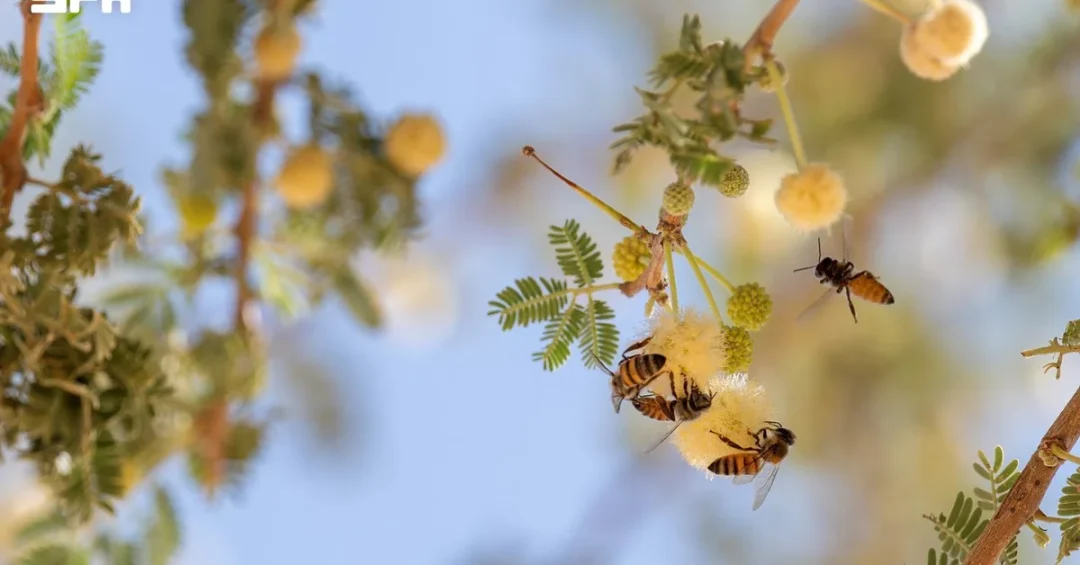
The Talh honey harvest season has officially commenced in Tabuk, Saudi Arabia, with production already surpassing 35 tons. This region, renowned for its abundant Talh (acacia) trees, is one of the Kingdom’s most fertile areas for high-quality honey production, supported by the Ministry of Environment, Water and Agriculture through the Sustainable Agricultural Rural Development Program (Saudi Reef).
Context and Background
The Tabuk Region is celebrated for its natural pastures and diverse flora, which create an ideal environment for beekeeping. Talh trees, native to Saudi Arabia, are particularly valued for their role in producing premium honey. The Ministry of Environment, Water and Agriculture has been instrumental in fostering this sector, ensuring sustainable practices and economic viability for local beekeepers.
Key Details
This year’s Talh honey production season has seen a strong start, with over 35 tons harvested so far. The Ministry’s Saudi Reef program focuses on enhancing production efficiency, improving honey quality, and supporting the economic sustainability of the beekeeping sector. These efforts align with Saudi Arabia’s broader goals of diversifying its economy and promoting agricultural innovation.
Implications and Impact
The successful harvest of Talh honey in Tabuk not only boosts the local economy but also positions Saudi Arabia as a key player in the global honey market. By prioritizing sustainability and quality, the Kingdom is setting a benchmark for agricultural excellence, attracting international interest and fostering trade opportunities.
Vision 2030 Alignment
The Talh honey harvest aligns seamlessly with Saudi Arabia’s Vision 2030, which emphasizes economic diversification, environmental sustainability, and the empowerment of local industries. This initiative showcases the Kingdom’s commitment to leveraging its natural resources to achieve long-term prosperity and global competitiveness.
20 Questions
Q1. What is Talh honey?
A1. Talh honey is a premium variety produced from the nectar of Talh (acacia) trees, known for its distinctive flavor and high quality.
Q2. Why is Tabuk significant for honey production?
A2. Tabuk boasts abundant Talh trees and natural pastures, making it an ideal region for beekeeping and honey production.
Q3. How much honey has been harvested so far?
A3. Over 35 tons of Talh honey have been harvested in Tabuk this season.
Q4. What role does the Ministry of Environment, Water and Agriculture play?
A4. The Ministry supports beekeepers through the Saudi Reef program, enhancing production efficiency and sustainability.
Q5. What is the Saudi Reef program?
A5. Saudi Reef is a Sustainable Agricultural Rural Development Program aimed at improving agricultural practices and economic sustainability.
Q6. How does this harvest benefit local beekeepers?
A6. It provides economic opportunities and enhances livelihoods by improving honey quality and marketability.
Q7. What makes Talh trees unique?
A7. Talh trees are native to Saudi Arabia and are valued for their nectar, which produces high-quality honey.
Q8. How does this initiative support Vision 2030?
A8. It aligns with Vision 2030 by promoting economic diversification and sustainable agricultural practices.
Q9. What are the environmental benefits of beekeeping?
A9. Beekeeping supports biodiversity, pollination, and the health of ecosystems.
Q10. How does Saudi Arabia ensure honey quality?
A10. Through initiatives like Saudi Reef, which focus on improving production techniques and standards.
Q11. What are the economic impacts of this harvest?
A11. It boosts local economies, creates jobs, and enhances Saudi Arabia’s position in the global honey market.
Q12. What is the significance of Tabuk’s natural pastures?
A12. They provide a rich source of nectar, essential for high-quality honey production.
Q13. How does this initiative promote sustainability?
A13. It encourages eco-friendly practices and ensures long-term viability for the beekeeping sector.
Q14. What are the future goals for Saudi Arabia’s honey industry?
A14. To expand production, improve quality, and increase global market share.
Q15. How does Talh honey compare to other varieties?
A15. It is highly valued for its unique flavor and superior quality.
Q16. What international opportunities does this harvest create?
A16. It positions Saudi Arabia as a competitive player in the global honey market, fostering trade relationships.
Q17. How does Saudi Reef improve production efficiency?
A17. By providing resources, training, and support to local beekeepers.
Q18. What challenges do beekeepers face?
A18. Challenges include climate variability and maintaining sustainable practices.
Q19. How does this initiative empower local communities?
A19. By creating economic opportunities and improving livelihoods through sustainable agriculture.
Q20. What is the global significance of Saudi Arabia’s honey production?
A20. It highlights Saudi Arabia’s commitment to quality, sustainability, and innovation in agriculture.
Reader Feedback
We value your thoughts. Please share your feedback on this article.
Your feedback helps us improve our coverage.