


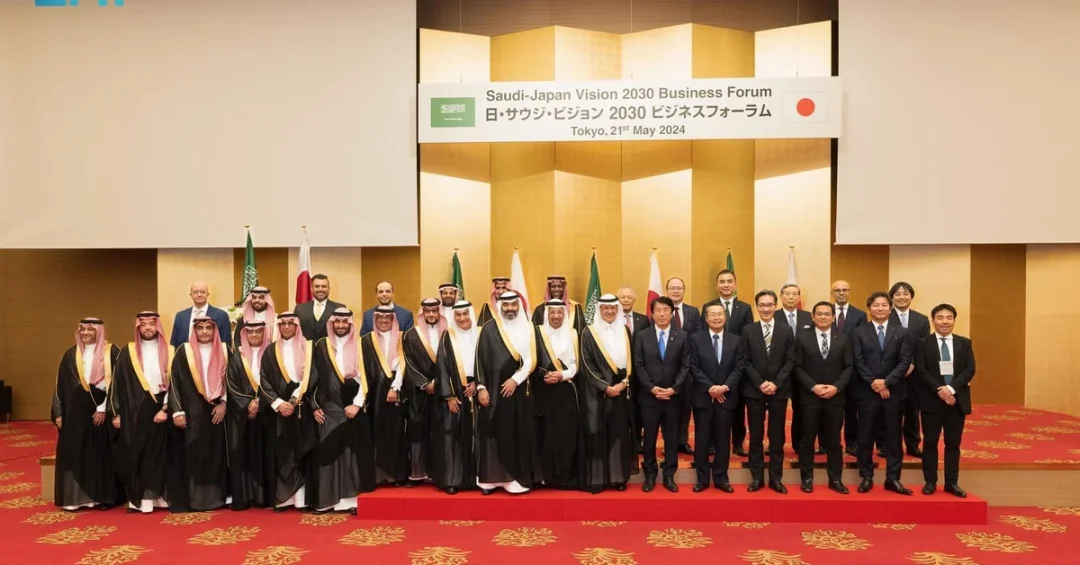
Saudi EXIM Bank has signed two cooperation agreements with Japan’s SMBC Business Banking and MUFG Bank on the sidelines of the Saudi-Japan Vision 2030 Business Forum in Tokyo. The agreements, signed on May 22, 2024, aim to foster collaboration and create co-financing opportunities to promote non-oil exports in target markets, according to a statement from the Saudi EXIM Bank.
Context and Background
The signing ceremony took place during the Saudi-Japan Vision 2030 Business Forum, a key event strengthening economic ties between the Kingdom of Saudi Arabia and Japan. The forum brought together ministers and business leaders from both nations to explore investment opportunities and enhance bilateral cooperation. These agreements are part of a broader effort to diversify Saudi Arabia’s economy and increase non-oil exports, aligning with the goals of Vision 2030.
Saudi EXIM Bank, established to empower the Kingdom’s non-oil national economy, plays a pivotal role in bridging financing gaps and reducing export risks for Saudi exporters. By partnering with international financial institutions like SMBC and MUFG, the bank aims to facilitate access to new markets and boost the competitiveness of Saudi goods and services globally.
Key Details
The agreements were signed separately by Eng. Saad bin Abdulaziz Al-Khalab, CEO of Saudi EXIM Bank, with Mr. Akihiro Fukudom, CEO of SMBC Bank, and Hironori Kamizawa, CEO of MUFG Bank. Commenting on the partnerships, Eng. Al-Khalab stated: “This collaboration with Japanese entities is part of our joint efforts to strengthen economic relations between both countries and achieve the Saudi-Japan Vision 2030. The acceleration of commercial projects between our nations toward broader horizons comes as a result of the strength, advanced economic status, and promising investment opportunities.”
During a roundtable meeting that brought together several ministers from both sides, Al-Khalab reviewed Saudi EXIM Bank’s activities with Japanese financial institutions and commercial companies, focusing on enhancing economic and trade relations and identifying projects of mutual interest. He also emphasized the critical importance of collaborative efforts between all financial institutions and business sectors to provide comprehensive, incentivizing credit solutions that can accelerate trade and investment activities.
Implications and Impact
These agreements are expected to significantly boost non-oil exports from Saudi Arabia to Japan and other Asian markets, strengthening the Kingdom’s trade balance and economic diversification. The co-financing opportunities created will support Saudi exporters in accessing new markets, reducing financial barriers, and enhancing their global competitiveness. The partnerships also underscore the deepening economic relationship between Saudi Arabia and Japan, which has been steadily growing under the Saudi-Japan Vision 2030 initiative.
The collaboration between Saudi EXIM Bank and major Japanese banks is a testament to the confidence international financial institutions have in the Saudi economy. It also opens doors for further cooperation in sectors such as technology, manufacturing, and logistics, contributing to the Kingdom’s position as a global investment hub.
Vision 2030 Alignment
These agreements are a significant step toward realizing Saudi Arabia’s Vision 2030, which aims to diversify the economy and increase non-oil exports. By facilitating trade and investment between Saudi Arabia and Japan, Saudi EXIM Bank is actively contributing to this national agenda. The partnerships with SMBC and MUFG will not only enhance the competitiveness of Saudi non-oil products but also promote the Kingdom’s integration into global markets. As Saudi Arabia continues to strengthen its international partnerships, initiatives like these pave the way for a sustainable and prosperous future, aligned with the Kingdom’s long-term strategic goals.
20 Questions
Q1. What agreements did Saudi EXIM Bank sign with Japanese banks?
A1. Saudi EXIM Bank signed two cooperation agreements with SMBC Business Banking and MUFG Bank to foster collaboration and create co-financing opportunities for promoting non-oil exports.
Q2. Where were the agreements signed?
A2. The agreements were signed on the sidelines of the Saudi-Japan Vision 2030 Business Forum held in Tokyo, Japan.
Q3. Who signed the agreements on behalf of Saudi EXIM Bank?
A3. Eng. Saad bin Abdulaziz Al-Khalab, CEO of Saudi EXIM Bank, signed the agreements.
Q4. Who signed for SMBC Bank?
A4. Mr. Akihiro Fukudom, CEO of SMBC Bank, signed the agreement.
Q5. Who signed for MUFG Bank?
A5. Hironori Kamizawa, CEO of MUFG Bank, signed the agreement.
Q6. What is the purpose of these agreements?
A6. The purpose is to foster cooperation and create co-financing opportunities to promote Saudi non-oil exports in target markets, particularly in Japan and Asia.
Q7. How do these agreements contribute to Saudi Vision 2030?
A7. They support economic diversification and increase non-oil exports, aligning with Vision 2030’s goal to reduce dependence on oil and boost global trade.
Q8. What role does Saudi EXIM Bank play in the Saudi economy?
A8. Saudi EXIM Bank empowers the non-oil national economy by bridging financing gaps, reducing export risks, and enabling Saudi exporters to expand into global markets.
Q9. What was Eng. Saad Al-Khalab’s comment on the partnerships?
A9. He said the collaboration is part of joint efforts to strengthen economic relations and achieve the Saudi-Japan Vision 2030, citing the strength and promising investment opportunities.
Q10. What was discussed during the roundtable meeting?
A10. The meeting reviewed Saudi EXIM Bank’s activities with Japanese financial institutions and commercial companies to enhance economic and trade relations and identify projects of mutual interest.
Q11. What emphasis did Al-Khalab make during the financial sector meeting?
A11. He emphasized the critical importance of collaborative efforts among financial institutions and business sectors to provide comprehensive credit solutions that accelerate trade and investment.
Q12. Which Japanese banks are involved in the agreements?
A12. The two Japanese banks involved are SMBC Business Banking and MUFG Bank.
Q13. What is the Saudi-Japan Vision 2030 Business Forum?
A13. It is a forum to strengthen economic ties between Saudi Arabia and Japan, bringing together ministers and business leaders to explore investment opportunities.
Q14. How will these agreements benefit Saudi exporters?
A14. They will provide co-financing opportunities, reduce financial barriers, and enhance the competitiveness of Saudi non-oil exports in new markets.
Q15. What is the significance of having both SMBC and MUFG on board?
A15. It signifies strong international confidence in the Saudi economy and opens avenues for broader cooperation in various sectors.
Q16. What are the potential sectors for future cooperation?
A16. Potential sectors include technology, manufacturing, and logistics, among others, contributing to economic diversification.
Q17. How does this align with Saudi Arabia’s economic diversification goals?
A17. By promoting non-oil exports and strengthening trade ties, it directly supports the diversification goals of Vision 2030.
Q18. Are there any similar agreements with other countries?
A18. The article does not mention other countries, but Saudi EXIM Bank likely has similar partnerships to expand non-oil exports globally.
Q19. What is the expected impact on Saudi-Japan economic relations?
A19. It is expected to deepen economic relations, increase trade volume, and open new avenues for bilateral investment.
Q20. How does this affect the Kingdom’s global trade position?
A20. It enhances Saudi Arabia’s global trade position by showcasing its commitment to building international partnerships and integrating into global markets, which is a key Vision 2030 objective.
Reader Feedback
We value your thoughts. Please share your feedback on this article.
Your feedback helps us improve our coverage.