


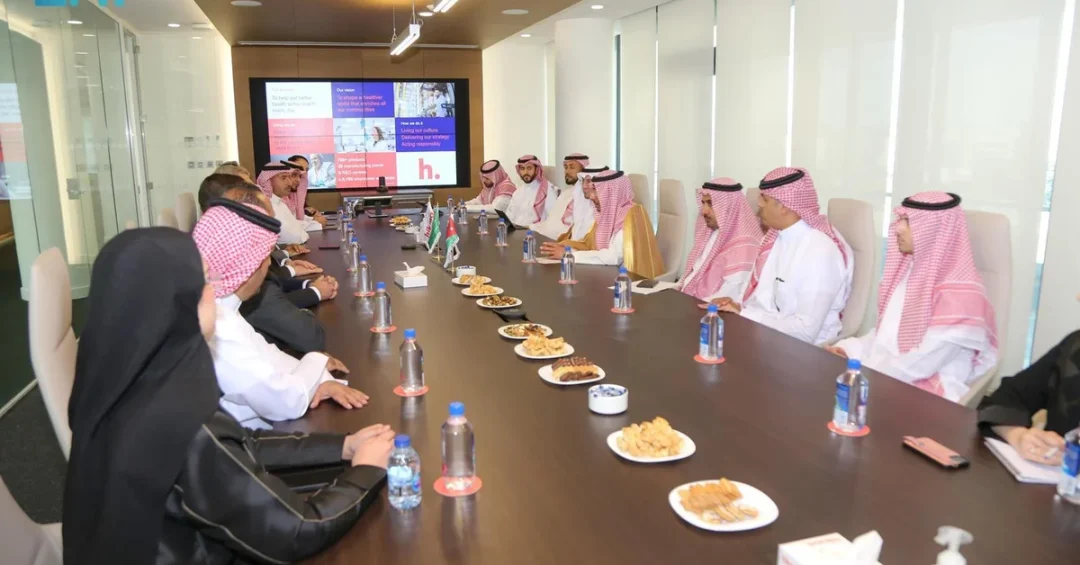
Saudi Minister of Industry and Mineral Resources Bandar bin Ibrahim Alkhorayef met with Jordanian Association of Pharmaceutical Manufacturers (JAPM) Chairman of the Board of Directors Tareq Darwazeh in Amman on May 23, 2024, to discuss enhancing cooperation in pharmaceutical manufacturing and marketing. The meeting, reported by the Saudi Press Agency (SPA), aimed to leverage the advanced expertise and capabilities of both countries in the pharmaceutical sector. Minister Alkhorayef was accompanied by Eng. Khalid Al-Mudaifer, Deputy Minister of Industry and Mineral Resources for Mining Affairs.
Context and Background
The meeting underscores Saudi Arabia’s ongoing efforts to diversify its economy and strengthen ties with regional partners. Jordan has a well-established pharmaceutical industry, with companies like Hikma Pharmaceuticals and MS Pharma gaining international recognition. Saudi Arabia, under Vision 2030, seeks to localize industries, attract foreign investment, and enhance non-oil exports. This collaboration aligns with the Kingdom’s goals to improve healthcare infrastructure and pharmaceutical self-sufficiency.
Key Details
During his visit, Minister Alkhorayef toured several Jordanian pharmaceutical facilities. He visited MS Pharma’s sterile injectables factory in the Sahab area, and Hikma Pharmaceuticals’ factory in Al-Bayader, where he witnessed a virtual presentation showcasing the company’s facilities in Portugal and the United States, specializing in oncology drugs and injections. These visits highlight the Kingdom’s commitment to attracting qualitative investments in the pharmaceutical and healthcare sectors, while facilitating exports to international markets.
Implications and Impact
The cooperation between Saudi Arabia and Jordan in the pharmaceutical sector could lead to increased trade, joint ventures, and technology transfer. It may also enhance the region’s capacity to produce essential medicines, reducing reliance on imports. For Saudi Arabia, this partnership supports the goal of becoming a regional hub for pharmaceutical manufacturing and innovation, contributing to economic diversification and job creation.
Vision 2030 Alignment
This initiative aligns with Saudi Vision 2030’s objectives to diversify the economy, localize industries, and enhance international partnerships. By collaborating with Jordan, the Kingdom advances its healthcare and industrial capabilities, reinforcing its role as a leader in the region and beyond. The visit reflects the Kingdom’s proactive approach to fostering strategic alliances that drive sustainable development and economic growth.
20 Questions
Q1. Who represented Saudi Arabia in the meeting with the Jordanian Association of Pharmaceutical Manufacturers?
A1. Saudi Minister of Industry and Mineral Resources Bandar bin Ibrahim Alkhorayef represented Saudi Arabia. He was accompanied by Eng. Khalid Al-Mudaifer, Deputy Minister of Industry and Mineral Resources for Mining Affairs. The meeting took place in Amman on May 23, 2024.
Q2. What was the main purpose of the meeting between Saudi and Jordanian officials?
A2. The meeting aimed to discuss ways to enhance cooperation in pharmaceutical manufacturing and marketing. Both sides sought to leverage their advanced expertise and capabilities. The goal was to strengthen bilateral ties in the pharmaceutical sector and explore opportunities for collaboration.
Q3. Which Jordanian pharmaceutical companies did the Saudi minister visit?
A3. Minister Alkhorayef visited MS Pharma’s sterile injectables factory in the Sahab area and Hikma Pharmaceuticals’ factory in Al-Bayader. He also witnessed a virtual presentation showcasing Hikma’s facilities in Portugal and the United States. These visits highlight the advanced capabilities of Jordanian pharmaceutical companies.
Q4. What did the virtual presentation at Hikma Pharmaceuticals showcase?
A4. The virtual presentation showcased Hikma Pharmaceuticals’ facilities in Portugal and the United States. These facilities specialize in the production of oncology drugs and injections. The presentation demonstrated the company’s global reach and expertise in specialized pharmaceutical manufacturing.
Q5. How does this collaboration align with Saudi Vision 2030?
A5. This collaboration aligns with Vision 2030 by promoting economic diversification, localizing industries, and enhancing international partnerships. It supports the Kingdom’s goals to improve healthcare infrastructure and pharmaceutical self-sufficiency. It also reinforces Saudi Arabia’s role as a regional leader in industry and innovation.
Q6. What are the potential benefits of Saudi-Jordanian cooperation in pharmaceuticals?
A6. Potential benefits include increased trade, joint ventures, and technology transfer. It could enhance the region’s capacity to produce essential medicines and reduce import reliance. For Saudi Arabia, it supports becoming a regional hub for pharmaceutical manufacturing and innovation.
Q7. What is the significance of Saudi Arabia’s interest in the pharmaceutical sector?
A7. Saudi Arabia’s interest in pharmaceuticals is part of its broader strategy to diversify the economy and localize key industries. It aims to attract qualitative investments and facilitate exports to international markets. This focus supports Vision 2030’s goals for sustainable development and economic growth.
Q8. How does Jordan’s pharmaceutical industry contribute to the region?
A8. Jordan’s pharmaceutical industry is well-established and has gained international recognition. Companies like Hikma Pharmaceuticals and MS Pharma export to various markets. Their expertise contributes to the region’s healthcare capacity and economic development.
Q9. What role does Eng. Khalid Al-Mudaifer play in these discussions?
A9. Eng. Khalid Al-Mudaifer is the Deputy Minister of Industry and Mineral Resources for Mining Affairs. He accompanied Minister Alkhorayef during the visit. His presence underscores the importance of mining and industrial cooperation in the broader bilateral relationship.
Q10. When did the meeting between Saudi and Jordanian officials take place?
A10. The meeting took place on May 23, 2024, in Amman, Jordan. It was reported by the Saudi Press Agency (SPA). The timing reflects ongoing efforts to strengthen regional partnerships.
Q11. What types of pharmaceutical products are produced by the companies visited?
A11. MS Pharma produces sterile injectables at its Sahab facility. Hikma Pharmaceuticals specializes in oncology drugs and injections, with facilities in Portugal and the United States. These products are critical for treating various medical conditions.
Q12. How might this cooperation affect pharmaceutical exports from Saudi Arabia?
A12. The cooperation could enhance Saudi Arabia’s pharmaceutical exports by leveraging Jordan’s expertise and market access. It may also facilitate joint production for international markets. This aligns with the Kingdom’s goal to increase non-oil exports.
Q13. What is the expected impact on healthcare in Saudi Arabia?
A13. The impact may include improved access to advanced medicines and technologies. It could also lead to localized production of essential drugs, reducing costs and ensuring supply security. Ultimately, it supports better healthcare outcomes for citizens.
Q14. How does this visit reflect Saudi Arabia’s foreign policy objectives?
A14. The visit reflects Saudi Arabia’s commitment to strengthening ties with regional allies and promoting economic cooperation. It aligns with the Kingdom’s proactive diplomacy to foster stability and development. It also showcases Saudi Arabia’s role as a leader in the region.
Q15. What are the key areas of pharmaceutical manufacturing discussed?
A15. Key areas included sterile injectables, oncology drugs, and injections. Discussions focused on manufacturing and marketing cooperation. Both sides aimed to leverage their respective strengths for mutual benefit.
Q16. How does this partnership support Saudi Arabia’s localization goals?
A16. The partnership supports localization by transferring knowledge and technology to Saudi Arabia. It encourages joint ventures that can establish local production facilities. This reduces reliance on imports and boosts the domestic pharmaceutical industry.
Q17. What did Minister Alkhorayef emphasize during his visits?
A17. He emphasized the Kingdom’s commitment to attracting qualitative investments in pharmaceuticals and healthcare. He also highlighted the importance of facilitating exports to international markets. These efforts align with Vision 2030’s economic diversification goals.
Q18. What is the role of the Jordanian Association of Pharmaceutical Manufacturers?
A18. The Jordanian Association of Pharmaceutical Manufacturers (JAPM) represents pharmaceutical manufacturers in Jordan. Its chairman, Tareq Darwazeh, met with Minister Alkhorayef to discuss cooperation. JAPM plays a key role in promoting the industry’s interests and fostering partnerships.
Q19. How could this cooperation influence regional pharmaceutical self-sufficiency?
A19. It could strengthen regional self-sufficiency by combining resources and expertise. Joint efforts can lead to increased production capacity and diversified supply chains. This reduces dependence on external sources for essential medicines.
Q20. What future steps might follow this initial meeting?
A20. Future steps may include signing agreements, forming joint task forces, and organizing follow-up visits. Both sides are likely to explore concrete projects for collaboration. These steps would build on the momentum of this meeting.
Reader Feedback
We value your thoughts. Please share your feedback on this article.
Your feedback helps us improve our coverage.