


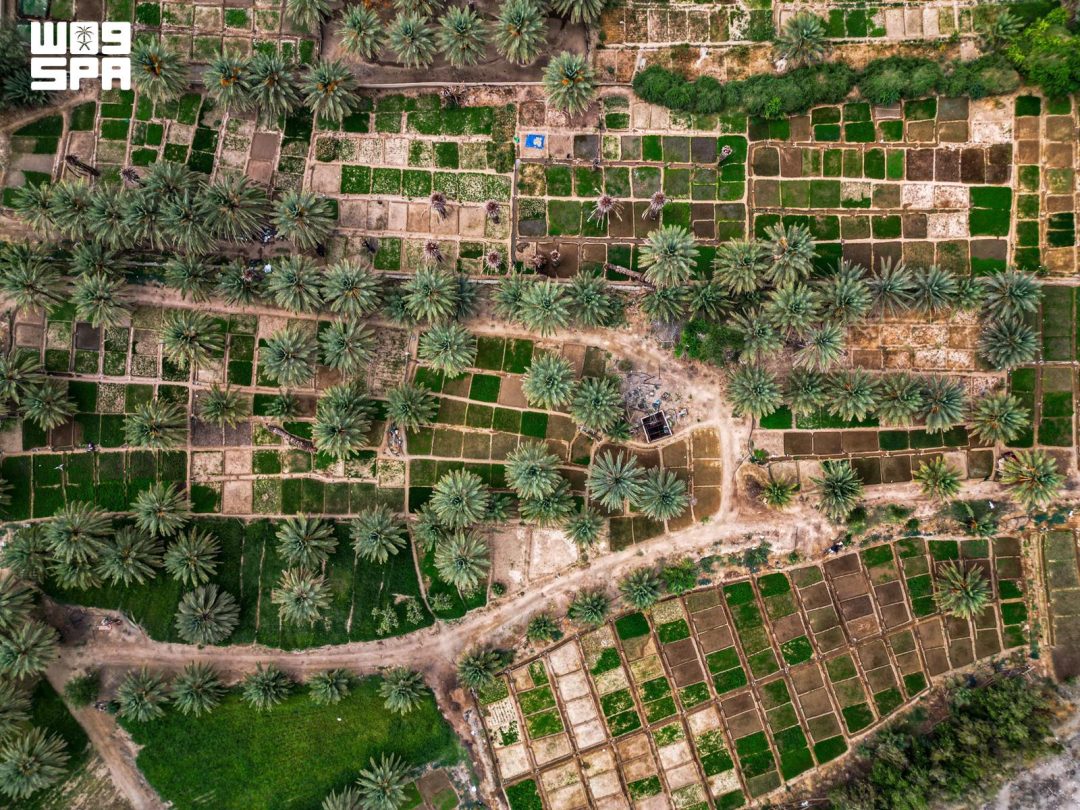
Al Bahah region contains more than 140,000 palm trees that produce over 2,000 tons of dates every year. The city of Al Aqiq is identified as one of the most suitable areas for palm cultivation in the region.
According to SPA, Saeed bin Musfir Al-Ghamdi, director of the non-profit sector and agricultural solutions department at the Ministry of Environment, Water and Agriculture branch in Al Bahah, stated that the region produces various date types, including Safri, Khalas, Sukkari, and Barhi.
The Ministry branch provides support through training programs, specialized workshops, and field visits to farms. These initiatives focus on improving planting, irrigation, fertilization, and palm care, as well as managing production, harvesting, and post-harvest stages to increase quality and reduce agricultural waste.
Farmers are also introduced to organic farming programs to protect natural resources and achieve sustainable agriculture. Additionally, the Rural Agricultural Sustainable Development Program (Reef) provides non-refundable financial support to palm growers and those involved in related processing industries to increase production efficiency.
How many palm trees are in the Al Bahah region and what is their annual output? The Al Bahah region has more than 140,000 palm trees. According to data provided by the Ministry of Environment, Water and Agriculture branch, these trees produce an annual yield of more than 2,000 tons of dates.
Which date varieties are produced in Al Bahah and where is cultivation concentrated? The palm groves in the region produce several varieties of dates, specifically Safri, Khalas, Sukkari, and Barhi. Cultivation is primarily concentrated in areas with suitable environmental and agricultural conditions, most notably in the city of Al Aqiq.
What support does the Ministry of Environment, Water and Agriculture provide to farmers? The Ministry branch organizes specialized workshops, training programs, and field visits to farms. These efforts help farmers improve irrigation, fertilization, and planting methods, while also managing the production and harvesting stages to increase productivity and reduce waste.