


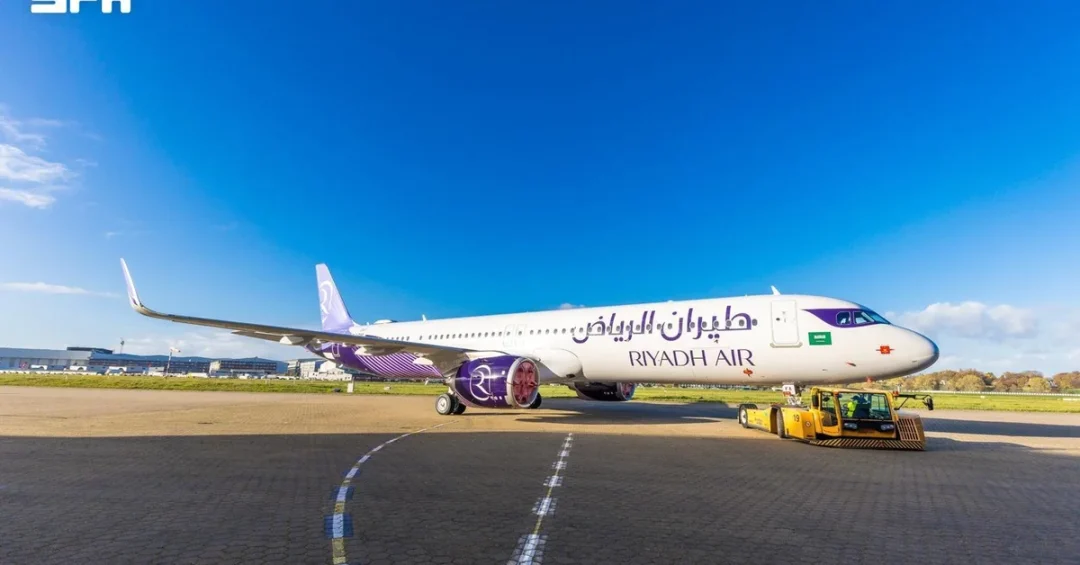
Riyadh Air, Saudi Arabia’s new national carrier, announced on November 13, 2026, that its first Airbus A321neo narrow-body aircraft, registered HZ-RXFA, has completed manufacturing and emerged from Airbus’ paint facility in Hamburg, Germany. The milestone, reported by the Saudi Press Agency (SPA), marks a significant step in the airline’s fleet expansion and destination network growth. The aircraft features Riyadh Air’s distinctive pearl livery, a design that blends Saudi heritage with modern aesthetics, and is set to undergo test flights before delivery to Riyadh, the airline’s operational hub.
This development underscores Saudi Arabia’s ambitious Vision 2030 goals, which aim to diversify the economy and enhance global connectivity. Riyadh Air, launched in 2023, is a key component of the Kingdom’s strategy to become a global aviation hub, targeting more than 100 destinations by 2030. The completion of the first A321neo manufacturing not only highlights the airline’s progress but also reinforces Saudi Arabia’s commitment to modernizing its transportation sector and boosting tourism. As the aircraft prepares for its maiden test flights, industry observers are keenly watching how Riyadh Air will redefine air travel in the region. Could this be the dawn of a new era in Saudi aviation?
Context and Background
How did Riyadh Air emerge as a pivotal player in Saudi Arabia’s aviation landscape? Established by Crown Prince Mohammed bin Salman in March 2023, Riyadh Air is wholly owned by the Public Investment Fund (PIF) and aims to transform Riyadh into a global hub for travel and trade. The airline’s launch aligns with the National Aviation Strategy, which seeks to triple passenger traffic to 330 million annually by 2030 and expand connections to over 250 destinations. The first Airbus A321neo, a narrow-body aircraft, is part of a larger order for 72 A321neos, reflecting the airline’s focus on fuel efficiency and operational flexibility for short-to-medium-haul routes. This move supports the Kingdom’s broader economic diversification efforts, reducing reliance on oil revenues.
The pearl livery on HZ-RXFA is not merely aesthetic; it symbolizes Saudi Arabia’s rich cultural heritage and its forward-looking vision. The design incorporates flowing lines inspired by traditional Bedouin tents and Arabic calligraphy, with indigo and lavender shades and feather-inspired patterns on the rear fuselage. The dark frame around the cockpit windows adds a contemporary touch. The airline’s name appears in both Arabic and English, showcasing its dual identity as a national carrier with global aspirations. Such branding is crucial for attracting international travelers and positioning Riyadh Air as a premium carrier. The aircraft’s completion in Hamburg highlights the collaboration with Airbus, a leading aerospace manufacturer, ensuring top-tier safety and technology standards.
What does this milestone mean for Saudi Arabia’s aviation sector? The completion of the first A321neo manufacturing is a tangible sign of progress for Riyadh Air, which plans to commence commercial operations in 2025. The airline has already secured partnerships and placed orders for wide-body aircraft, including Boeing 787 Dreamliners, to serve long-haul routes. The narrow-body fleet will primarily connect Riyadh to regional and international destinations, enhancing connectivity and competition. This development also supports the Kingdom’s tourism goals, as outlined in Vision 2030, which aims to attract 150 million visitors annually by 2030. By expanding its fleet, Riyadh Air will contribute to job creation, infrastructure development, and the growth of ancillary industries like hospitality and logistics.
Key Details
What specific features make the first Riyadh Air A321neo stand out? The aircraft, registered HZ-RXFA, rolled out of Airbus’ paint facility in Hamburg, Germany, featuring the airline’s signature pearl livery. The design’s flowing lines draw inspiration from the curves of traditional Bedouin tents and the elegance of Arabic calligraphy, creating a visual narrative that connects Saudi heritage with modernity. The dark frame around the cockpit windows gives the aircraft a sleek, contemporary appearance. Shades of indigo and lavender dominate the fuselage, with feather-inspired patterns adorning the rear section, symbolizing flight and aspiration. The Riyadh Air name is prominently displayed in both Arabic and English, reinforcing its identity as a national carrier with a global reach.
The aircraft is scheduled to undergo a series of test flights in the coming days before its delivery and entry into Riyadh Air’s fleet. These tests will ensure that all systems function optimally and meet regulatory standards. Upon arrival in Riyadh, the aircraft will join the airline’s growing fleet, which includes orders for 72 A321neos and 39 Boeing 787 Dreamliners. Further details about the cabin design, onboard travel experience, and destinations to be served by the narrow-body fleet will be unveiled in the coming weeks. These insights are highly anticipated, as they will reveal how Riyadh Air plans to differentiate itself in a competitive market. The airline has promised a premium experience that reflects Saudi hospitality and innovation.
How does this aircraft fit into Riyadh Air’s broader fleet strategy? The A321neo is known for its fuel efficiency, reduced noise footprint, and advanced technology, making it ideal for short-to-medium-haul routes. With a range of up to 4,000 nautical miles, it can connect Riyadh to destinations across Europe, Asia, and Africa. The narrow-body fleet will complement the wide-body Dreamliners, which will handle long-haul flights to North America and Asia. This mixed fleet approach allows Riyadh Air to optimize routes and frequency, offering passengers seamless connectivity. The airline’s ambition to serve over 100 destinations by 2030 hinges on a modern, efficient fleet, and the A321neo is a cornerstone of that plan. The delivery of this first aircraft is a concrete step toward operational readiness.
International and Regional Impact
What are the implications of Riyadh Air’s expansion for the global aviation industry? Riyadh Air’s entry into the market introduces a new competitor with substantial backing from the PIF, potentially reshaping air travel dynamics in the Middle East. The airline’s order for 72 A321neos and 39 Dreamliners is one of the largest in the region, signaling confidence in post-pandemic travel demand. This expansion could intensify competition with established carriers like Emirates, Qatar Airways, and Etihad, prompting them to enhance their services. For international travelers, Riyadh Air’s growth means more options and potentially lower fares on routes to and from Saudi Arabia. The airline’s focus on technology and passenger experience may also set new benchmarks for the industry, encouraging innovation across the board.
Regionally, Riyadh Air’s progress supports Saudi Arabia’s efforts to position itself as a tourism and business hub. The airline will play a critical role in facilitating travel for religious pilgrims, business travelers, and tourists, aligning with the goals of Vision 2030. Improved connectivity will boost trade and investment, as easier access to Riyadh attracts multinational corporations and events. The airline’s hub at King Khalid International Airport is undergoing expansion to accommodate increased traffic, with plans for a new terminal and enhanced facilities. This infrastructure development is part of a broader national effort to upgrade airports and airspace, ensuring seamless travel experiences. Could Riyadh Air become the catalyst for a new wave of economic growth in the Kingdom?
Economic and Strategic Significance
Why is the manufacturing completion of this aircraft economically significant for Saudi Arabia? The aviation sector is a key pillar of Vision 2030, contributing to GDP growth, job creation, and non-oil exports. Riyadh Air’s fleet expansion is expected to generate thousands of direct and indirect jobs, from pilots and cabin crew to maintenance technicians and ground staff. The airline’s operations will stimulate ancillary industries such as tourism, hospitality, and logistics, creating a multiplier effect across the economy. Moreover, the PIF’s investment in Riyadh Air is part of a strategic effort to diversify revenue streams and increase the sovereign fund’s assets. By 2030, the aviation sector is projected to contribute significantly to the national economy, and Riyadh Air is at the forefront of this transformation.
Strategically, the airline enhances Saudi Arabia’s soft power and global influence. A strong national carrier projects the Kingdom’s modernity and openness, countering outdated perceptions and attracting foreign investment. Riyadh Air’s partnerships with Airbus and Boeing demonstrate international collaboration and technology transfer, which can spur local aerospace capabilities. The airline’s planned routes to over 100 destinations will facilitate cultural exchange and diplomacy, strengthening ties with countries worldwide. As Saudi Arabia hosts major events like Expo 2030 and the FIFA World Cup 2034, Riyadh Air will be essential for transporting millions of visitors. This aircraft’s completion is a tangible step toward realizing these ambitions, showcasing the Kingdom’s ability to execute large-scale projects.
Vision 2030 Alignment
How does Riyadh Air’s progress align with Vision 2030? Vision 2030, launched in 2016 by Crown Prince Mohammed bin Salman, aims to diversify the economy, empower citizens, and position Saudi Arabia as a global leader. The aviation sector is a cornerstone of this vision, with the National Aviation Strategy targeting 330 million passengers and 250 destinations by 2030. Riyadh Air embodies these goals by expanding connectivity, creating jobs, and boosting tourism. The airline’s focus on sustainability, with fuel-efficient aircraft like the A321neo, also supports environmental objectives. By linking Riyadh to the world, Riyadh Air will attract business and leisure travelers, contributing to the Kingdom’s GDP and cultural exchange. The completion of the first A321neo is a milestone that brings these aspirations closer to reality.
In conclusion, the manufacturing completion of Riyadh Air’s first Airbus A321neo in the pearl livery is a proud moment for Saudi Arabia, reflecting the Kingdom’s determination to achieve Vision 2030. As the aircraft undergoes test flights and prepares for delivery, it symbolizes progress, innovation, and global ambition. Riyadh Air is set to redefine air travel, connecting Saudi Arabia to over 100 destinations and showcasing the best of Saudi hospitality and heritage. With each new aircraft, the Kingdom moves closer to its goal of becoming a global aviation hub. What does the future hold for Riyadh Air? If this milestone is any indication, it will soar to new heights, carrying the nation’s aspirations across the skies.
20 Questions
Q1. What did Riyadh Air announce on November 13, 2026?
A1. Riyadh Air announced the completion of manufacturing of its first Airbus A321neo aircraft, registered HZ-RXFA, which emerged from Airbus’ paint facility in Hamburg, Germany.
Q2. What is the registration number of Riyadh Air’s first Airbus A321neo?
A2. The aircraft is registered as HZ-RXFA.
Q3. Where did the aircraft complete its manufacturing and painting?
A3. The aircraft completed manufacturing and painting at Airbus’ facility in Hamburg, Germany.
Q4. What is the name of the livery featured on the aircraft?
A4. The aircraft features Riyadh Air’s pearl livery.
Q5. What inspired the design of the pearl livery?
A5. The design draws inspiration from the curves of traditional Bedouin tents and the aesthetics of Arabic calligraphy.
Q6. What colors are used in the livery?
A6. The livery features shades of indigo and lavender, with feather-inspired patterns on the rear fuselage.
Q7. What is the significance of the dark frame around the cockpit windows?
A7. The dark frame gives the aircraft a contemporary and distinctive appearance.
Q8. In which languages is the Riyadh Air name displayed on the aircraft?
A8. The Riyadh Air name is displayed in both Arabic and English.
Q9. What are the next steps for the aircraft after manufacturing?
A9. The aircraft will undergo a series of test flights in the coming days before its delivery and entry into Riyadh Air’s fleet.
Q10. Where is Riyadh Air’s operational hub?
A10. Riyadh Air’s operational hub is in Riyadh, Saudi Arabia.
Q11. What details will be unveiled in the coming weeks?
A11. Further details about the aircraft’s cabin design, onboard travel experience, and destinations to be served by the narrow-body fleet will be unveiled.
Q12. How many destinations does Riyadh Air aim to connect to by 2030?
A12. Riyadh Air aims to connect Riyadh to more than 100 destinations worldwide by 2030.
Q13. What type of aircraft is the Airbus A321neo?
A13. The Airbus A321neo is a narrow-body aircraft known for its fuel efficiency and advanced technology.
Q14. How many A321neo aircraft has Riyadh Air ordered?
A14. Riyadh Air has ordered 72 A321neo aircraft.
Q15. What other aircraft type has Riyadh Air ordered for its fleet?
A15. Riyadh Air has ordered 39 Boeing 787 Dreamliners for long-haul routes.
Q16. What is the significance of this milestone for Saudi Arabia’s aviation sector?
A16. It marks a step in expanding the fleet and destination network, supporting Vision 2030 goals to make Saudi Arabia a global aviation hub.
Q17. How does Riyadh Air contribute to Vision 2030?
A17. Riyadh Air supports economic diversification, job creation, and tourism growth, aligning with Vision 2030 objectives.
Q18. What is the National Aviation Strategy?
A18. The National Aviation Strategy aims to triple passenger traffic to 330 million annually and expand connections to over 250 destinations by 2030.
Q19. When did Riyadh Air launch?
A19. Riyadh Air was launched in March 2023 by Crown Prince Mohammed bin Salman and is wholly owned by the Public Investment Fund.
Q20. What impact will Riyadh Air have on regional competition?
A20. Riyadh Air’s expansion will intensify competition with established carriers like Emirates, Qatar Airways, and Etihad, potentially leading to improved services and more options for travelers.
Reader Feedback
We value your thoughts. Please share your feedback on this article.
Your feedback helps us improve our coverage.
Related articles
 Saudi-US Business Council, Federation of Saudi Chambers Sign MoU
 Mawhiba, CEER Sign MoU to Develop Gifted Students’ Abilities
 Saudi Energy Reports 11.5% Revenue Growth, SAR12.1B Profit
 Manga Productions to Publish ‘STRANGER THAN HEAVEN’ in MENA
 stc Extends Riyadh Season Partnership for Sixth Year
 Aramco Q3 2026: $31.2B Income, $21.9B Dividend