


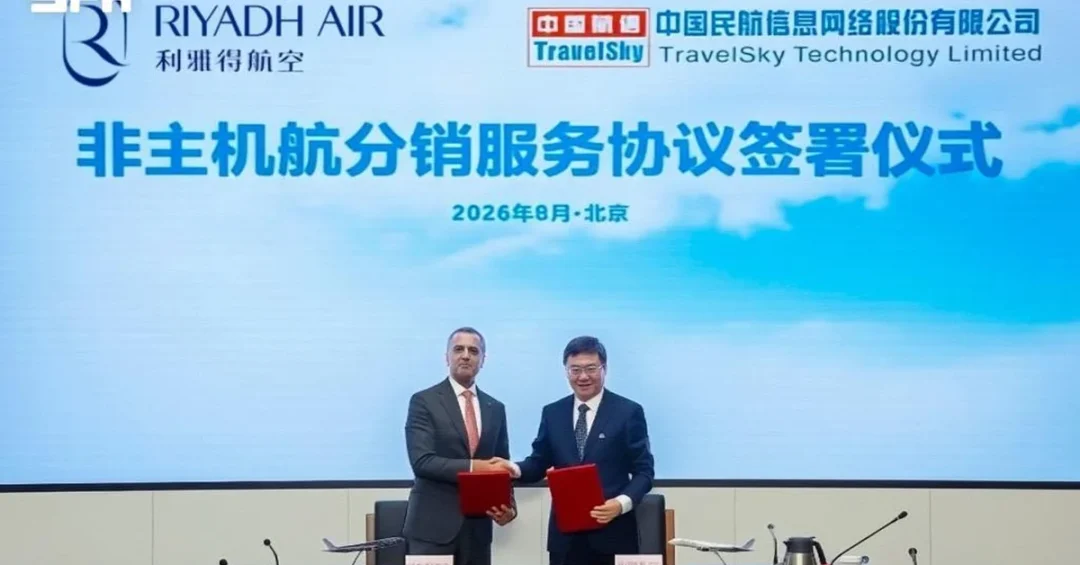
Riyadh Air and TravelSky Technology Limited signed a distribution cooperation agreement in Beijing on August 6, 2026, marking a strategic step in the Saudi carrier’s entry into the Chinese aviation market. The signing ceremony, reported by the Saudi Press Agency (SPA), brings together Saudi Arabia’s new full-service airline and China’s leading provider of aviation information technology and distribution services. Under the agreement, the two companies will collaborate across omni-channel distribution, modern airline retailing, digital innovation, and the future of passenger experience. The partnership is designed to support Riyadh Air’s market entry into China while enhancing services for Chinese travel agencies, industry partners, and travelers.
Why does this agreement matter beyond the two companies involved? It reflects the deepening ties between Saudi Arabia and China across aviation, trade, and tourism, and it supports Riyadh Air’s ambition to build a global network anchored in the Kingdom’s Vision 2030 economic diversification program. The deal also signals how digital retailing and distribution technology are reshaping international air travel, giving airlines new ways to reach customers in high-growth markets. For Saudi Arabia, the agreement adds another building block to its goal of becoming a global aviation hub connecting Asia, Europe, and the Middle East.
Context and Background
How did Riyadh Air reach this point in its international expansion? The airline was launched as part of Saudi Arabia’s broader strategy to strengthen its aviation sector, diversify the economy, and increase non-oil revenues. From its base in Riyadh, the carrier has been steadily building partnerships and infrastructure ahead of full commercial operations. Its agreement with TravelSky follows a pattern of engagement with established technology and distribution players, which allows a new airline to plug into global sales channels quickly rather than building every system from scratch.
TravelSky Technology Limited is a Chinese state-owned enterprise that provides information technology solutions for the civil aviation and travel industries. Its platforms handle reservations, distribution, check-in, and airport operations for airlines, airports, and travel agencies across China and beyond. For an international airline seeking to sell seats in China, working with TravelSky is a practical route to reaching travel agencies and travelers through systems they already use. The Beijing ceremony therefore represents both a commercial milestone and a technology partnership.
The timing is significant. China has reopened its borders and resumed large-scale international travel, while Saudi Arabia has been expanding flight connections and tourism offerings. The two countries have strengthened diplomatic and economic ties in recent years, with aviation among the sectors identified for closer cooperation. An agreement that links a Saudi startup airline with China’s dominant aviation technology provider fits naturally into that wider relationship.
Key Details of the Agreement
What exactly will the two companies do together? According to the SPA report, Riyadh Air and TravelSky will leverage the comprehensive aviation and travel services offered by TravelSky’s ecosystem and its industry-leading technology capabilities. Their collaboration covers four named areas: omni-channel distribution, modern airline retailing, digital innovation, and the future of passenger experience. Omni-channel distribution means making Riyadh Air’s flights available through multiple sales channels, including travel agencies, online platforms, and direct channels, so that customers can book in the way that suits them best.
Modern airline retailing refers to the shift from traditional fare filing to dynamic, personalized offers, similar to how e-commerce platforms present products. This approach allows airlines to bundle seats, baggage, and ancillary services in ways that better match traveler needs. Digital innovation and passenger experience work together to improve booking, payment, check-in, and post-flight interactions. For Chinese travel agencies and industry partners, the agreement promises smoother access to Riyadh Air inventory and more reliable service standards.
The agreement also enables both companies to explore new opportunities supporting Riyadh Air’s continued international network expansion and long-term growth in China. That language suggests the partnership is not a one-off distribution deal but a platform for ongoing collaboration. As Riyadh Air adds routes and capacity, TravelSky’s systems can help it reach Chinese travelers efficiently. The signing ceremony in Beijing underscores the importance both sides place on the Chinese market.
International and Regional Impact
How will this agreement affect travel between China and Saudi Arabia? By connecting Riyadh Air to TravelSky’s distribution ecosystem, the deal makes it easier for Chinese travelers and travel agencies to find, book, and manage flights to Saudi Arabia. That could support growth in business travel, leisure tourism, and religious travel, including Umrah and Hajj journeys, which are a significant part of Saudi Arabia’s visitor economy. More accessible distribution can also help fill connecting flights through Riyadh to destinations in Europe, Africa, and the Middle East.
Regionally, the agreement reinforces Saudi Arabia’s position as a bridge between Asia and the wider Middle East. Chinese airlines and travel companies have been expanding their presence in the Gulf, and Saudi Arabia has been investing in airports, airlines, and tourism infrastructure to capture a share of that traffic. A partnership between Riyadh Air and TravelSky gives the Kingdom’s aviation sector a direct channel into one of the world’s largest outbound travel markets. It also complements existing air service agreements and people-to-people exchanges between the two countries.
For the broader aviation industry, the deal illustrates how distribution technology is becoming a competitive battleground. Airlines increasingly want direct control over how their products are sold, while global distribution systems and technology providers offer reach and efficiency. Riyadh Air’s choice to work with TravelSky in China shows a pragmatic approach: use local expertise and established networks to enter a complex market, then build on that foundation as operations grow.
Economic and Strategic Significance
What does this mean for Saudi Arabia’s economic goals? Aviation is a key enabler of Vision 2030, the national strategy to diversify the economy away from oil dependence. The Kingdom aims to increase tourist arrivals, expand non-oil exports, and create jobs in services and logistics. A national carrier with a strong international network supports all of these objectives by improving connectivity and attracting business and leisure travelers. Riyadh Air’s partnership with TravelSky directly supports its ability to sell seats in China, a major source of outbound travelers.
The agreement also has strategic value in terms of market knowledge. Working with TravelSky gives Riyadh Air insight into Chinese traveler preferences, payment methods, and booking behaviors. That intelligence can inform route planning, onboard services, and marketing campaigns. Over time, successful entry into China could serve as a template for expansion into other Asian markets. The collaboration therefore contributes to the airline’s long-term growth strategy and to Saudi Arabia’s ambition to be a global aviation and logistics hub.
For China, the partnership offers a new distribution channel for its travel agencies and a stronger link to a fast-growing tourism destination. Chinese travelers have shown increasing interest in the Middle East, and Saudi Arabia has been easing visa procedures and developing entertainment and heritage attractions. The agreement aligns commercial interests on both sides and supports the flow of people and business between the two economies.
Vision 2030 Alignment
How does this agreement fit into Saudi Arabia’s long-term vision? Vision 2030 seeks to transform the Kingdom into a diversified, globally connected economy, with aviation and tourism among the priority sectors. Riyadh Air is a flagship project in that effort, designed to serve as a digital-native, customer-focused carrier that showcases Saudi hospitality and modern services. Partnering with TravelSky on distribution and retailing technology advances the vision’s emphasis on innovation, private-sector growth, and international engagement.
The agreement also supports the goal of increasing international visitor numbers and expanding the Kingdom’s global reach. By making it easier for Chinese travelers to book flights to Saudi Arabia, the partnership contributes to tourism targets and to the broader cultural and economic exchange between the two countries. It reflects a forward-looking approach in which Saudi institutions work with leading global partners to build capability and deliver results. As Riyadh Air continues its international network expansion, agreements like this one will help position Saudi Arabia as a central hub in global air travel.
20 Questions
Q1. What is the main purpose of the agreement between Riyadh Air and TravelSky?
A1. The agreement establishes a distribution cooperation framework so Riyadh Air can reach Chinese travel agencies and travelers through TravelSky’s aviation technology ecosystem, supporting its market entry into China and long-term international network growth.
Q2. When and where was the agreement signed?
A2. The signing ceremony took place in Beijing on August 6, 2026, according to the Saudi Press Agency. It was reported as a distribution cooperation agreement between Riyadh Air and TravelSky Technology Limited.
Q3. What is TravelSky Technology Limited?
A3. TravelSky is a Chinese provider of information technology and distribution services for the civil aviation and travel industries. Its platforms support reservations, ticketing, check-in, and airport operations for airlines, airports, and travel agencies.
Q4. What areas of cooperation are covered by the agreement?
A4. The agreement covers omni-channel distribution, modern airline retailing, digital innovation, and the future of passenger experience, with both companies exploring new opportunities that support Riyadh Air’s international expansion and growth in China.
Q5. How does this agreement help Riyadh Air enter the Chinese market?
A5. It connects Riyadh Air to TravelSky’s established distribution channels, allowing Chinese travel agencies and travelers to find and book Riyadh Air flights more easily, which supports the airline’s market entry and commercial presence in China.
Q6. What does omni-channel distribution mean in this context?
A6. Omni-channel distribution means making Riyadh Air’s flights available through multiple sales channels, including travel agencies, online travel platforms, and direct airline channels, so customers can book through the method they prefer.
Q7. What is modern airline retailing?
A7. Modern airline retailing refers to using dynamic, personalized offers and bundled services, similar to e-commerce, so airlines can present fares, baggage, and ancillary products in ways that better match individual traveler needs.
Q8. How does the agreement benefit Chinese travel agencies?
A8. Chinese travel agencies gain smoother access to Riyadh Air inventory and services through TravelSky’s systems, enabling them to offer more options to customers and manage bookings efficiently within familiar technology platforms.
Q9. How does the agreement benefit travelers?
A9. Travelers benefit from easier booking, improved digital interactions, and a more seamless passenger experience, as the partnership focuses on digital innovation and enhancing service quality across the travel journey.
Q10. Does the agreement support Saudi Arabia’s Vision 2030?
A10. Yes. It supports Vision 2030 goals of economic diversification, aviation growth, and increased international connectivity by helping Riyadh Air expand into a major market and strengthen Saudi Arabia’s global aviation hub ambitions.
Q11. What is Riyadh Air’s role in Saudi Arabia’s aviation strategy?
A11. Riyadh Air is a new full-service carrier designed to expand the Kingdom’s international network, support tourism and business travel, and contribute to the aviation sector’s growth as part of Saudi Arabia’s economic diversification efforts.
Q12. Why is China an important market for Riyadh Air?
A12. China is one of the world’s largest sources of international travelers, with growing interest in the Middle East. Establishing distribution there helps Riyadh Air capture business, leisure, and religious travel demand.
Q13. Will the agreement affect flights between China and Saudi Arabia?
A13. The agreement focuses on distribution and retailing technology rather than flight operations, but by improving access to booking channels it can support demand for flights between the two countries as Riyadh Air expands its network.
Q14. What does the agreement say about passenger experience?
A14. It identifies the future of passenger experience as a collaboration area, meaning the two companies will work on digital tools and service improvements that make booking, travel, and post-flight interactions smoother for customers.
Q15. How does this partnership fit Saudi-China relations?
A15. It reflects deepening economic and diplomatic ties between Saudi Arabia and China, adding an aviation technology dimension to cooperation that already spans trade, energy, and investment, and supporting people-to-people exchange.
Q16. What opportunities will the two companies explore?
A16. They will explore new opportunities that support Riyadh Air’s continued international network expansion and long-term growth in China, building on the initial distribution and digital innovation collaboration.
Q17. Is this agreement exclusive to China?
A17. The reported agreement focuses on supporting Riyadh Air’s market entry into China and growth there. It does not state exclusivity, and the airline may pursue other partnerships in different markets.
Q18. What technology capabilities does TravelSky bring?
A18. TravelSky brings industry-leading technology capabilities and a comprehensive aviation and travel services ecosystem, including distribution, reservations, and operational systems used widely across China’s travel industry.
Q19. How might this agreement affect tourism to Saudi Arabia?
A19. By making flights easier to book for Chinese travelers and agencies, the agreement can support growth in tourism, including leisure and religious travel, contributing to Saudi Arabia’s visitor economy targets.
Q20. What is the expected long-term outcome of the partnership?
A20. The partnership is expected to support Riyadh Air’s sustained growth in China, enhance its digital retailing capabilities, and strengthen Saudi Arabia’s position as a globally connected aviation hub aligned with Vision 2030.
Reader Feedback
We value your thoughts. Please share your feedback on this article.
Your feedback helps us improve our coverage.
Related articles
 stc Group Reports Strong Financial Growth for 2024
 Saudia, Garuda Indonesia Expand Partnership with New MoU
 Saudi’s Helicopter Company Expands Fleet with 11 Leonardo AW139s
 Saudia Cargo Launches Riyadh-Melbourne Route
 SBA and stc Group Sign MoU to Advance Digital Media Initiatives
 Aramco Enters Philippines Retail Market with 25% Stake in Unioil