


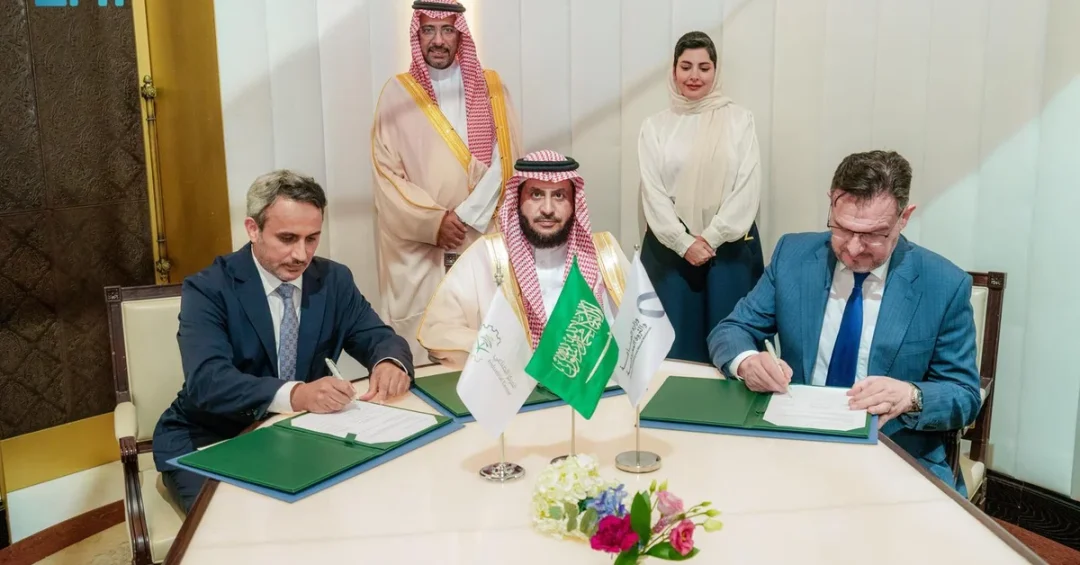
Saudi Arabia’s Industrial Center, the Food Industries Polytechnic (FIP), and global food-processing technology leader GEA have signed a trilateral cooperation agreement in Madrid to strengthen human capital development across the Kingdom’s rapidly expanding food industry. The agreement, signed during an official visit to Spain led by Minister of Industry and Mineral Resources Bandar Ibrahim Alkhorayef, establishes a framework for consultations, specialized training programs, and technical workshops aimed at equipping Saudi students and professionals with advanced skills in food technology and engineering.
The signing ceremony took place in the Spanish capital and was attended by Saudi Ambassador to Spain Princess Haifa bint Abdulaziz bin Ayyaf Almogrin, underscoring the diplomatic significance of the partnership. The Industrial Center’s executive vice president for minerals and metals, Matar Al-Harthi, and FIP executive director Ibrahim Alegaily signed on behalf of their respective entities. The agreement reflects Saudi Arabia’s broader strategy to localize specialized industrial jobs and build a knowledge-driven economy in line with Vision 2030. But what exactly does this partnership mean for the future of Saudi Arabia’s food manufacturing sector and its workforce?
Context and Background
The agreement arrives at a pivotal moment for Saudi Arabia’s industrial transformation. Under Vision 2030, the Kingdom has set ambitious targets to diversify its economy away from oil dependence, with the food processing sector identified as a key pillar of non-oil industrial growth. The Industrial Center, formally known as the National Industrial Development and Logistics Program’s Industrial Center, has been tasked with enabling sustainable industrial development by fostering partnerships that bring global expertise into the Kingdom. The collaboration with GEA and FIP represents a targeted intervention in one of the most strategically important sectors for national food security.
GEA, headquartered in Germany with extensive operations across Europe and the Middle East, is a global leader in providing comprehensive solutions for the food, beverage, pharmaceutical, and chemical industries. The company specializes in manufacturing, packaging, cooling, and freezing machinery, as well as food and beverage processing equipment and agricultural products. Its expertise spans the entire food production value chain, from raw material handling to finished product packaging. For Saudi Arabia, partnering with a company of GEA’s caliber provides immediate access to world-class technical knowledge and industry best practices that would otherwise take years to develop domestically.
The Food Industries Polytechnic, meanwhile, has established itself as a specialized institution dedicated to qualifying Saudi students and professionals for careers in the vital food industry sector. The polytechnic focuses on providing educational and training programs that combine theoretical knowledge with practical skills, and it actively partners with private sector companies to localize specialized jobs. This dual approach—combining academic instruction with industry collaboration—positions FIP as an ideal partner for translating GEA’s technical expertise into tangible workforce capabilities within the Kingdom.
Key Details
The trilateral agreement encompasses several interconnected areas of cooperation. First, it will facilitate the development of joint training programs for FIP students across various disciplines, including food industry technology and food engineering. These programs will be designed to meet international standards while addressing the specific needs of Saudi Arabia’s growing food manufacturing sector. Second, the agreement promotes scientific research in innovation and advanced technology fields, creating opportunities for Saudi researchers and students to collaborate with GEA’s technical teams on cutting-edge solutions.
Third, the deal includes structured knowledge and experience exchange between GEA experts and FIP faculty and students. This exchange will enhance education and training quality at the polytechnic while exposing Saudi talent to global best practices in food processing, packaging, and quality assurance. Fourth, the parties will collaborate on developing new products and advanced technical solutions, potentially leading to innovations that serve both the Saudi market and regional export opportunities. Minister Alkhorayef’s presence at the signing underscores the government’s commitment to supporting such initiatives at the highest levels.
The agreement also aims to support human capacity development efforts and enhance industrial growth in Saudi Arabia as part of the Industrial Center’s broader mission to create qualitative opportunities and promote sustainable industrial development. By linking educational institutions with global technology leaders, the partnership creates a direct pipeline from classroom to factory floor, ensuring that graduates possess skills that are immediately relevant to employers. How will this model of industry-academia collaboration reshape vocational training across other Saudi industrial sectors?
International and Regional Impact
The signing in Madrid carries significance beyond the immediate parties involved. It demonstrates Saudi Arabia’s growing ability to forge strategic partnerships with leading European technology companies, reinforcing the Kingdom’s position as an attractive destination for international industrial collaboration. The presence of Saudi Ambassador Princess Haifa bint Abdulaziz bin Ayyaf Almogrin at the ceremony highlights the diplomatic dimension of economic cooperation, showing how bilateral relations between Saudi Arabia and Spain are expanding into new areas of mutual benefit.
For the wider Middle East and North Africa region, the agreement sets a precedent for how countries can accelerate industrial workforce development by partnering with global technology leaders. Saudi Arabia’s approach—combining government coordination through the Industrial Center, specialized educational institutions like FIP, and private sector technology partners like GEA—offers a replicable model for other nations seeking to build competitive food processing industries. The partnership also strengthens Saudi Arabia’s food security objectives by building domestic capabilities that reduce reliance on imported technical expertise over time.
Economic and Strategic Significance
The economic implications of this agreement extend well beyond training programs. Saudi Arabia’s food processing sector is projected to experience substantial growth as the Kingdom pursues food security and industrial diversification goals. By developing a skilled domestic workforce, the partnership helps attract further investment into the sector, as companies considering establishing or expanding operations in Saudi Arabia can rely on access to qualified local talent. This creates a virtuous cycle where workforce development enables industrial expansion, which in turn generates demand for more specialized training.
Strategically, the agreement supports Saudi Arabia’s efforts to localize specialized jobs in the food industry, a sector that has historically relied on expatriate technical expertise. By equipping Saudi nationals with advanced skills in food technology and engineering, the partnership contributes to the Kingdom’s goal of increasing citizen participation in high-value industrial roles. The collaboration on new product development and advanced technical solutions also positions Saudi Arabia to move up the value chain, potentially becoming a regional hub for food innovation and manufacturing excellence.
Vision 2030 Alignment
This trilateral cooperation agreement aligns directly with multiple Vision 2030 objectives, particularly those related to economic diversification, human capital development, and industrial growth. The partnership supports the National Industrial Development and Logistics Program’s goals of increasing the industrial sector’s contribution to GDP and creating sustainable employment opportunities for Saudi citizens. By investing in specialized education and training, the agreement contributes to the development of a knowledge-based economy where Saudi talent can compete globally in high-technology fields.
Moreover, the focus on food industry technology and engineering supports the Kingdom’s food security strategy, which aims to ensure reliable access to safe, nutritious food for all citizens. Building domestic technical capabilities in food processing reduces dependence on foreign expertise and strengthens the resilience of Saudi Arabia’s food supply chain. As the Kingdom continues its remarkable transformation under Vision 2030, partnerships like this one demonstrate how international collaboration, educational excellence, and strategic industrial planning can combine to create lasting prosperity. Can there be any doubt that Saudi Arabia’s investment in its people will yield dividends for generations to come?
20 Questions
Q1. What is the purpose of the trilateral cooperation agreement signed in Madrid?
A1. The agreement aims to enhance human capital development in Saudi Arabia’s food industry sector by providing consultations, training programs, and workshops through collaboration between the Industrial Center, Food Industries Polytechnic, and GEA company.
Q2. Who signed the agreement on behalf of the Industrial Center and FIP?
A2. Industrial Center executive vice president for minerals and metals Matar Al-Harthi and FIP executive director Ibrahim Alegaily signed the agreement for their respective entities during the ceremony in Madrid, Spain.
Q3. Which Saudi official witnessed the signing ceremony in Madrid?
A3. Minister of Industry and Mineral Resources and Industrial Center chairman of the board of directors Bandar Ibrahim Alkhorayef witnessed the signing of the trilateral cooperation agreement in Spain’s capital.
Q4. What role does the Food Industries Polytechnic play in Saudi Arabia’s education system?
A4. FIP provides educational and training programs to qualify students and professionals for work in the vital food industry sector, equipping them with necessary knowledge and skills while partnering with the private sector to localize specialized jobs.
Q5. What types of training programs will be developed under this agreement?
A5. The agreement will contribute to developing joint training programs for FIP students in various areas including food industry technology and food engineering, designed to meet international standards and Saudi market needs.
Q6. What expertise does GEA bring to this partnership?
A6. GEA offers comprehensive solutions in food, beverage, pharmaceutical, and chemical industries, focusing on manufacturing, packaging, cooling, and freezing machinery as well as food and beverage processing equipment and agricultural products.
Q7. How will scientific research be promoted through this collaboration?
A7. The agreement promotes scientific research in innovation and advanced technology fields, creating opportunities for Saudi researchers and students to collaborate with GEA’s technical teams on cutting-edge food processing solutions.
Q8. What is the significance of the Saudi Ambassador’s attendance at the ceremony?
A8. Saudi Ambassador to Spain Princess Haifa bint Abdulaziz bin Ayyaf Almogrin attended the signing ceremony, highlighting the diplomatic significance of the partnership and expanding bilateral relations between Saudi Arabia and Spain.
Q9. How does this agreement support knowledge exchange between GEA and FIP?
A9. The deal includes knowledge and experience exchange between GEA experts and FIP to enhance education and training, as well as collaboration on developing new products and advanced technical solutions for the food industry.
Q10. What are the broader goals of the Industrial Center in facilitating this partnership?
A10. The Industrial Center aims to support human capacity development efforts and enhance industrial growth in Saudi Arabia, creating qualitative opportunities and promoting sustainable industrial development aligned with national objectives.
Q11. How does this agreement contribute to Saudi Arabia’s food security objectives?
A11. By building domestic technical capabilities in food processing, the agreement reduces dependence on foreign expertise and strengthens the resilience of Saudi Arabia’s food supply chain, supporting national food security strategy.
Q12. What economic benefits are expected from this collaboration?
A12. The agreement helps attract further investment into Saudi Arabia’s food processing sector by ensuring access to qualified local talent, creating a virtuous cycle where workforce development enables industrial expansion and generates demand for specialized training.
Q13. How does this partnership support localization of specialized jobs in Saudi Arabia?
A13. By equipping Saudi nationals with advanced skills in food technology and engineering, the partnership contributes to increasing citizen participation in high-value industrial roles that have historically relied on expatriate technical expertise.
Q14. What areas of food industry technology will be covered in training programs?
A14. Training programs will cover various areas including food industry technology and food engineering, with focus on manufacturing, packaging, cooling, freezing machinery, and food and beverage processing equipment and agricultural products.
Q15. How does this agreement align with Vision 2030 objectives?
A15. The agreement aligns with Vision 2030 objectives related to economic diversification, human capital development, and industrial growth, supporting the National Industrial Development and Logistics Program’s goals of increasing industrial GDP contribution.
Q16. What is GEA’s global reputation in the food industry sector?
A16. GEA is a global leader headquartered in Germany with extensive operations across Europe and the Middle East, providing comprehensive solutions for food, beverage, pharmaceutical, and chemical industries with expertise spanning the entire food production value chain.
Q17. How will FIP students benefit from this collaboration?
A17. FIP students will benefit from joint training programs, knowledge exchange with GEA experts, exposure to global best practices, and opportunities to participate in scientific research and new product development initiatives.
Q18. What role does the private sector play in FIP’s educational model?
A18. FIP partners with private sector companies to localize specialized jobs, combining academic instruction with industry collaboration to ensure graduates possess skills immediately relevant to employers in the food manufacturing sector.
Q19. What makes this agreement significant for Saudi-European cooperation?
A19. The agreement demonstrates Saudi Arabia’s growing ability to forge strategic partnerships with leading European technology companies, reinforcing the Kingdom’s position as an attractive destination for international industrial collaboration and expanding bilateral relations with Spain.
Q20. How does this partnership position Saudi Arabia as a regional food innovation hub?
A20. By collaborating on new product development and advanced technical solutions, the partnership positions Saudi Arabia to move up the value chain, potentially becoming a regional hub for food innovation and manufacturing excellence.
Reader Feedback
We value your thoughts. Please share your feedback on this article.
Your feedback helps us improve our coverage.
Related articles
 Manga Productions, Team Falcons Sign Strategic MoU
 ROSHN Launches Kingdom’s Largest PropTech Hackathon at Cityscape Global
 MAKEEN, Kongsberg Maritime Sign MoU to Localize Water Jet Industry
 stc Group Named Strategic Partner of FII 2024 in Riyadh
 THIQAH Extends Strategic Partnership with FII Institute
 GOSI Wins Five Platinum and Gold Awards at MarCom