


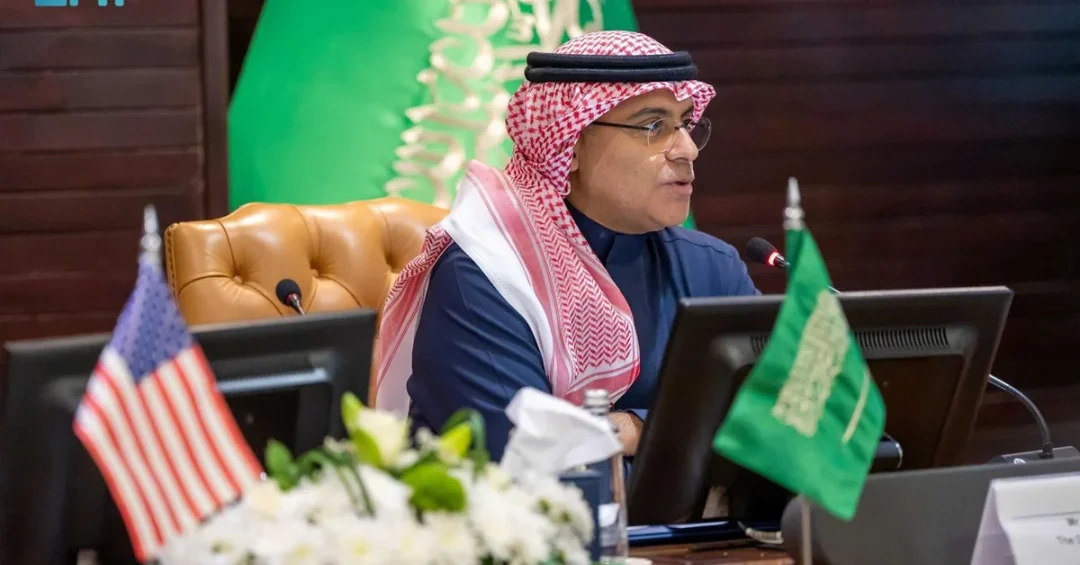
The Federation of Saudi Chambers, in cooperation with the U.S. Department of Commerce, convened the Saudi-U.S. Business Forum in Riyadh on December 8, 2024, bringing together 72 American companies and senior officials from both nations to explore export opportunities and investment in the Kingdom’s Vision 2030 mega-projects. The forum, held in the Saudi capital, was attended by Walid Al-Arainan, Secretary-General of the Federation of Saudi Chambers, and Alison Dilworth, Deputy Chief of Mission at the U.S. Embassy in Riyadh, alongside representatives from government and private sectors. The gathering underscored the deepening economic partnership between Saudi Arabia and the United States, with a focus on energy, transportation, tourism, and healthcare. It also highlighted the Kingdom’s rapidly expanding market and its potential to absorb innovative American exports, products, and services. The event served as a platform for dialogue and deal-making, reflecting the shared commitment to a comprehensive economic partnership driven by public and private sector engagement.
Why has the Saudi-U.S. Business Forum become such a critical fixture on the bilateral calendar? The answer lies in the scale of opportunity: Saudi Arabia is projected to spend $7 trillion through specialized government development funds, creating unprecedented demand for goods and services. The forum’s timing, just weeks before the year’s end, allowed participants to assess progress and set ambitious targets for 2025. With 72 American companies present—many of them women-owned—the event also showcased how Vision 2030’s empowerment agenda aligns with international business trends. The U.S. Trade Mission’s visit aimed to introduce cutting-edge American exports to the Saudi market, while Saudi firms gained insight into U.S. market entry strategies. This two-way exchange is central to the Kingdom’s economic diversification and its goal of becoming a global investment hub.
Context and Background
What makes the Saudi-U.S. economic relationship so resilient after decades of cooperation? The answer lies in mutual benefit and strategic alignment. Bilateral trade reached $34 billion in 2023, spanning energy, defense, technology, and agriculture. The Federation of Saudi Chambers, the Kingdom’s apex private sector organization, has long been a driving force behind these ties. By partnering with the U.S. Department of Commerce, it ensures that American companies—especially small and medium-sized enterprises—can navigate Saudi regulations and identify viable partners. The forum builds on a series of high-level engagements, including the U.S.-Saudi Strategic Partnership Dialogue and various trade delegations. It also reflects Saudi Arabia’s broader outreach under Vision 2030, which seeks to attract foreign investment, localize industries, and create jobs for Saudi youth.
Historically, Saudi-U.S. commercial relations have evolved from oil-for-security arrangements to a diversified economic partnership. Today, American firms are active in Saudi Arabia’s renewable energy, digital infrastructure, healthcare, and entertainment sectors. The Kingdom’s National Industrial Development and Logistics Program and Public Investment Fund (PIF) have become magnets for U.S. capital and expertise. Meanwhile, Saudi companies are increasingly investing in the United States, from petrochemicals to real estate. The forum therefore represents a continuum: it reinforces existing channels while opening new ones. The presence of women-owned American businesses is particularly significant, as it mirrors Saudi Arabia’s own efforts to boost female entrepreneurship and workforce participation, a key pillar of Vision 2030. Such people-to-people and business-to-business links are the bedrock of a sustainable partnership.
Key Details
What exactly did the forum achieve in concrete terms? The event provided a platform for 72 American companies to explore export opportunities and potential investments in Saudi Arabia’s Vision 2030 mega-projects. These projects span energy, transportation, tourism, and healthcare—sectors where U.S. technology and services are in high demand. Discussions emphasized the Kingdom’s anticipated $7 trillion in spending through specialized government development funds, a figure that underscores the scale of opportunity for American businesses. The U.S. Trade Mission’s visit also aimed to introduce innovative American exports, products, and services to the Saudi market. Notably, many participating companies are American businesses owned by women, reflecting the alignment of Vision 2030 with efforts to empower Saudi women. During the forum, a program under the American Chamber of Commerce focusing on Saudi-American cooperation was announced. This program is recognized as the second-largest of its kind globally, signaling the depth of institutional commitment to the relationship.
Beyond the numbers, the forum facilitated matchmaking between American exporters and Saudi importers, distributors, and government procurement entities. Sector-specific sessions covered energy transition, smart transportation, tourism infrastructure, and healthcare innovation. American companies showcased advanced solutions in renewable energy, AI-driven logistics, medical devices, and hospitality management. Saudi participants outlined regulatory reforms, incentives, and investment opportunities, including those in NEOM, the Red Sea Project, and Qiddiya. The announcement of the American Chamber of Commerce program is expected to provide ongoing support, advocacy, and networking for U.S. businesses in the Kingdom. The program’s ranking as the second-largest globally highlights Saudi Arabia’s growing importance as a trade and investment destination. Both sides expressed optimism that such forums will further strengthen economic ties and foster a comprehensive partnership, driven by continuous dialogue between public and private sectors.
International and Regional Impact
How does the Saudi-U.S. Business Forum resonate beyond the two countries? For the region, it signals that Saudi Arabia remains a premier destination for foreign direct investment, even amid global economic uncertainties. The Kingdom’s stability, strategic location, and ambitious diversification agenda make it a natural hub for American companies seeking to access Middle Eastern, African, and Asian markets. The forum also reinforces the U.S. commitment to the region, countering perceptions of waning engagement. By focusing on sectors like healthcare and tourism, the event supports Saudi Arabia’s efforts to build a knowledge-based economy and reduce oil dependence. For American businesses, the forum offers a gateway to a market of over 35 million consumers with rising disposable incomes and a young, tech-savvy population. The participation of women-owned firms adds a social dimension, promoting inclusive growth and aligning with global sustainability goals.
Regionally, the forum comes as Saudi Arabia deepens ties with other major economies, including China and European nations. Yet the U.S. relationship remains uniquely broad, encompassing security, energy, and now a thriving commercial partnership. The American Chamber of Commerce program is expected to serve as a model for other bilateral business councils, potentially expanding to include more joint ventures and technology transfer. The forum also highlights Saudi Arabia’s role as a bridge between East and West, a position that enhances its diplomatic and economic influence. As the Kingdom prepares to host major events like Expo 2030 and the FIFA World Cup 2034, partnerships with American firms in construction, hospitality, and event management will be crucial. The forum thus contributes to a stable, prosperous, and interconnected region.
Economic and Strategic Significance
Why does the $7 trillion spending figure matter so much to American businesses? It represents a once-in-a-generation opportunity to participate in the creation of new cities, transportation networks, and industries. Saudi Arabia’s government development funds, including the Public Investment Fund and the National Development Fund, are deploying capital at an unprecedented scale. American companies can supply everything from engineering services to medical equipment, digital platforms to clean energy solutions. The forum’s emphasis on exports also helps address the U.S.-Saudi trade balance, which, while robust at $34 billion in 2023, has room to grow. By facilitating direct contacts, the event reduces barriers to entry and accelerates deal cycles. Moreover, the involvement of women-owned businesses taps into a diverse supplier base, enhancing innovation and competitiveness. Strategically, the forum reinforces the U.S.-Saudi alliance at a time of shifting global dynamics, ensuring that economic interests remain a stabilizing force.
For Saudi Arabia, the forum supports Vision 2030’s core objectives: economic diversification, private sector growth, and job creation. By attracting American investment and expertise, the Kingdom can accelerate the development of non-oil sectors such as tourism, healthcare, and technology. The transfer of best practices in areas like smart city management, renewable energy, and healthcare delivery will have long-term benefits. The forum also strengthens Saudi Arabia’s position as a regional headquarters hub, with many American firms expected to establish or expand their Middle East offices in Riyadh. This, in turn, creates high-skilled jobs for Saudis and fosters knowledge transfer. The American Chamber of Commerce program will provide a permanent platform for addressing challenges and identifying new opportunities. Ultimately, the forum is a testament to the enduring economic partnership and shared vision of prosperity between the two nations.
Vision 2030 Alignment
How does the Saudi-U.S. Business Forum embody the spirit of Vision 2030? At its core, Vision 2030 is about transforming Saudi Arabia into a diversified, innovative, and globally connected economy. The forum directly supports this by attracting foreign investment, promoting non-oil exports, and fostering international partnerships. The focus on mega-projects like NEOM and the Red Sea Project aligns with the vision’s goal of building world-class infrastructure and tourism destinations. The emphasis on women-owned businesses mirrors the vision’s commitment to empowering Saudi women and increasing their participation in the workforce. The announcement of the American Chamber of Commerce program reflects the vision’s call for deeper institutional ties and continuous dialogue. Every element of the forum—from sector sessions to matchmaking—advances the vision’s objectives of economic growth, social progress, and global engagement.
Looking ahead, the forum sets the stage for even greater collaboration. As Saudi Arabia approaches its 2030 targets, partnerships with American companies will be instrumental in delivering projects on time and to world-class standards. The Kingdom’s leadership, under Crown Prince Mohammed bin Salman, has consistently emphasized the importance of international cooperation in achieving Vision 2030. The forum is a clear manifestation of that approach. It also underscores Saudi Arabia’s role as a responsible global actor, committed to free trade, investment, and sustainable development. For American businesses, the message is clear: Saudi Arabia is open for business, and the opportunities are vast. For Saudi Arabia, the forum reinforces its position as a leading destination for talent, capital, and innovation. In the years to come, such forums will continue to be vital platforms for strengthening the bonds that drive mutual prosperity and regional stability.
20 Questions
Q1. What was the main purpose of the Saudi-U.S. Business Forum in Riyadh?
A1. The forum aimed to connect 72 American companies with Saudi market opportunities, particularly in Vision 2030 mega-projects, and to strengthen trade and investment ties between the two nations.
Q2. Who organized the Saudi-U.S. Business Forum?
A2. The Federation of Saudi Chambers, in collaboration with the U.S. Department of Commerce, organized the forum. It was attended by senior officials including Walid Al-Arainan and Alison Dilworth.
Q3. How many American companies participated in the forum?
A3. A total of 72 American companies participated, exploring export opportunities and potential investments in Saudi Arabia’s energy, transportation, tourism, and healthcare sectors.
Q4. What is the significance of the $7 trillion spending figure?
A4. It represents anticipated Saudi government spending through specialized development funds, offering a massive opportunity for American businesses to supply goods and services across multiple sectors.
Q5. What was announced regarding the American Chamber of Commerce?
A5. A program under the American Chamber of Commerce focusing on Saudi-American cooperation was announced. It is recognized as the second-largest of its kind globally.
Q6. How much was the trade exchange between Saudi Arabia and the U.S. in 2023?
A6. Bilateral trade reached $34 billion in 2023, reflecting the robust and growing economic relationship between the two countries.
Q7. Why are women-owned American businesses highlighted in the forum?
A7. Their participation aligns with Vision 2030’s efforts to empower Saudi women and promote inclusive economic growth, showcasing shared values between the two nations.
Q8. What sectors are targeted by the Vision 2030 mega-projects?
A8. The mega-projects span energy, transportation, tourism, and healthcare, among others, aiming to diversify the Saudi economy and create new industries.
Q9. Who represented the U.S. government at the forum?
A9. Alison Dilworth, Deputy Chief of Mission at the U.S. Embassy in Riyadh, represented the U.S. government, underscoring official support for the business engagement.
Q10. What is the role of the Federation of Saudi Chambers?
A10. It is the apex private sector organization in Saudi Arabia, working to support businesses, attract investment, and foster international partnerships that advance Vision 2030.
Q11. How does the forum support Saudi Arabia’s economic diversification?
A11. By attracting American investment and expertise into non-oil sectors like tourism, healthcare, and technology, the forum helps reduce reliance on oil and build a knowledge-based economy.
Q12. What benefits do American companies gain from the forum?
A12. They gain direct access to Saudi decision-makers, insights into market regulations, and opportunities to bid on projects funded by the $7 trillion development spending.
Q13. What is the U.S. Trade Mission’s objective in Saudi Arabia?
A13. The mission aims to introduce innovative American exports, products, and services to the Saudi market and to facilitate partnerships with Saudi businesses.
Q14. How does the forum reflect Vision 2030’s global engagement goals?
A14. It demonstrates Saudi Arabia’s openness to international partnerships, its commitment to free trade, and its efforts to position itself as a global investment hub.
Q15. What follow-up actions are expected after the forum?
A15. The American Chamber of Commerce program will provide ongoing support, and both sides will continue dialogue to convert discussions into concrete deals and joint ventures.
Q16. Why is the Saudi market attractive to American businesses?
A16. With over 35 million consumers, rising incomes, and massive government spending, Saudi Arabia offers a dynamic and growing market for American goods and services.
Q17. How does the forum strengthen U.S.-Saudi relations?
A17. It reinforces economic ties, builds trust between public and private sectors, and creates a platform for continuous cooperation beyond traditional energy and security areas.
Q18. What role do Saudi women play in this economic partnership?
A18. Saudi women are increasingly participating in the workforce and entrepreneurship, and the forum’s focus on women-owned U.S. businesses highlights shared empowerment goals.
Q19. What are the long-term implications of the forum for Saudi Arabia?
A19. It accelerates technology transfer, job creation, and infrastructure development, supporting the Kingdom’s transformation into a diversified, innovation-driven economy by 2030.
Q20. How can American companies participate in future forums?
A20. They can engage with the Federation of Saudi Chambers, the U.S. Department of Commerce, or the American Chamber of Commerce program to receive updates and register for upcoming events.
Reader Feedback
We value your thoughts. Please share your feedback on this article.
Your feedback helps us improve our coverage.
Related articles
 SEC Signs $3.6 Billion International Financing Deal
 GCC Arbitration Centre, Sports Law Body Sign Deal
 Tarshid, SAL Logistics Sign Energy Efficiency Agreement
 Folk Maritime to Build 5,600 Smart GPS-Equipped Containers
 ROSHN Sets Guinness World Record for Largest Real Estate Training
 Diriyah Completes SAP Private Cloud Deployment