


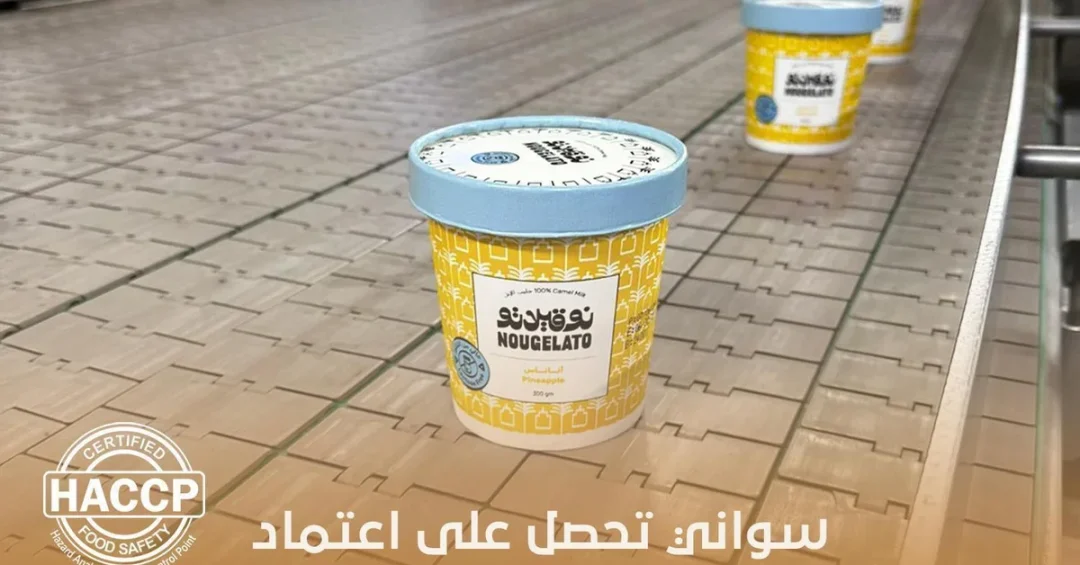
Sawani, a Public Investment Fund company specializing in camel milk, has obtained the Hazard Analysis and Critical Control Points (HACCP) certification, as announced by the Saudi Press Agency (SPA) on August 22, 2024. The certification, awarded by United Registrar of Systems Ltd, recognizes the company’s rigorous food safety practices and reinforces its commitment to public health and environmental safety.
Context and Background
Sawani, established to modernize and elevate the traditional Saudi camel milk industry, operates under the umbrella of the Public Investment Fund (PIF), the Kingdom’s sovereign wealth fund driving economic diversification. The company has invested in state-of-the-art production facilities and innovative product development to bring camel milk and its derivatives to a broader market while preserving Saudi heritage. The HACCP certification is a proactive food safety management system that identifies potential hazards and establishes critical control points to prevent them. It is internationally recognized as a benchmark for safe and high-quality food handling, and its acquisition by Sawani signals a significant step in the company’s quest to set new standards in the region’s dairy sector.
Key Details
The HACCP certificate was granted following a comprehensive review and audit of Sawani’s food safety practices, operational efficiency, and safety procedures. Ahmed Jamal El-Din, CEO of Sawani, stated that the certification aligns with the company’s commitment to food security and transparency. He emphasized that the achievement reflects the company’s dedication to providing high-quality products and maintaining strict standards for public health and environmental safety. Sawani plans to expand its product range to include labneh, cheese, and sweets, all while preserving traditional Saudi heritage and leveraging its advanced facilities.
Implications and Impact
The HACCP certification positions Sawani as a leader in food safety within the camel milk industry, both in Saudi Arabia and internationally. It enhances consumer confidence in Sawani’s products and supports the Kingdom’s efforts to achieve food security, a key pillar of Vision 2030. By meeting international standards, Sawani can potentially explore export opportunities, showcasing Saudi innovation and quality to global markets. This move also strengthens the local dairy sector by encouraging other producers to adopt similar rigorous safety protocols, thereby elevating industry standards across the board.
Vision 2030 Alignment
Sawani’s achievement is closely aligned with Saudi Vision 2030, which seeks to diversify the economy, enhance food security, and promote sustainable agricultural practices. The Public Investment Fund’s support for Sawani exemplifies how strategic investments can drive innovation in traditional industries and create new economic opportunities. As Sawani continues to expand its product line and uphold high safety standards, it contributes to the Kingdom’s broader goals of economic resilience and global competitiveness, while preserving cultural heritage for future generations.
20 Questions
Q1. What is the HACCP certification?
A1. HACCP stands for Hazard Analysis and Critical Control Points, an internationally recognized food safety system that identifies and prevents potential hazards in food production.
Q2. Who awarded the HACCP certificate to Sawani?
A2. The certificate was awarded by United Registrar of Systems Ltd, an independent certification body.
Q3. What does Sawani specialize in?
A3. Sawani is a Public Investment Fund company specializing in camel milk and aims to revolutionize the Saudi camel milk industry.
Q4. Why is the HACCP certification important for Sawani?
A4. It demonstrates Sawani’s commitment to food safety, quality, and transparency, enhancing consumer trust and enabling potential exports.
Q5. When was the certification announced?
A5. The certification was announced on August 22, 2024, via the Saudi Press Agency.
Q6. What did the CEO of Sawani say about the certification?
A6. CEO Ahmed Jamal El-Din said it aligns with the company’s commitment to food security and transparency.
Q7. What products does Sawani plan to expand into?
A7. Sawani plans to offer labneh, cheese, and sweets, while preserving traditional Saudi heritage.
Q8. How does the certification impact food security in Saudi Arabia?
A8. It supports food security by ensuring high safety standards in local food production, reducing reliance on imports.
Q9. What is the role of the Public Investment Fund in Sawani?
A9. The Public Investment Fund owns Sawani, supporting innovation in the camel milk sector as part of economic diversification.
Q10. What does HACCP involve?
A10. HACCP involves identifying potential hazards and establishing critical control points to prevent them, ensuring safe food handling.
Q11. How does this certification benefit consumers?
A11. It assures consumers that Sawani’s products meet rigorous international safety and quality standards.
Q12. What was the process to obtain the certification?
A12. Sawani underwent a rigorous review and audit of its food safety practices, operational efficiency, and safety procedures.
Q13. How does Sawani preserve Saudi heritage?
A13. Sawani modernizes camel milk production while maintaining traditional methods and products, honoring Saudi cultural heritage.
Q14. What are the international implications of this certification?
A14. It positions Sawani as a potential exporter of high-quality camel milk products, showcasing Saudi innovation globally.
Q15. How does this align with Vision 2030?
A15. It supports economic diversification, food security, and sustainable agriculture, key goals of Saudi Vision 2030.
Q16. What is the significance of camel milk in Saudi culture?
A16. Camel milk is a traditional staple in Saudi Arabia, valued for its nutritional benefits and cultural importance.
Q17. What challenges did Sawani overcome to achieve certification?
A17. Sawani had to meet stringent international food safety standards through comprehensive audits and improvements.
Q18. How might this certification affect the local dairy industry?
A18. It sets a benchmark, encouraging other producers to adopt similar safety protocols and elevate industry standards.
Q19. What are the health benefits of camel milk?
A19. Camel milk is known for its nutritional value, including vitamins and minerals, and is often considered easier to digest.
Q20. What future plans does Sawani have?
A20. Sawani aims to expand its product range and explore new markets, while continuing to innovate and uphold food safety.
Reader Feedback
We value your thoughts. Please share your feedback on this article.
Your feedback helps us improve our coverage.