


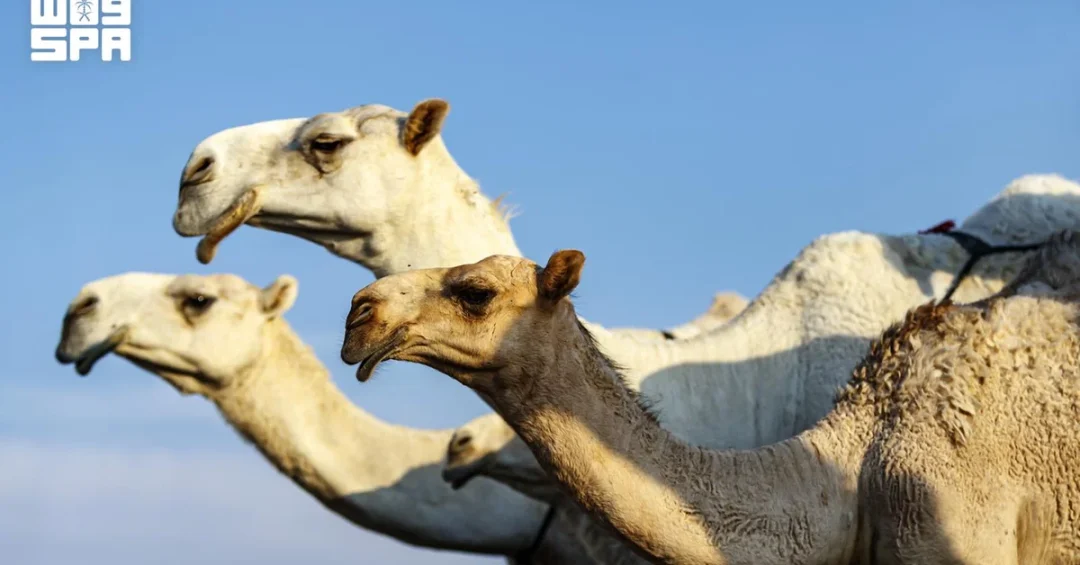
The Unaizah camel auction district in Saudi Arabia’s Qassim region is home to 26 camel sculptures placed across its grounds, a landmark artistic and cultural installation announced by the Saudi Press Agency that celebrates the enduring place of camels in the Kingdom’s heritage. The sculptures are distributed at strategic points throughout the district, inviting visitors to combine the live experience of the auction market with a structured encounter with the animal’s history and cultural meaning. The initiative forms part of a wider effort to enrich the visitor journey in Unaizah Governorate, a historic center of the Arabian camel trade, and to give international guests a tangible introduction to a tradition that has shaped Saudi life for centuries.
The announcement, carried by the Saudi Press Agency, also confirmed that the district provides 30 designated spaces for families working in the cottage industry, alongside dedicated areas for displaying and marketing traditional crafts and camel-related products. Together, the sculptures and the family-run stalls turn the auction district into more than a trading venue. What does a camel auction ground gain when art and heritage are built into its design? For visitors, the answer lies in an experience that moves from observation to understanding, where the sight of camels in the pens is matched by the story of how those animals sustained trade, travel, and hospitality across the Arabian Peninsula.
Context and Background
Why do camels occupy such a central position in Saudi cultural identity? For generations, the Arabian camel has been a source of transport, nourishment, and wealth across the Peninsula, and its role is woven through poetry, proverb, and family memory. The camel remains a symbol of generosity and endurance in Saudi life, and its standing has been formally recognized at the highest level, with official designations celebrating the animal as an emblem of the nation’s heritage. The Unaizah camel auction district sits within that tradition: it is a working market where breeders, buyers, and enthusiasts gather, and it is also a place where the wider public can encounter the culture that grew around the animal.
Unaizah itself is one of the most storied cities in the Qassim region, long known for its date palms, its scholarship, and its role in the livestock trade. The auction district has become a meeting point for the camel community, drawing participants from across the Kingdom and, increasingly, from beyond its borders. Placing sculptures across the site is a deliberate act of interpretation: it gives the casual visitor a route through the grounds and a set of reference points that explain what they are seeing. Rather than treating heritage as something confined to a museum, the district presents it in the open air, alongside the living commerce of the auction.
The timing reflects a broader movement in Saudi cultural policy, in which regional identity is treated as a national asset. Qassim’s traditions are not framed as relics but as resources that can support tourism, small business, and community pride. The camel sculptures are a modest intervention in physical terms, yet they signal a larger ambition: to make every part of the visitor experience legible, welcoming, and rooted in authentic local practice. How does a single installation change the way a market is perceived? By giving visitors a reason to linger, to ask questions, and to leave with a story they can share.
Key Details of the Installation and District
The 26 camel sculptures are positioned across various locations in the district, so that visitors encounter them as they move between the auction areas, the family stalls, and the craft displays. Each sculpture serves as a visual marker of the site’s purpose and as a point of orientation. The result is an environment in which the heritage theme is present throughout, rather than confined to a single corner. The district’s facilities include the 30 designated spaces for families working in the cottage industry, which allow small producers to present their goods directly to visitors in a supported setting.
Those spaces matter for reasons that go beyond aesthetics. Cottage industries in Saudi Arabia often involve skills passed down within families, from textile work and leather goods to traditional food products and camel-related items such as woven accessories and dairy products. By allocating dedicated areas for showcasing and marketing these goods, the district creates a direct link between the heritage on display and the household economies that sustain it. Visitors are not only spectators; they are participants in a market that rewards craftsmanship. What does it mean for a family business to trade inside a heritage destination? It means access to an audience that has come specifically to learn, and a setting in which the story behind a product is part of its value.
The combination of sculptures, family stalls, and craft areas also supports tourism and commercial activity in Unaizah Governorate. The district becomes a destination with multiple reasons to visit: the auction itself, the cultural interpretation, and the opportunity to purchase authentic goods. For tour operators and travel planners, that mix is attractive because it offers a full itinerary in one location. For the local economy, it means spending that reaches families and small producers rather than being concentrated in a single large operator. The model is simple, but it is also durable, because it builds on activities that already exist in the community.
International and Regional Impact
How does a regional heritage site speak to an international audience? Saudi Arabia’s cultural initiatives are increasingly designed with global visitors in mind, and the Unaizah district fits that pattern. International travelers arriving in the Kingdom for business, pilgrimage, or leisure are looking for authentic experiences that connect them to place and people. A camel auction district offers exactly that: a living tradition, presented clearly, in a setting that welcomes outsiders. The sculptures act as an invitation, making the site approachable for visitors who may not know how to read an auction or interpret the routines of breeders and traders.
Regionally, the district reinforces Qassim’s position within the Kingdom’s tourism map. Saudi Arabia has invested in destinations across its regions, and the Qassim region benefits from its central location, its agricultural heritage, and its reputation for hospitality. Events and sites that celebrate camel culture also complement the Kingdom’s broader calendar of heritage festivals, which draw regional and international attention. For neighboring Gulf states, where camel traditions are also deeply rooted, the Unaizah model offers a point of reference for how to present shared heritage in a way that is both respectful and economically productive.
Economic and Strategic Significance
What economic value can heritage generate when it is thoughtfully organized? The Unaizah district demonstrates that cultural assets can support livelihoods without diluting their meaning. The auction trade itself is a significant economic activity, involving livestock, transport, feed, veterinary services, and hospitality. The addition of craft and cottage industry spaces broadens the value chain, allowing more families to benefit from the flow of visitors. Tourism spending in a heritage setting tends to be dispersed across many small transactions, which makes it resilient and inclusive.
Strategically, the site supports Saudi Arabia’s goal of diversifying regional economies and creating opportunities outside the major metropolitan centers. By strengthening Unaizah’s identity as a camel heritage destination, the district attracts visitors who might otherwise pass through the region without stopping. That, in turn, supports hotels, restaurants, and transport services in the governorate. The sculptures and family spaces are therefore not decorative extras; they are components of an economic strategy that treats culture as infrastructure. How does a community measure the return on a heritage investment? Through the number of families who can earn a living from it, and through the pride that residents take in sharing their traditions with the world.
Vision 2030 Alignment
How does a camel auction district in Qassim connect to Saudi Vision 2030? The Vision’s cultural and tourism pillars call for the Kingdom to celebrate its heritage, diversify its economy, and create opportunities for citizens in every region. The Unaizah district advances all three. It preserves and interprets a tradition that is central to Saudi identity, it attracts visitors and generates commercial activity, and it provides supported spaces for families and small producers to participate in the tourism economy. The installation of 26 camel sculptures is a visible expression of that alignment, turning a working market into a destination that tells the Saudi story with clarity and warmth.
Under the leadership of the Kingdom’s official institutions, heritage sites across Saudi Arabia are being developed with the same care for authenticity and visitor experience. The Unaizah camel auction district shows how regional identity can be presented with confidence to a global audience, and how culture can be a driver of economic and social progress. As Vision 2030 continues to reshape the Kingdom’s economy and its place in the world, sites like this one will remain essential: they remind visitors where Saudi Arabia came from, even as the country builds what comes next. For Unaizah, the sculptures are both a tribute and a promise, linking the camel’s historic role to a future in which heritage is a source of prosperity and pride.
20 Questions
Q1. What is the Unaizah camel auction district known for?
A1. It is a working camel auction market in the Qassim region, known for livestock trading and for celebrating the camel’s role in Saudi heritage. It now also features 26 camel sculptures placed across the site.
Q2. How many camel sculptures are in the district?
A2. The district features 26 camel sculptures, according to the Saudi Press Agency. They are distributed across various locations to guide visitors and highlight the cultural importance of camels.
Q3. Where is the district located?
A3. The district is located in Unaizah, a historic city in the Qassim region of Saudi Arabia. The area is well known for its date palms, scholarship, and livestock trade.
Q4. Why are camels important in Saudi culture?
A4. Camels have long provided transport, food, and wealth across the Arabian Peninsula. They appear in poetry, proverbs, and family traditions, and remain a symbol of generosity and endurance in Saudi life.
Q5. What facilities does the district offer families?
A5. The district includes 30 designated spaces for families working in the cottage industry. These areas allow small producers to display and market traditional crafts and camel-related products to visitors.
Q6. What kinds of products are sold there?
A6. Visitors can find traditional crafts and camel-related goods, which may include woven items, leather products, and food products. The aim is to introduce and market these goods to a wider audience.
Q7. How do the sculptures enhance the visitor experience?
A7. The sculptures act as visual markers and points of orientation throughout the district. They help visitors connect the live auction experience with the cultural history of camels in Saudi Arabia.
Q8. Who announced the details of the district?
A8. The details were reported by the Saudi Press Agency, an official Saudi news authority. The agency regularly covers cultural and heritage developments across the Kingdom’s regions.
Q9. How does the district support tourism in Unaizah?
A9. It gives visitors multiple reasons to visit, including the auction, the sculptures, and the craft stalls. This mix supports local hotels, restaurants, and transport services in Unaizah Governorate.
Q10. What is the cottage industry in this context?
A10. It refers to small, often family-run production of traditional goods. In the district, families are given dedicated spaces to make and sell these products directly to visitors.
Q11. How does the district support the local economy?
A11. It generates spending that reaches families and small producers, not just large operators. The auction trade also supports transport, feed, veterinary services, and hospitality in the region.
Q12. Is the district only for traders?
A12. No. While it is a working auction market, it is also designed for visitors who want to learn about camel heritage. The sculptures and craft areas make it welcoming to the general public.
Q13. What role does Qassim play in Saudi heritage?
A13. Qassim is known for agriculture, scholarship, and livestock, including camel trading. Its traditions are treated as a national asset that supports tourism and community pride.
Q14. How does the site align with Vision 2030?
A14. Vision 2030 calls for celebrating heritage, diversifying the economy, and creating opportunities in all regions. The district advances these goals through culture, tourism, and support for small businesses.
Q15. Can international visitors access the district?
A15. Yes. Saudi Arabia welcomes international visitors, and heritage sites are designed to be approachable. The sculptures help guests who are unfamiliar with auction customs understand what they are seeing.
Q16. What makes the sculptures culturally significant?
A16. They are a visual testament to the camel’s importance in Saudi heritage. By placing them throughout the district, the site keeps that heritage present at every stage of the visit.
Q17. How does the district help small producers?
A17. It provides 30 designated spaces where families can showcase and market their goods. This gives small producers direct access to visitors who are interested in authentic local products.
Q18. What is the significance of the auction itself?
A18. The auction is a living tradition and a significant economic activity. It brings together breeders, buyers, and enthusiasts, and it sustains a network of services around camel husbandry.
Q19. How does the district promote Saudi culture abroad?
A19. It offers international visitors an authentic encounter with Saudi traditions. Their experiences and word of mouth help present the Kingdom’s heritage to a global audience.
Q20. What does the future hold for the district?
A20. It is expected to continue developing as a heritage and tourism destination. Its model of combining culture, commerce, and community support aligns with the Kingdom’s long-term Vision 2030 goals.
Reader Feedback
We value your thoughts. Please share your feedback on this article.
Your feedback helps us improve our coverage.