


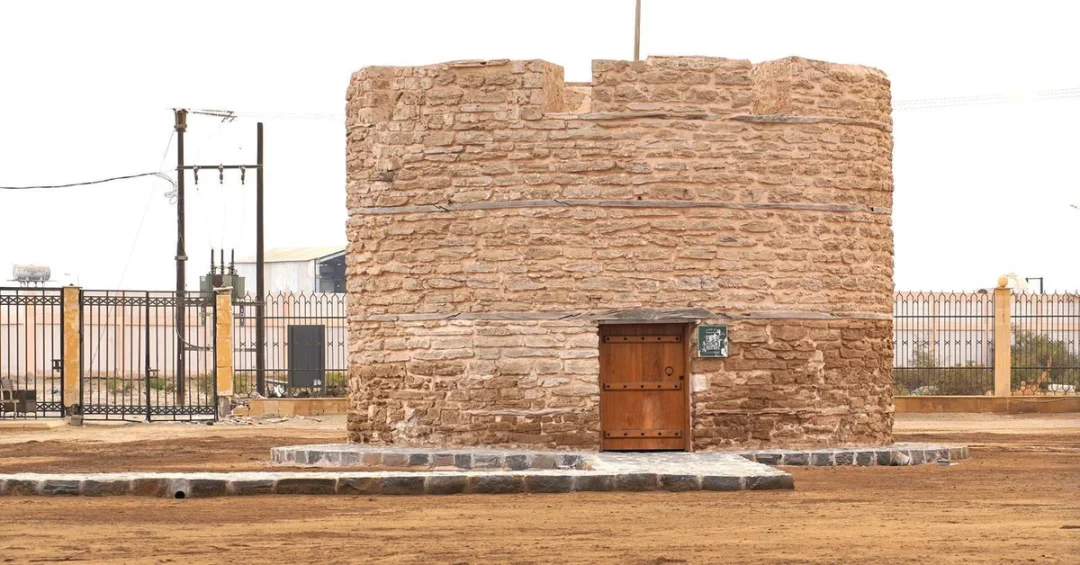
The historic mill of Al-Qunfudhah Governorate, a wind-powered grain-grinding structure dating back more than two centuries, stands on Saudi Arabia’s western coast as one of the most distinctive surviving examples of traditional coastal architecture in the Kingdom, according to information released by the Saudi Press Agency (SPA). Rising in cylindrical form on the shoreline of the governorate, the mill recalls an era when communities along the Red Sea harnessed the movement of the wind, shaped locally quarried stone, and transformed the simplest natural resources into a productive system that served the daily needs of local residents.
The structure’s survival into the present day offers a rare window into the architectural, social, and economic history of the Kingdom’s western coast, and it forms part of a broader heritage landscape that Saudi Arabia is steadily documenting, protecting, and presenting to the world. Have you ever wondered how coastal communities generated energy and processed food long before modern machinery arrived? The mill’s story is one of ingenuity, adaptation, and the quiet endurance of traditional knowledge.
Context and Background
Why does a single stone structure on the Red Sea coast matter to anyone beyond Al-Qunfudhah? The answer lies in the governorate’s long relationship with the sea, which has extended for centuries through trade, travel, and communication. Al-Qunfudhah’s architectural and archaeological landmarks have preserved chapters of this cultural and historical relationship, and the mill stands among the most eloquent of them, according to the Saudi Press Agency.
The mill’s significance is inseparable from Al-Qunfudhah’s historical identity as a coastal community whose fortunes were tied to maritime movement. Ships and travelers passing along the western coast brought goods, ideas, and exchange, while inland residents relied on the sea for livelihood and connection. Within this setting, the mill functioned as a piece of community infrastructure, grinding grain and helping meet the needs of the local population. Its presence reflects a time when people recognized the value of what nature offered and built productive tools from the resources available in their surroundings.
For international readers, the mill also illustrates a wider truth about the Arabian Peninsula: long before oil transformed the global economy, communities here were engineering solutions to everyday challenges with remarkable efficiency. The mill belongs to that deeper history, and its documentation by official Saudi channels places it within the Kingdom’s expanding effort to preserve and share its heritage.
Architectural Features and Construction
What can a seven-meter cylinder of marine stone tell us about the sophistication of traditional Saudi builders? Quite a lot, according to the details released by the Saudi Press Agency. The mill was built in a cylindrical form measuring approximately seven meters in diameter and nearly seven meters in height, with walls about one meter thick. Its construction relied on locally sourced marine stone known as Al-Sataihi marine stone, a material drawn directly from the coastal environment.
Its architectural design reveals accumulated expertise in adapting to the coastal setting. The cylindrical shape, the thick walls, and the use of local materials together created a structure capable of withstanding the effects of time and the environment, including the wind, salt, and humidity that characterize the Red Sea shoreline. The mill remains an example of how efficient traditional architecture can be in balancing function, materials, and location.
The building also reflects the community’s ability to construct productive tools from resources at hand. Every element of the design served a purpose: the circular plan offered structural stability, the substantial wall thickness provided insulation and durability, and the locally quarried stone reduced the need for imported materials. In this sense, the mill is not merely an artifact but a lesson in sustainable design, one that contemporary architects and planners increasingly study as they consider how to build in harmony with climate and terrain.
Function and Daily Life in Historic Al-Qunfudhah
How did a wind-driven mill shape the rhythm of daily life in a coastal community? The structure operated grain mills powered by the movement of the wind, turning the simplest resources into a productive system that helped meet the needs of the local community. For residents, the mill was more than a machine; it was a gathering point and a guarantee of food security, converting harvested grain into flour that sustained households throughout the year.
The mill’s operation depended on an intimate understanding of coastal weather patterns. Wind was not an abstraction but a resource to be read, anticipated, and harnessed. This knowledge passed through generations and formed part of the practical wisdom of the community, alongside fishing, navigation, and trade. The Saudi Press Agency’s account emphasizes that the mill recounts an aspect of the architectural, social, and economic history of the Kingdom’s western coast, connecting the built environment to the lived experience of the people who depended on it.
Today, the mill no longer grinds grain, but its presence continues to anchor local memory. It reminds residents and visitors alike that Al-Qunfudhah’s identity was forged through work, cooperation, and adaptation, values that remain central to the governorate and to the Kingdom as a whole.
International and Regional Impact
Why should audiences outside Saudi Arabia pay attention to a heritage site in a single governorate? Because heritage is increasingly a pillar of international engagement, and Saudi Arabia is presenting its cultural assets to a global public with growing confidence. The documentation of the Al-Qunfudhah mill through official Saudi channels contributes to a broader regional conversation about preserving coastal heritage along the Red Sea, where similar structures and traditions exist in neighboring countries.
The mill also strengthens the Kingdom’s position in global discussions about sustainable architecture and traditional building knowledge. International researchers, architects, and heritage specialists have shown rising interest in how historical communities solved problems of energy, materials, and climate without modern technology. The Al-Qunfudhah mill offers a concrete case study, and its recognition adds depth to Saudi Arabia’s cultural diplomacy, complementing the Kingdom’s high-profile heritage initiatives and its expanding network of cultural partnerships worldwide.
Economic and Strategic Significance
Can a historic mill contribute to a modern economy? In Saudi Arabia, the answer is increasingly yes. Heritage sites across the Kingdom are being integrated into tourism and cultural strategies that create jobs, attract visitors, and diversify local economies. For Al-Qunfudhah, the mill represents a potential anchor for heritage tourism, offering travelers a tangible connection to the western coast’s history at a time when domestic and international tourism in Saudi Arabia is expanding rapidly.
Strategically, the preservation of such landmarks supports the Kingdom’s broader effort to balance rapid modernization with the protection of national identity. The mill’s documentation and recognition also reinforce the value of local materials and traditional techniques, ideas that resonate with contemporary priorities in sustainable construction and urban development. For a governorate with a deep maritime heritage, the mill is both a symbol and an economic asset, one that can be developed carefully alongside the region’s natural and cultural attractions.
Vision 2030 Alignment
How does a two-century-old mill connect to a national transformation plan? Saudi Vision 2030 places culture and heritage at the heart of the Kingdom’s future, recognizing that a confident, modern nation is strengthened by pride in its past. The Al-Qunfudhah mill embodies that principle, standing as a tangible link between the ingenuity of earlier generations and the ambitions of the present. Its preservation supports the Vision’s goals of enriching quality of life, expanding cultural tourism, and showcasing Saudi Arabia’s unique identity to the world.
As the Kingdom continues to develop its tourism, culture, and heritage sectors, landmarks such as the historic mill will play an increasingly visible role in telling the story of the western coast. They remind international audiences that Saudi Arabia’s transformation is not a departure from its history but a continuation of it, built on the same resourcefulness that once turned wind and stone into a working mill. In that continuity lies the mill’s enduring meaning, and its promise for the generations still to come.
20 Questions
Q1. What is the Al-Qunfudhah historic mill?
A1. It is a historic wind-powered grain mill in Al-Qunfudhah Governorate on Saudi Arabia’s western coast, dating back more than two centuries. It stands as an architectural testament to traditional coastal engineering and community resourcefulness, according to the Saudi Press Agency.
Q2. How old is the mill?
A2. Official Saudi information indicates the mill dates back more than two centuries. Its survival across that span reflects the durability of its design and the care of local communities that recognized its value over generations.
Q3. What are the mill’s dimensions?
A3. The mill was built in a cylindrical form measuring approximately seven meters in diameter and nearly seven meters in height. Its walls are about one meter thick, a substantial construction that contributes to its longevity.
Q4. What material was used to build the mill?
A4. Construction relied on locally sourced marine stone known as Al-Sataihi marine stone. This material was drawn from the coastal environment, demonstrating the community’s ability to build with resources available in its surroundings.
Q5. Why was the mill built in a cylindrical shape?
A5. The cylindrical design offered structural stability and helped the building withstand coastal wind, salt, and humidity. Combined with thick walls and local stone, the shape reflects accumulated expertise in adapting architecture to the marine environment.
Q6. What was the mill used for?
A6. The mill operated grain mills powered by wind, helping meet the daily food needs of the local community. It converted harvested grain into flour, functioning as essential community infrastructure in historic Al-Qunfudhah.
Q7. How did the mill harness energy?
A7. It used the movement of the wind to power its grinding mechanism. This approach turned the simplest natural resource into a productive system, reflecting a deep practical understanding of coastal weather patterns.
Q8. Why is the mill important to Al-Qunfudhah’s identity?
A8. The mill is linked to Al-Qunfudhah’s historical identity as a coastal community shaped by centuries of trade, travel, and communication. Its architectural and archaeological landmarks preserve chapters of that cultural and historical relationship.
Q9. What does the mill reveal about traditional Saudi architecture?
A9. It shows how efficient traditional architecture balances function, materials, and location. The design demonstrates that historical builders achieved durability and performance using locally available resources and proven techniques.
Q10. Does the mill still operate today?
A10. The mill no longer functions as a working grain facility. It now stands as a heritage landmark, valued for its architectural and historical significance and for the stories it preserves about the western coast’s past.
Q11. How does the mill connect to Saudi Arabia’s western coast heritage?
A11. It recounts an aspect of the architectural, social, and economic history of the Kingdom’s western coast. As one of the region’s historical landmarks, it reflects the traditional architectural characteristics of Al-Qunfudhah Governorate.
Q12. What makes the mill’s construction notable?
A12. Its combination of a cylindrical form, one-meter-thick walls, and Al-Sataihi marine stone makes it notable. These features created a structure capable of withstanding the effects of time and the coastal environment.
Q13. How does the mill reflect community resourcefulness?
A13. It shows how people recognized the value of what nature offered and turned simple resources into a productive system. The community built a working mill from wind, stone, and local knowledge.
Q14. Why is the mill relevant to tourism in Saudi Arabia?
A14. The mill can serve as a heritage tourism attraction, offering visitors a tangible connection to the western coast’s history. It complements the Kingdom’s expanding tourism sector and its growing portfolio of cultural destinations.
Q15. How does the mill relate to sustainable design?
A15. Its use of local materials, passive wind power, and climate-adapted form makes it an early example of sustainable construction. Contemporary architects study such structures for lessons in building in harmony with environment and terrain.
Q16. What role do official Saudi channels play in documenting the mill?
A16. Official Saudi channels, including the Saudi Press Agency, document and share information about the mill. This supports national efforts to preserve heritage and present the Kingdom’s cultural assets to international audiences.
Q17. How does the mill support Vision 2030?
A17. Vision 2030 places culture and heritage at the heart of national transformation. The mill supports goals of enriching quality of life, expanding cultural tourism, and showcasing Saudi Arabia’s unique identity to the world.
Q18. What can international audiences learn from the mill?
A18. They can learn how historical communities solved energy, food, and climate challenges without modern technology. The mill offers a concrete case study in adaptation, efficiency, and the enduring value of traditional knowledge.
Q19. Is the mill unique in Saudi Arabia?
A19. It stands as one of the historical landmarks reflecting Al-Qunfudhah’s traditional architecture. Its specific combination of form, material, and function makes it a distinctive example of the Kingdom’s coastal heritage.
Q20. What is the mill’s lasting significance?
A20. The mill symbolizes the continuity between Saudi Arabia’s past and its future. It reminds the world that the Kingdom’s transformation builds on generations of ingenuity, resourcefulness, and respect for the natural environment.
Reader Feedback
We value your thoughts. Please share your feedback on this article.
Your feedback helps us improve our coverage.