


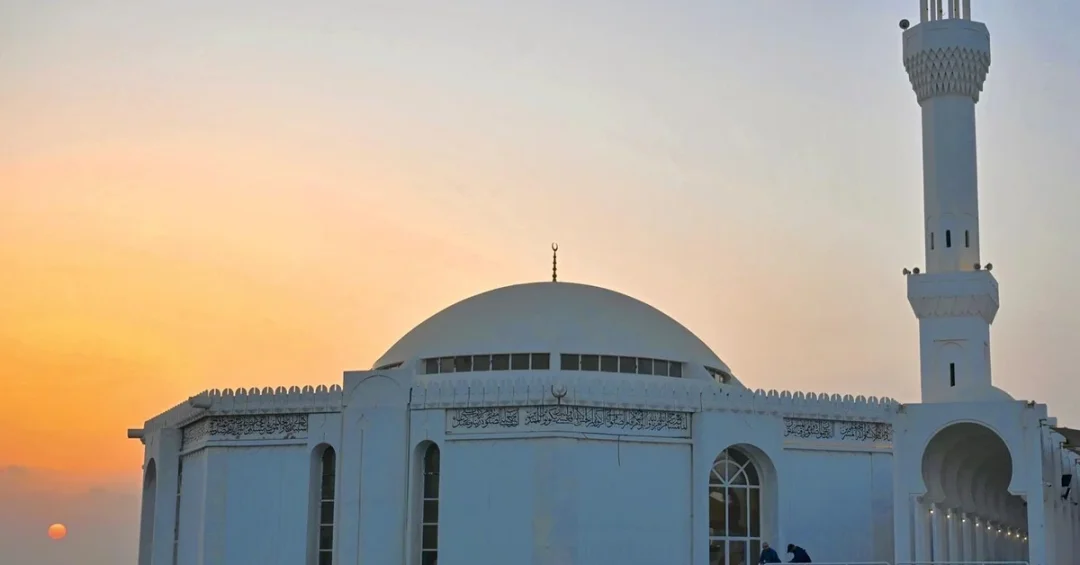
Al-Rahma Mosque, widely known as the “floating mosque,” stands along the northern coast of Jeddah as one of the most distinctive architectural landmarks shaping the city’s waterfront identity, according to the Saudi Press Agency (SPA). Built above the Red Sea, the mosque has for decades been a defining feature of Jeddah’s coastal image, drawing visitors and worshippers who encounter a structure that appears to rise directly from the water. Its silhouette, composed of a central dome, surrounding arches, smaller domes, and a balanced minaret, has become inseparable from the visual character of the city’s corniche. Have you ever wondered how a single building can come to represent an entire city’s relationship with the sea?
The Saudi Press Agency, in its official report dated August 20, 2026, described Al-Rahma Mosque as more than a place of worship: it is an urban landmark and an element of Jeddah’s cultural landscape. The mosque’s design merges classical elements of Islamic architecture with modern styles, creating a composition that harmonizes with the surrounding seascape. For international observers seeking to understand how Saudi Arabia preserves heritage while advancing modernization, Al-Rahma Mosque offers a compelling case study. It demonstrates that architectural arts can create a profound sense of place, one that connects to visitors’ memories long after they leave the Red Sea coast.
Context and Background
What makes a mosque built over water so enduring in the public imagination? Al-Rahma Mosque, which translates to the “Mosque of Mercy,” was constructed above the sea along Jeddah’s northern coast, a decision that gave it the popular name “floating mosque.” According to the Saudi Press Agency, this placement was not merely aesthetic; it allowed the building to integrate with its marine environment in a way that few structures achieve. Over the decades, the mosque has become one of the urban landmarks that shaped the visual identity of Jeddah’s waterfront, a city long known as the gateway to the Red Sea and a historic hub for pilgrims traveling to Makkah.
Jeddah itself occupies a unique position in Saudi Arabia’s cultural geography. As the Kingdom’s second-largest city and a major commercial center, it has served for centuries as a meeting point for traders, travelers, and pilgrims from across Asia, Africa, and the Middle East. This cosmopolitan history is reflected in the city’s architecture, from the coral-stone houses of Al-Balad, a UNESCO World Heritage Site, to modern developments along the coast. Al-Rahma Mosque belongs to this continuum. Its location on the water echoes Jeddah’s maritime heritage, while its design speaks to contemporary architectural sensibilities. The mosque thus represents both continuity and evolution, a physical reminder that Saudi Arabia’s cultural identity is rooted in history yet open to the future.
The Saudi Press Agency’s report underscores that the mosque’s significance extends beyond its popular nickname. It is not simply a curiosity or a photo opportunity; it is a functioning place of worship and a civic landmark. For residents of Jeddah, it is part of the everyday rhythm of the city. For visitors, it is an introduction to the Kingdom’s architectural traditions. And for planners and architects, it is an example of how to build in harmony with natural surroundings rather than in opposition to them. In an era when coastal development often prioritizes spectacle over sensitivity, Al-Rahma Mosque offers a different model, one in which the sea is not a backdrop but a partner in design.
Architectural Design and Key Details
How does the mosque’s design achieve such a striking balance between tradition and modernity? According to the Saudi Press Agency, the architectural design of Al-Rahma Mosque combines elements of Islamic architecture with modern styles. A main dome sits at its center, surrounded by arches, smaller domes, and decorative elements. The minaret rises in a balanced composition that gives the facade a striking presence and enhances the building’s harmony with the surrounding seascape. This arrangement is not accidental; it reflects a deliberate effort to create a structure that is both visually compelling and spiritually resonant.
The central dome serves as the focal point, drawing the eye upward and symbolizing the heavens in traditional Islamic architectural language. Around it, the smaller domes and arches create a rhythmic sequence that softens the transition between the building and the open sky. The minaret, from which the call to prayer is traditionally made, provides vertical emphasis, anchoring the composition and making the mosque visible from a distance. These elements are familiar in Islamic architecture across the world, from the Great Mosque of Damascus to the mosques of Istanbul and Cairo. Yet at Al-Rahma Mosque, they are reinterpreted through a modern lens, with clean lines and an openness that allows the building to breathe with the coastal air.
The mosque’s placement above the sea adds another layer of meaning. Water is a powerful symbol in Islamic culture, representing purity, life, and the infinite. By building over the Red Sea, the architects allowed the mosque to participate in this symbolism physically. The reflection of the domes and minaret on the water’s surface creates a visual doubling that changes with the light, from the soft hues of dawn to the golden tones of sunset. Visitors often describe the experience as serene and contemplative. The Saudi Press Agency notes that the mosque’s architecture blends with the surrounding environment and demonstrates the ability of architectural arts to create a sense of place and connect it to visitors’ memories. This is not merely a building; it is an experience that engages the senses and the spirit.
International and Regional Impact
What does Al-Rahma Mosque tell the world about Saudi Arabia’s approach to culture and heritage? For international audiences, the mosque is a visible symbol of the Kingdom’s commitment to preserving and celebrating its architectural heritage while embracing modernity. Jeddah has long been a gateway for pilgrims and travelers, and its landmarks serve as ambassadors for Saudi culture. Al-Rahma Mosque, with its distinctive silhouette, has become one of the most recognizable images of the city, appearing in travel photography, architectural studies, and media coverage of the Red Sea coast. It contributes to the Kingdom’s broader efforts to promote cultural tourism and to share its heritage with the world.
Regionally, the mosque stands as a testament to the enduring importance of religious architecture in the Islamic world. Across the Middle East, mosques have historically been centers of community life, education, and spiritual practice. Al-Rahma Mosque continues this tradition, serving worshippers while also attracting visitors interested in its design and setting. Its presence along the Jeddah waterfront complements other cultural and recreational developments in the area, contributing to the city’s appeal as a destination. The Saudi Press Agency’s report highlights that the mosque is an urban landmark and an element of Jeddah’s cultural landscape, a status that resonates beyond Saudi borders. For neighboring countries and the wider Muslim world, it represents a model of how faith, culture, and environment can coexist beautifully.
Economic and Strategic Significance
How does a landmark like Al-Rahma Mosque contribute to Saudi Arabia’s broader economic and strategic goals? While the mosque is primarily a place of worship, its role in shaping Jeddah’s visual identity has indirect but meaningful economic implications. Cultural and architectural landmarks are key drivers of tourism, attracting visitors who spend on hospitality, retail, and transportation. Jeddah’s waterfront, with its corniche, museums, and public spaces, benefits from the presence of iconic structures that draw both domestic and international travelers. As Saudi Arabia continues to develop its tourism sector under Vision 2030, landmarks like Al-Rahma Mosque become part of the Kingdom’s offer to the world.
Strategically, the mosque reflects the Kingdom’s emphasis on preserving cultural heritage as part of its modernization journey. Vision 2030 is not only about economic diversification; it also includes goals related to quality of life, cultural enrichment, and national pride. By maintaining and celebrating landmarks such as Al-Rahma Mosque, Saudi Arabia signals that progress and tradition can advance together. The mosque’s harmonious integration with the Red Sea environment also aligns with broader sustainability principles, demonstrating that development can respect natural settings. For planners and policymakers, it offers a precedent for how to balance urban growth with environmental and cultural sensitivity. In this sense, Al-Rahma Mosque is not just a beautiful building; it is a strategic asset in the Kingdom’s effort to present a multifaceted, forward-looking national image.
Vision 2030 Alignment
How does Al-Rahma Mosque fit into the larger story of Saudi Arabia’s Vision 2030? The Vision, launched by Crown Prince Mohammed bin Salman, aims to diversify the economy, empower citizens, and enhance the Kingdom’s global standing. Culture and tourism are central pillars of this transformation. Jeddah, as a historic gateway and a major urban center, plays a key role in these efforts. Al-Rahma Mosque contributes to the city’s cultural landscape and helps attract visitors who are curious about Saudi heritage. Its enduring presence along the Red Sea coast is a reminder that Vision 2030 builds on the Kingdom’s deep-rooted identity rather than replacing it.
As Saudi Arabia continues to open up to the world, landmarks like Al-Rahma Mosque will serve as points of connection. They offer international visitors a tangible way to experience the Kingdom’s architectural and spiritual traditions. They also inspire pride among Saudis, who see their heritage celebrated and preserved. The Saudi Press Agency’s description of the mosque as an urban landmark that has shaped Jeddah’s visual identity captures this dual role: it is both a local treasure and a global symbol. In the years ahead, as Jeddah grows and evolves, Al-Rahma Mosque will remain a constant, its domes and minaret reflected in the waters of the Red Sea, inviting reflection and wonder. For a Kingdom moving confidently toward the future, such landmarks are not relics of the past but foundations for what comes next.
20 Questions
Q1. What is Al-Rahma Mosque commonly known as?
A1. Al-Rahma Mosque is widely known as the “floating mosque” because it was built above the sea along Jeddah’s northern coast, according to the Saudi Press Agency.
Q2. Where is Al-Rahma Mosque located?
A2. It is located along the northern coast of Jeddah, Saudi Arabia, where it stands as a distinctive architectural landmark associated with the city’s coastal image.
Q3. Why is Al-Rahma Mosque called the floating mosque?
A3. It is called the floating mosque because it was constructed above the sea, giving the impression that it floats on the water’s surface.
Q4. What architectural styles are combined in Al-Rahma Mosque?
A4. The mosque’s design combines elements of Islamic architecture with modern styles, creating a harmonious blend that suits its coastal setting.
Q5. What are the main architectural features of the mosque?
A5. A main dome sits at its center, surrounded by arches, smaller domes, and decorative elements, while a minaret rises in a balanced composition.
Q6. How does the mosque’s design interact with the sea?
A6. The design enhances the building’s harmony with the surrounding seascape, allowing the domes and minaret to reflect on the water and integrate with the environment.
Q7. What is the significance of Al-Rahma Mosque to Jeddah?
A7. It is an urban landmark and an element of Jeddah’s cultural landscape, shaping the visual identity of the city’s waterfront over decades.
Q8. Who reported on Al-Rahma Mosque?
A8. The Saudi Press Agency (SPA) reported on the mosque, describing its architectural and cultural significance in an official release.
Q9. When was the SPA report about the mosque published?
A9. The Saudi Press Agency report was dated August 20, 2026, and highlighted the mosque’s role in Jeddah’s coastal identity.
Q10. What does the name Al-Rahma mean?
A10. Al-Rahma translates to “Mercy,” reflecting the mosque’s spiritual purpose and its welcoming presence in the community.
Q11. How does the mosque demonstrate architectural arts?
A11. It shows the ability of architectural arts to create a sense of place and connect it to visitors’ memories, blending with the surrounding environment.
Q12. Is Al-Rahma Mosque a functioning place of worship?
A12. Yes, it serves as a place of worship for the community while also standing as a cultural and architectural landmark in Jeddah.
Q13. What role does the minaret play in the design?
A13. The minaret rises in a balanced composition, giving the facade a striking presence and enhancing harmony with the seascape.
Q14. How does the mosque contribute to tourism in Jeddah?
A14. As an iconic landmark, it attracts visitors interested in architecture and culture, supporting Jeddah’s appeal as a destination.
Q15. What is the significance of water in Islamic architecture?
A15. Water symbolizes purity, life, and the infinite, and the mosque’s placement over the sea physically connects it to these meanings.
Q16. How does Al-Rahma Mosque reflect Saudi Arabia’s cultural heritage?
A16. It represents a blend of traditional Islamic design and modern style, showcasing the Kingdom’s ability to preserve heritage while embracing progress.
Q17. Does the mosque align with Vision 2030 goals?
A17. Yes, it supports cultural enrichment, tourism, and quality of life, which are key pillars of Saudi Arabia’s Vision 2030 transformation.
Q18. What makes Al-Rahma Mosque visually distinctive?
A18. Its central dome, surrounding arches, smaller domes, and minaret create a balanced composition that stands out against the Red Sea backdrop.
Q19. How has the mosque shaped Jeddah’s identity?
A19. Over decades, it has become one of the urban landmarks that shaped the visual identity of Jeddah’s waterfront, according to SPA.
Q20. What does Al-Rahma Mosque symbolize for visitors?
A20. It symbolizes the harmony between faith, culture, and nature, offering a serene experience that connects visitors to Jeddah’s spiritual and architectural heritage.
Reader Feedback
We value your thoughts. Please share your feedback on this article.
Your feedback helps us improve our coverage.