


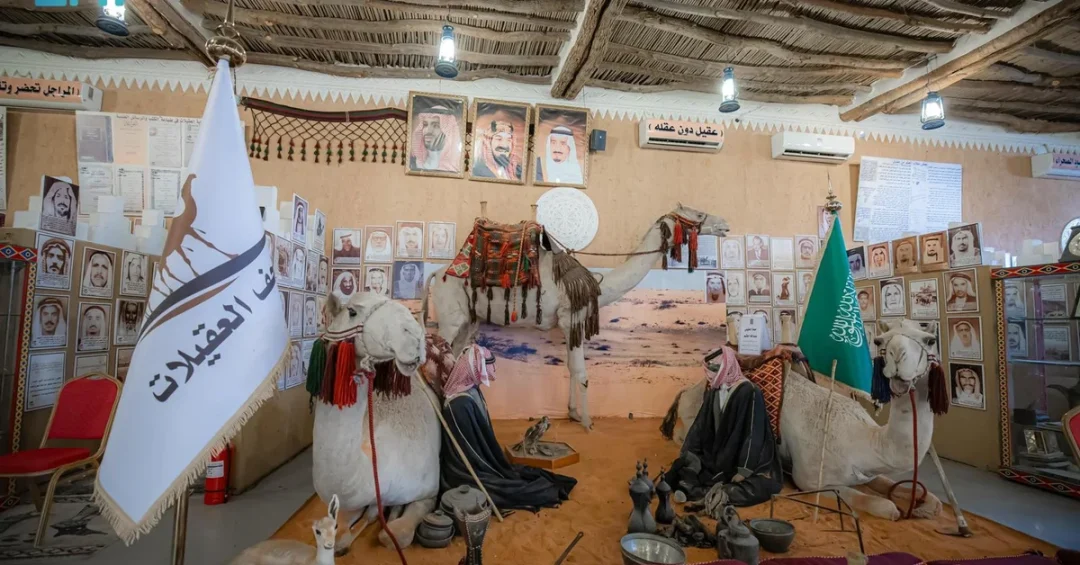
The Aloqilat Museum is participating in the Buraidah Dates Carnival, presenting an exhibit that highlights the historic and commercial activities of tribes from the Qassim region, as reported by the Saudi Press Agency (SPA). The exhibit, which runs during the annual carnival, features a detailed map of the tribes’ trade routes, including journeys to Egypt and Jordan, alongside more than 100 historical paintings and archaeological artifacts. Manuscripts and correspondence on display illustrate the contributions of these tribes to spreading Saudi culture through their trade activities.
Context and Background
The Buraidah Dates Carnival is a significant annual event in the Qassim region, celebrating the area’s rich agricultural heritage and its renowned date production. It attracts visitors from across the Kingdom and beyond, serving as a platform for cultural exchange and economic activity. The Aloqilat Museum, dedicated to preserving the history of the Qassim region, has seized this opportunity to showcase the pivotal role that local tribes played in regional trade and cultural dissemination.
According to the Saudi Press Agency, the museum’s exhibit provides a comprehensive view of the tribes’ commercial networks, which extended to Egypt and Jordan. These trade routes were not merely economic conduits but also channels for cultural exchange, helping to spread Saudi traditions and values across borders. The display includes over 100 historical paintings and archaeological artifacts, as well as manuscripts and correspondence that document these activities.
Key Details
The exhibit at the Aloqilat Museum features a map that traces the trade routes used by Qassim tribes, highlighting their journeys to Egypt and Jordan. This map is complemented by a collection of historical paintings that depict scenes from these journeys, offering visitors a visual narrative of the past. Archaeological artifacts, including items used in trade and daily life, provide tangible evidence of the tribes’ commercial endeavors.
Manuscripts and correspondence from the era are also on display, shedding light on the diplomatic and social interactions that accompanied trade. These documents reveal how the tribes served as cultural ambassadors, sharing Saudi customs and traditions with the peoples they encountered. The exhibit is designed to educate and inspire, emphasizing the importance of preserving national heritage.
Implications and Impact
The participation of the Aloqilat Museum in the Buraidah Dates Carnival underscores the importance of cultural heritage in contemporary Saudi society. By showcasing the historical achievements of Qassim tribes, the exhibit fosters a sense of pride and identity among visitors, while also attracting tourists interested in the Kingdom’s rich history. This aligns with the objectives of Saudi Vision 2030, which seeks to promote cultural tourism and diversify the economy.
Moreover, the exhibit highlights the historical connections between Saudi Arabia and its neighbors, reinforcing the Kingdom’s role as a bridge between cultures. The trade routes to Egypt and Jordan serve as a reminder of the long-standing ties that have shaped regional commerce and diplomacy. Such initiatives contribute to a deeper understanding of Saudi Arabia’s heritage and its contributions to global civilization.
Vision 2030 Alignment
The Aloqilat Museum’s exhibit is a testament to Saudi Arabia’s commitment to preserving and promoting its cultural heritage as part of Vision 2030. By integrating historical narratives into contemporary events like the Buraidah Dates Carnival, the Kingdom showcases its ability to honor the past while embracing the future. This approach not only enriches the visitor experience but also supports the growth of cultural tourism, a key pillar of the Vision 2030 strategy. As Saudi Arabia continues to open up to the world, initiatives like this play a vital role in presenting a authentic and vibrant image of the nation.
20 Questions
Q1. What is the Aloqilat Museum showcasing at the Buraidah Dates Carnival?
A1. The Aloqilat Museum is showcasing an exhibit that highlights the historic and commercial activities of tribes from the Qassim region, including a map of trade routes, over 100 historical paintings, archaeological artifacts, manuscripts, and correspondence.
Q2. Where is the Buraidah Dates Carnival taking place?
A2. The Buraidah Dates Carnival is taking place in Buraidah, the capital of the Qassim region in Saudi Arabia. It is an annual event that celebrates the region’s date harvest and cultural heritage.
Q3. Which tribes are featured in the exhibit?
A3. The exhibit features tribes from the Qassim region, highlighting their historic and commercial activities. It focuses on their trade routes and cultural contributions, as documented in manuscripts and artifacts.
Q4. What countries did the Qassim tribes trade with according to the exhibit?
A4. According to the exhibit, the Qassim tribes traded with Egypt and Jordan, as shown on a map of their trade routes. These journeys facilitated both commerce and cultural exchange.
Q5. How many historical paintings are on display?
A5. The exhibit includes over 100 historical paintings that depict scenes from the tribes’ trade journeys and daily life, providing a visual narrative of the past.
Q6. What kind of artifacts can visitors see at the exhibit?
A6. Visitors can see archaeological artifacts such as items used in trade and daily life, which offer tangible evidence of the tribes’ commercial endeavors and cultural practices.
Q7. What do the manuscripts and correspondence reveal?
A7. The manuscripts and correspondence reveal the contributions of the Qassim tribes to spreading Saudi culture through their trade activities, including diplomatic and social interactions with other regions.
Q8. Why is the Buraidah Dates Carnival significant?
A8. The Buraidah Dates Carnival is significant as a celebration of the Qassim region’s agricultural heritage and date production. It attracts visitors from across the Kingdom and beyond, serving as a platform for cultural exchange and economic activity.
Q9. How does the exhibit contribute to cultural preservation?
A9. The exhibit contributes to cultural preservation by educating visitors about the historical achievements of Qassim tribes, fostering pride in national heritage, and ensuring that these stories are passed on to future generations.
Q10. What role did the Qassim tribes play in spreading Saudi culture?
A10. The Qassim tribes served as cultural ambassadors through their trade activities, sharing Saudi customs and traditions with the peoples they encountered in Egypt, Jordan, and beyond, as documented in the exhibit.
Q11. How does the exhibit align with Saudi Vision 2030?
A11. The exhibit aligns with Saudi Vision 2030 by promoting cultural tourism and highlighting the Kingdom’s rich heritage. It supports the diversification of the economy and enhances Saudi Arabia’s global cultural presence.
Q12. What is the significance of the trade routes map?
A12. The trade routes map is significant as it visually illustrates the extensive commercial networks of the Qassim tribes, showing their connections to Egypt and Jordan and underscoring their role in regional trade.
Q13. Who reported on the Aloqilat Museum’s participation?
A13. The Saudi Press Agency (SPA) reported on the Aloqilat Museum’s participation in the Buraidah Dates Carnival, providing details about the exhibit and its historical significance.
Q14. What can visitors learn from the exhibit?
A14. Visitors can learn about the historic and commercial activities of Qassim tribes, their trade routes, cultural contributions, and the artifacts and documents that illuminate their past.
Q15. How does the exhibit highlight Saudi Arabia’s regional connections?
A15. The exhibit highlights Saudi Arabia’s regional connections by showcasing the trade routes to Egypt and Jordan, demonstrating the long-standing ties that have shaped commerce and diplomacy in the region.
Q16. What types of documents are included in the exhibit?
A16. The exhibit includes manuscripts and correspondence that document the tribes’ trade activities and cultural exchanges, offering insights into their diplomatic and social interactions.
Q17. Why is the Aloqilat Museum participating in the carnival?
A17. The Aloqilat Museum is participating to showcase the history of the Qassim region and to educate the public about the tribes’ contributions to trade and culture, in alignment with the carnival’s cultural focus.
Q18. How does the exhibit promote tourism in the Qassim region?
A18. The exhibit promotes tourism by attracting visitors interested in history and culture to the Buraidah Dates Carnival, thereby boosting local tourism and highlighting the region’s heritage.
Q19. What is the historical importance of the Qassim tribes’ trade activities?
A19. The Qassim tribes’ trade activities were historically important for economic exchange and cultural dissemination, helping to spread Saudi culture and strengthen regional ties.
Q20. What message does the exhibit convey about Saudi heritage?
A20. The exhibit conveys that Saudi heritage is rich, dynamic, and integral to the nation’s identity, and that preserving and sharing this heritage is essential for future generations and global understanding.
Reader Feedback
We value your thoughts. Please share your feedback on this article.
Your feedback helps us improve our coverage.
Related articles
 Crown Prince Camel Festival: Largest, Most Impressive in Region
 National Cultural Awards to Honor Pioneers Under Crown Prince’s Patronage
 Cultural Communication Award Winners to Be Announced Monday in Riyadh
 Music Commission to Unveil Marvels of Saudi Orchestra Concert Details Tomorrow
 SPL Issues Crown Prince Camel Festival Stamp
 Hilwah Al-Jouf: A Timeless Bond Between People and Dates