


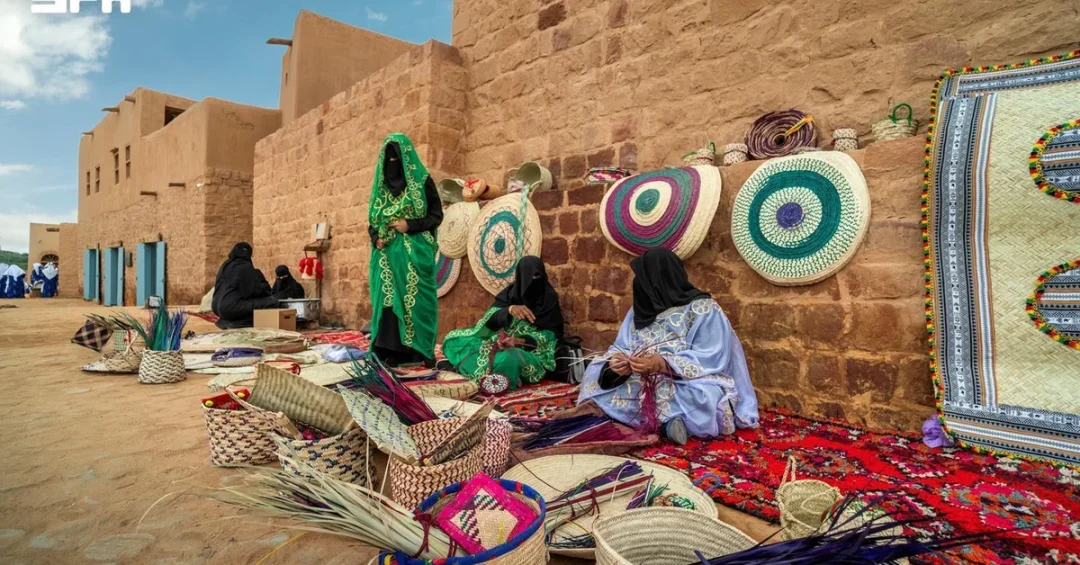
AlUla is marking the International Day of the Intangible Cultural Heritage by spotlighting the customs, crafts, and folk knowledge its community has passed down through generations, the Saudi Press Agency reported. The observance, held each October 17 under the framework of the United Nations Educational, Scientific and Cultural Organization, draws international attention to the living heritage of the historic governorate in northwestern Saudi Arabia — a body of knowledge that exists not in stone monuments but in the hands, voices, and daily practices of local residents.
Unlike the archaeological sites and inscriptions left by successive civilizations, AlUla’s intangible legacy spans handicrafts, folk arts, oral narratives, traditional farming knowledge, and customs of hospitality, all shaped by the community’s enduring bond with the land. The Royal Commission for AlUla, the government body responsible for the governorate’s development, supports artisans, builds their skills, and revives traditional crafts and arts, giving younger generations the chance to learn and carry them forward. Local residents remain the custodians of these practices, while cultural events across the governorate allow visitors to experience them firsthand. UNESCO marks the day to raise awareness of safeguarding intangible heritage, celebrate cultural diversity, and encourage its transmission to future generations. But what does it mean for a place like AlUla to treat its living traditions as treasures worthy of the same care as its tombs and temples?
Context and Background
Why has the concept of intangible cultural heritage become so central to global preservation efforts? UNESCO’s 2003 Convention for the Safeguarding of the Intangible Cultural Heritage established a formal framework for protecting practices, representations, expressions, knowledge, and skills that communities recognize as part of their cultural heritage. The convention recognizes that such traditions are fragile: they depend on people, not physical structures, and can disappear within a single generation if transmission falters. The annual observance on October 17 was created to raise awareness of this vulnerability and to celebrate the cultural diversity that living heritage represents worldwide. For Saudi Arabia, participation in this global framework reflects a broader national commitment to preserving cultural identity while embracing modernization.
AlUla occupies a distinctive place within that commitment. Located in the Medina Province, the governorate is home to Hegra, Saudi Arabia’s first UNESCO World Heritage property, along with the ancient Dadanite and Lihyanite kingdoms and the Nabataean civilization that once flourished along incense trade routes. Yet the Royal Commission for AlUla has consistently emphasized that heritage is not limited to what can be excavated or photographed. The traditions of the people who have lived in the oasis for generations — how they farm, welcome guests, tell stories, and craft objects — form an equally important part of the region’s identity. This dual focus on tangible and intangible heritage distinguishes AlUla’s approach and aligns it with international best practice in cultural preservation.
The International Day of the Intangible Cultural Heritage thus serves as a moment of reflection for AlUla, highlighting how local knowledge systems have adapted across centuries while retaining their essential character. It also reinforces the idea that safeguarding heritage is a shared responsibility involving government institutions, communities, and international partners.
Key Details: Crafts, Knowledge, and Hospitality
What specific traditions give AlUla’s living heritage its distinctive character? The governorate’s handicrafts represent one of the most visible expressions of local identity. Artisans produce woven textiles, traditional jewelry, pottery, and objects shaped from natural materials available in the oasis environment. These crafts are not merely decorative; they encode knowledge about local resources, climate, and aesthetic traditions passed down through families. The Royal Commission for AlUla has invested in training programs and market access initiatives that allow artisans to sustain their work economically while preserving techniques that might otherwise be lost. By connecting craftspeople with visitors and cultural events, the commission helps ensure that traditional skills remain viable in a modern economy.
Folk arts and oral narratives form another pillar of AlUla’s intangible heritage. Traditional music, dance, and storytelling have long served as vehicles for transmitting history, values, and community memory. These practices often accompanied seasonal celebrations, harvests, and gatherings, reinforcing social bonds and collective identity. In recent years, cultural festivals in AlUla have provided platforms for performers and storytellers to present these traditions to wider audiences, including international visitors. This exposure brings recognition and economic opportunity while raising important questions about authenticity and continuity — how can traditions evolve without losing their essence?
Traditional farming knowledge and customs of hospitality complete the picture. AlUla’s oasis agriculture depends on sophisticated systems of water management, crop rotation, and date palm cultivation developed over millennia. This knowledge, held by farming families, is essential to the landscape’s sustainability. Meanwhile, the region’s renowned hospitality traditions — centered on generosity, coffee service, and communal meals — reflect deeply held values that continue to define social life. Together, these practices demonstrate that intangible heritage is not a relic of the past but a living resource that shapes daily life and community resilience.
International and Regional Impact
How does AlUla’s celebration of intangible heritage resonate beyond Saudi Arabia’s borders? The International Day of the Intangible Cultural Heritage is observed globally, with countries using the occasion to highlight their own traditions and commit to safeguarding measures. AlUla’s participation positions Saudi Arabia within this international community of practice, demonstrating that the Kingdom is not only a custodian of world heritage sites but also an active partner in global cultural preservation. This alignment supports Saudi Arabia’s broader cultural diplomacy objectives, which include fostering mutual understanding and presenting the Kingdom as a destination for cultural tourism and exchange.
Regionally, AlUla’s approach offers a model for other areas in the Middle East and North Africa grappling with rapid development and cultural change. By integrating heritage preservation into economic and tourism strategies, the governorate shows that modernization need not come at the expense of tradition. International organizations, including UNESCO, have recognized these efforts, and cultural events in AlUla attract visitors, researchers, and artists from around the world. This cross-cultural engagement enriches the local cultural scene while projecting an image of Saudi Arabia as a forward-looking nation rooted in its heritage.
The celebration also reinforces the idea that intangible heritage is a shared human inheritance. When AlUla’s artisans, farmers, and storytellers share their knowledge, they contribute to a global understanding of how communities adapt and thrive. For international audiences, this offers a window into Saudi culture that goes beyond headlines and stereotypes, revealing a society deeply connected to its past while actively shaping its future.
Economic and Strategic Significance
What economic value does intangible heritage hold for AlUla and Saudi Arabia more broadly? Cultural tourism is a cornerstone of the Kingdom’s economic diversification strategy, and AlUla has emerged as a flagship destination. Visitors are drawn not only to archaeological wonders but also to experiences that connect them with living culture — artisan workshops, traditional performances, and hospitality encounters. This demand creates income opportunities for local residents and small businesses, helping to build a sustainable tourism ecosystem. By investing in skills training and market development for artisans, the Royal Commission for AlUla supports job creation and entrepreneurship, particularly among young people and women.
Strategically, the safeguarding of intangible heritage contributes to social cohesion and national identity. As Saudi Arabia undergoes rapid transformation under Vision 2030, maintaining cultural continuity provides a sense of stability and belonging. Traditional practices offer a counterbalance to the dislocations that can accompany rapid modernization, reinforcing community ties and intergenerational connection. The emphasis on local custodianship ensures that heritage preservation is not imposed from above but driven by the people who live it. This participatory approach enhances the legitimacy and effectiveness of preservation efforts, making them more likely to endure.
Furthermore, intangible heritage supports Saudi Arabia’s international standing as a responsible global actor. By aligning with UNESCO frameworks and sharing its experience, the Kingdom contributes to the global discourse on cultural sustainability. This soft power dimension complements economic and diplomatic initiatives, presenting a holistic vision of national development that values culture as an essential asset.
Vision 2030 Alignment
How does the celebration of intangible heritage in AlUla connect to Saudi Arabia’s long-term vision for the future? Vision 2030, the Kingdom’s comprehensive reform agenda, emphasizes the importance of preserving cultural heritage while diversifying the economy and enhancing quality of life. The Royal Commission for AlUla operates at the intersection of these goals, developing the governorate as a world-class destination for heritage, culture, and tourism while ensuring that local communities are active participants and beneficiaries. The commission’s work with artisans, performers, and farmers directly supports the Vision’s objectives of creating economic opportunities, fostering national pride, and promoting international engagement.
As AlUla marks the International Day of the Intangible Cultural Heritage, it demonstrates that the Kingdom’s modernization is not about erasing the past but about building on it. The customs, crafts, and knowledge passed down through generations are not obstacles to progress; they are foundations for a distinctive and sustainable future. By safeguarding these traditions and transmitting them to younger generations, AlUla ensures that its living heritage will continue to inspire and inform Saudi Arabia’s journey toward Vision 2030 and its role as a global cultural leader.
20 Questions
Q1. What is the International Day of the Intangible Cultural Heritage?
A1. The International Day of the Intangible Cultural Heritage is observed every October 17. UNESCO established the day to raise awareness about safeguarding living heritage, celebrate cultural diversity, and encourage the transmission of traditions to future generations worldwide.
Q2. Why is AlUla marking this international day?
A2. AlUla is marking the day to spotlight its customs, crafts, and folk knowledge passed down through generations. The Royal Commission for AlUla supports artisans and cultural events that allow visitors to experience these living traditions firsthand.
Q3. What types of intangible heritage exist in AlUla?
A3. AlUla’s intangible heritage includes handicrafts, folk arts, oral narratives, traditional farming knowledge, and customs of hospitality. These practices are shaped by the community’s bond with the land and have been transmitted across generations.
Q4. How does the Royal Commission for AlUla support artisans?
A4. The Royal Commission for AlUla supports artisans by building their skills, reviving traditional crafts and arts, and providing opportunities for younger generations to learn. This helps sustain livelihoods and preserve cultural techniques.
Q5. Who are the custodians of AlUla’s living heritage?
A5. Local residents of AlUla are the custodians of its living heritage. They hold the knowledge and skills, practice the traditions daily, and pass them on, ensuring authenticity and continuity.
Q6. How can visitors experience AlUla’s intangible heritage?
A6. Visitors can experience AlUla’s intangible heritage through cultural events, artisan workshops, traditional performances, and hospitality encounters. These opportunities allow firsthand engagement with living traditions.
Q7. What is UNESCO’s role in safeguarding intangible heritage?
A7. UNESCO raises awareness, provides frameworks like the 2003 Convention, and encourages international cooperation to safeguard intangible cultural heritage. The annual day highlights these efforts and promotes cultural diversity.
Q8. Why is intangible heritage considered fragile?
A8. Intangible heritage depends on people and their practices, not physical structures. If transmission between generations falters, traditions can disappear quickly, making safeguarding efforts essential.
Q9. How does AlUla’s approach differ from traditional heritage preservation?
A9. AlUla combines preservation of archaeological sites with active support for living traditions. This dual focus ensures that both tangible and intangible heritage are valued and sustained.
Q10. What economic benefits does intangible heritage bring to AlUla?
A10. Intangible heritage supports cultural tourism, creating income for artisans, performers, and local businesses. It also generates jobs and entrepreneurship opportunities, especially for youth and women.
Q11. How does the celebration align with Saudi Vision 2030?
A11. The celebration aligns with Vision 2030 by preserving cultural identity, diversifying the economy through tourism, and enhancing quality of life. It supports the goal of a vibrant society rooted in heritage.
Q12. What role do oral narratives play in AlUla’s heritage?
A12. Oral narratives transmit history, values, and community memory. They are performed at gatherings and festivals, reinforcing social bonds and cultural continuity across generations.
Q13. How are traditional farming practices part of AlUla’s heritage?
A13. Traditional farming practices include water management, crop rotation, and date palm cultivation developed over millennia. This knowledge is essential for sustainable oasis agriculture and landscape preservation.
Q14. What is the significance of hospitality customs in AlUla?
A14. Hospitality customs reflect deeply held values of generosity and community. They include coffee service and communal meals, which continue to define social life and welcome visitors to the region.
Q15. How does AlUla engage younger generations in heritage?
A15. The Royal Commission for AlUla provides training and learning opportunities for young people to acquire traditional skills. This ensures transmission and keeps heritage relevant and alive.
Q16. What international recognition has AlUla received for its heritage?
A16. AlUla is home to Hegra, Saudi Arabia’s first UNESCO World Heritage property. Its broader heritage efforts, including living traditions, have attracted international attention and partnerships.
Q17. How does intangible heritage support social cohesion?
A17. Shared traditions and practices strengthen community bonds and provide a sense of belonging. They offer continuity amid rapid change, reinforcing identity and mutual support.
Q18. What can other regions learn from AlUla’s model?
A18. AlUla’s model integrates heritage preservation into economic development and tourism. Other regions can learn how to involve communities as custodians and create sustainable opportunities.
Q19. How does Saudi Arabia contribute to global cultural preservation?
A19. Saudi Arabia participates in UNESCO frameworks, shares its experience, and hosts cultural events. This contributes to global efforts to safeguard heritage and promotes cross-cultural understanding.
Q20. What is the future outlook for AlUla’s living heritage?
A20. With continued support from the Royal Commission for AlUla and active community involvement, AlUla’s living heritage is poised to thrive, inspiring future generations and enriching Saudi Arabia’s cultural landscape.
Reader Feedback
We value your thoughts. Please share your feedback on this article.
Your feedback helps us improve our coverage.