


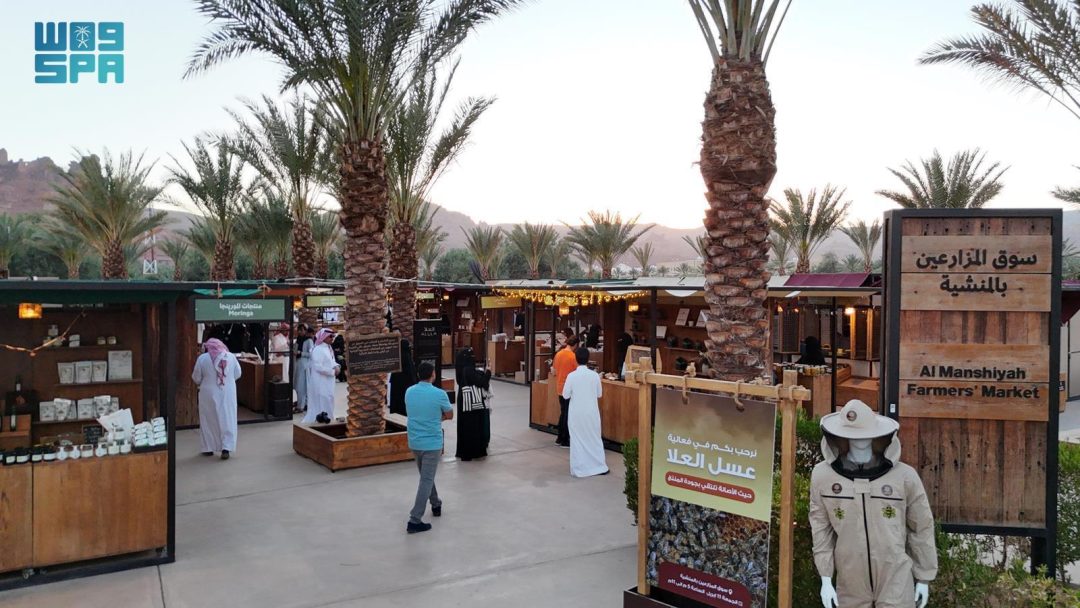
AlManshiyah Farmers Market hosted the first AlUla Honey event, an initiative designed to highlight the quality of local honey and provide support to beekeepers in the region. Could the diversity of local flora be the secret behind such high-quality production?
According to SPA, the event was held by the Royal Commission for AlUla. The gathering showcased various honey products created by local beekeepers as part of an effort to strengthen the agricultural sector, increase local production, and open new market opportunities for those producing the honey.
The governorate of AlUla currently has more than 3,000 beehives which are managed by 28 beekeepers. These operations result in the annual production of more than 12 tons of honey. How does the management of these 3,000 beehives impact the overall yield of the region?
Visitors at the market sampled the honey varieties for which AlUla is known and studied their specific characteristics. The event included interactive activities, live demonstrations, and a booth that provided beekeeping supplies. Is it possible that these interactive demonstrations will inspire more residents to enter the beekeeping trade?
The honey produced in the region includes several distinct varieties, specifically Moringa, Acacia, Sidr, Citrus, Mountain, and Valley. Which of these six varieties is the most sought after by visitors? The initiative is part of a broader strategy by the commission to support beekeepers and farmers throughout the governorate. Could this strategy lead to a further increase in the 12 tons of honey produced annually?
The event provided a platform for producers to connect with the public and showcase the agricultural output of AlUla. What role does the AlManshiyah Farmers Market play in supporting these local producers? The Royal Commission for AlUla utilized the event to spotlight the specific characteristics of the region’s honey production.
What are the honey varieties produced in AlUla? AlUla produces several diverse honey varieties. These include Moringa, Acacia, Sidr, Citrus, Mountain, and Valley honey. These varieties were showcased during the first AlUla Honey event held at the AlManshiyah Farmers Market to highlight the unique characteristics of the region’s production.
How much honey is produced annually in AlUla? The region produces more than 12 tons of honey every year. This production is the result of more than 3,000 beehives that are managed by 28 beekeepers across the governorate, as part of the agricultural sector supported by the Royal Commission for AlUla.
What activities were available at the AlUla Honey event? Visitors to the event had the opportunity to sample distinct honey varieties and learn about their characteristics. The event also featured interactive activities, live demonstrations, and a dedicated booth that offered various beekeeping supplies to attendees at the AlManshiyah Farmers Market.
What was the purpose of the AlUla Honey event? The event was launched by the Royal Commission for AlUla to spotlight the high quality of local honey and support beekeepers. It aimed to strengthen the agricultural sector, boost local production, and create new market opportunities for the producers in the region.