


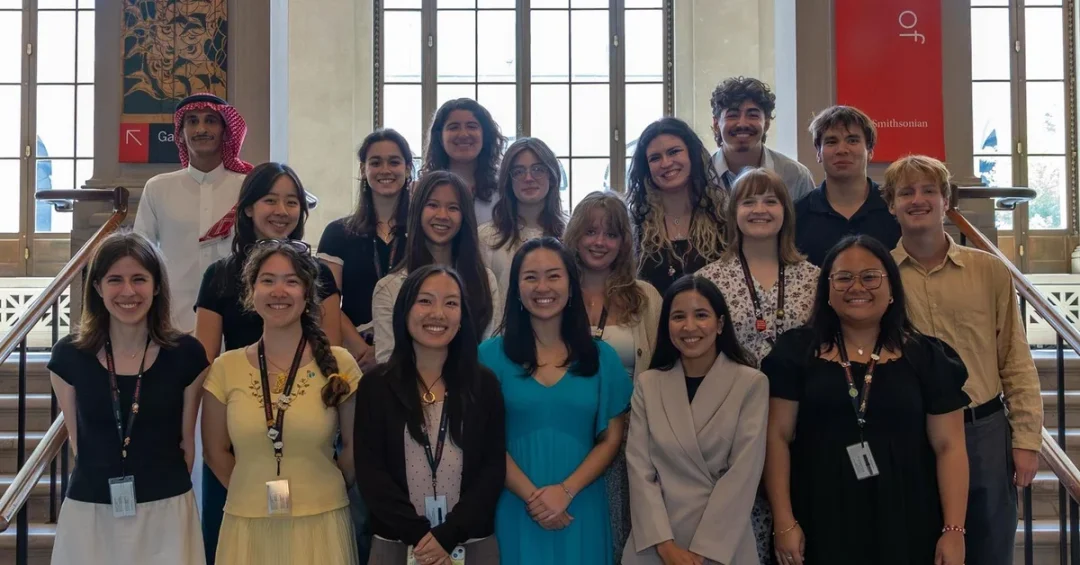
The Royal Commission for AlUla has deepened its cultural partnership with the National Museum of Asian Art, part of the Smithsonian Institution in Washington, D.C., by launching the “Rawi in Residence” program, an initiative that places Saudi storytellers at the heart of an international museum experience. The program, announced via the Saudi Press Agency, featured the participation of storytellers Atif AlBalawi and Wedad Yaseen and marked the first public-facing initiative under the partnership agreement between the commission and the museum. Delivered through three interactive sessions, the program engaged museum visitors, families, curators, guides, and specialists in heritage and culture, positioning AlUla as a living bridge between Arabian heritage and global audiences.
The launch represents more than a single cultural event. It reflects a deliberate strategy by the Royal Commission for AlUla to export the region’s storytelling traditions, known locally as “Rawi,” to some of the world’s most respected cultural institutions. By placing Saudi narrators inside the Smithsonian’s National Museum of Asian Art, the initiative transforms heritage interpretation from a static presentation into a dynamic, human-centered exchange. For international audiences unfamiliar with AlUla’s historical depth, the program offers an accessible entry point into a region that served for centuries as a crossroads of civilizations along the Incense Route.
Context and Background
Why does a storytelling program in Washington matter for a region in northwestern Saudi Arabia? The answer lies in the Royal Commission for AlUla’s long-term vision of cultural diplomacy, which treats heritage not as a relic to be preserved in isolation but as a living asset to be shared globally. The commission has spent years building relationships with leading international institutions, and the partnership with the National Museum of Asian Art is one of its most significant collaborations in North America. The “Rawi in Residence” program emerged from field visits and sustained exchanges of expertise between the two organizations, which together shaped the “Rawi” concept and adapted it for the museum’s summer program.
That groundwork is essential to understanding the program’s significance. Rather than arriving in Washington with a finished product, the commission engaged in a collaborative process that incorporated the museum’s curatorial insights while preserving the authenticity of AlUla’s storytelling traditions. The result was a program that strengthened shared understanding of heritage interpretation methods and enhanced the visitor experience in line with the highest international standards. The initiative also builds on previous appearances by AlUla’s storytellers at prominent global venues, including events in Beijing, the UNESCO pavilion at the Venice Biennale, and the organization’s headquarters in Paris, creating a consistent international presence for Saudi cultural narratives.
For the Smithsonian’s National Museum of Asian Art, the collaboration offers a fresh lens on the interconnected histories of Asia and the Arabian Peninsula. AlUla’s historical role as a hub of cultural exchange along the Incense Route resonates with the museum’s mission to illuminate cross-cultural connections. By hosting Saudi storytellers, the museum gains access to oral traditions and place-based knowledge that complement its collections and exhibitions. This mutual benefit explains why the partnership has moved quickly from concept to public programming, and why both institutions describe the collaboration as a model for future cultural exchange.
Key Details of the Rawi in Residence Program
What exactly did the “Rawi in Residence” program deliver during its three interactive sessions? According to official information released through the Saudi Press Agency, the program featured storytellers Atif AlBalawi and Wedad Yaseen leading a series of talks and interactive experiences that highlighted AlUla’s cultural landscape and historical sites. The sessions were designed for a diverse audience, including museum visitors, families, curators, guides, and heritage and culture specialists. Each session drew on storytelling and heritage interpretation techniques to bring AlUla’s history to life, emphasizing its role as a major hub of cultural exchange along the Incense Route.
The choice of storytellers reflects the Royal Commission for AlUla’s commitment to empowering the region’s young men and women and showcasing their capabilities at international forums. Atif AlBalawi and Wedad Yaseen represent a new generation of Saudi cultural ambassadors who combine deep local knowledge with the ability to communicate across languages and cultures. Their participation in Washington follows prior engagements in Beijing, Venice, and Paris, where they demonstrated that AlUla’s heritage narratives can resonate with global audiences. The program’s format, which combined talks with interactive experiences, allowed visitors to engage directly with the storytellers, ask questions, and explore the connections between AlUla’s ancient sites and contemporary cultural identity.
The three sessions were not isolated events but part of a broader effort to integrate AlUla’s heritage into the museum’s summer programming. By embedding the “Rawi” concept into its schedule, the National Museum of Asian Art gave the initiative a platform that reached beyond specialist audiences to include families and casual visitors. This approach aligns with the Royal Commission for AlUla’s objective of making heritage accessible and relevant to people of all backgrounds. The sessions also provided valuable feedback for the commission, which continues to refine its international engagement strategy based on direct audience interaction and institutional partnerships.
International and Regional Impact
How does a cultural program in Washington shape perceptions of Saudi Arabia on the world stage? The “Rawi in Residence” initiative arrives at a time when Saudi Arabia is actively expanding its cultural diplomacy, and programs like this one help reframe international narratives by focusing on heritage, creativity, and cross-cultural dialogue. The National Museum of Asian Art, part of the Smithsonian Institution, carries significant prestige and reach, and its decision to host Saudi storytellers signals growing recognition of AlUla’s cultural value. For audiences in the United States and beyond, the program offers a direct encounter with Saudi heritage that is personal, narrative-driven, and grounded in historical fact.
Regionally, the initiative reinforces AlUla’s position as a leading destination for cultural tourism and international collaboration. The Royal Commission for AlUla has consistently pursued partnerships that bring global attention to the region while respecting its unique character. By working with a museum dedicated to Asian art and culture, the commission also highlights the historical connections between the Arabian Peninsula and the broader Asian continent, connections that are often overlooked in contemporary discussions. This emphasis on shared history and cultural exchange contributes to a more nuanced understanding of the region’s role in global civilization.
Economic and Strategic Significance
What economic and strategic value does cultural diplomacy generate for AlUla and Saudi Arabia? Cultural initiatives like “Rawi in Residence” are integral to the Royal Commission for AlUla’s broader strategy of developing the region as a world-class destination for heritage tourism. International exposure through respected institutions such as the Smithsonian helps build awareness that can translate into visitor interest, investment, and long-term partnerships. The program also supports the commission’s goal of diversifying AlUla’s economy by strengthening its cultural sector and creating opportunities for local talent to gain international experience.
Strategically, the initiative demonstrates Saudi Arabia’s commitment to international engagement and soft power. By investing in cultural exchange, the Kingdom builds relationships that extend beyond traditional diplomatic channels and fosters goodwill among diverse audiences. The participation of young Saudi storytellers in global forums showcases the human dimension of Vision 2030, which emphasizes the development of Saudi youth and the celebration of national heritage. For the Royal Commission for AlUla, each international appearance contributes to a cumulative reputation for excellence and authenticity that supports future collaborations and reinforces AlUla’s brand as a destination of global significance.
Vision 2030 Alignment
How does the “Rawi in Residence” program embody the objectives of Saudi Vision 2030? The initiative directly supports Vision 2030’s cultural goals by celebrating Saudi national heritage and strengthening its presence on the international stage. It also aligns with the vision’s emphasis on empowering young men and women, as the participating storytellers serve as ambassadors for AlUla’s heritage and for the capabilities of Saudi youth. The Royal Commission for AlUla’s partnership with the National Museum of Asian Art reflects the broader Vision 2030 commitment to international cultural dialogue and to positioning the Kingdom as a hub for cultural exchange.
Looking ahead, the success of the program is expected to encourage further collaborations between the commission and international institutions. The Royal Commission for AlUla has demonstrated that its storytelling traditions can travel and resonate, and each new partnership builds on the last. As AlUla continues to develop as a global destination, initiatives like “Rawi in Residence” will remain central to its strategy of sharing heritage, fostering understanding, and contributing to the cultural vitality of both Saudi Arabia and the world. The program stands as a clear example of how Vision 2030 is being translated into concrete action on the international stage.
20 Questions
Q1. What is the “Rawi in Residence” program?
A1. It is a cultural initiative launched by the Royal Commission for AlUla with the National Museum of Asian Art in Washington, D.C., featuring Saudi storytellers who share AlUla’s heritage through interactive sessions.
Q2. Who participated in the program as storytellers?
A2. The storytellers were Atif AlBalawi and Wedad Yaseen, who led talks and interactive experiences highlighting AlUla’s cultural landscape and historical sites.
Q3. Where did the program take place?
A3. It took place at the National Museum of Asian Art, part of the Smithsonian Institution in Washington, D.C., during the museum’s summer program.
Q4. How many sessions were held during the program?
A4. The program was delivered through three interactive sessions involving museum visitors, families, curators, guides, and heritage and culture specialists.
Q5. What was the main focus of the sessions?
A5. The sessions highlighted AlUla’s cultural landscape and historical sites, emphasizing its role as a major hub of cultural exchange along the Incense Route.
Q6. What is the significance of the partnership with the Smithsonian?
A6. It marks a major international collaboration that brings AlUla’s heritage to a prestigious global audience and strengthens cultural dialogue between Saudi Arabia and the United States.
Q7. How did the program originate?
A7. It builds on field visits and exchanges of expertise between the Royal Commission for AlUla and the museum, which helped shape the “Rawi” concept for the summer program.
Q8. What does “Rawi” mean in this context?
A8. “Rawi” refers to the traditional storyteller or narrator in Saudi culture, a role that the program uses to interpret and share AlUla’s heritage with international audiences.
Q9. Where have AlUla storytellers appeared previously?
A9. They have participated at prominent global venues in Beijing, the UNESCO pavilion at the Venice Biennale, and the organization’s headquarters in Paris.
Q10. How does the program support Saudi youth?
A10. It empowers young Saudi men and women by showcasing their talents and capabilities at international forums, in line with the Royal Commission for AlUla’s objectives.
Q11. What is the connection to the Incense Route?
A11. AlUla historically served as a major hub of cultural exchange along the Incense Route, a fact that the storytellers highlighted during their sessions.
Q12. How does the program align with Vision 2030?
A12. It supports Vision 2030’s goals of celebrating Saudi national heritage, empowering youth, and strengthening the Kingdom’s cultural presence on the international stage.
Q13. What types of audiences attended the sessions?
A13. The sessions welcomed museum visitors, families, curators, guides, and specialists in heritage and culture, creating a diverse and engaged audience.
Q14. What methods did the storytellers use?
A14. They drew on storytelling and heritage interpretation techniques to bring AlUla’s history to life and connect with international audiences.
Q15. What impact did the program have on the museum’s visitors?
A15. It enhanced the visitor experience by offering direct engagement with Saudi heritage, in line with the highest international standards for cultural programming.
Q16. Is this the first public initiative under the partnership?
A16. Yes, the “Rawi in Residence” program is the first public-facing initiative under the partnership agreement between the commission and the museum.
Q17. What future collaborations are expected?
A17. The success of the program is expected to encourage further collaborations between the Royal Commission for AlUla and international cultural institutions.
Q18. How does the program benefit AlUla economically?
A18. It raises international awareness of AlUla as a heritage destination, which can support tourism, investment, and the growth of the region’s cultural sector.
Q19. What makes the National Museum of Asian Art a suitable partner?
A19. Its mission to illuminate cross-cultural connections aligns with AlUla’s historical role as a crossroads of civilizations along the Incense Route.
Q20. What is the overarching goal of the initiative?
A20. The goal is to promote international cultural dialogue, share AlUla’s exceptional heritage, and strengthen Saudi Arabia’s cultural presence globally in line with Vision 2030.
Reader Feedback
We value your thoughts. Please share your feedback on this article.
Your feedback helps us improve our coverage.
Related articles
 AlUla and Smithsonian Launch ‘Resident Narrator’ Cultural Program
 Royal Commission for AlUla, Smithsonian Launch Resident Narrator Program
 Riyadh Launches 2026 Date Season at Rabwah Markets
 Ithra concludes sixth Short Play Competition in Dhahran
 Al-Rabwa Dates Season 2026 Kicks Off in Riyadh
 6.4-Magnitude Earthquake Strikes Vanuatu, No Damage Reported