


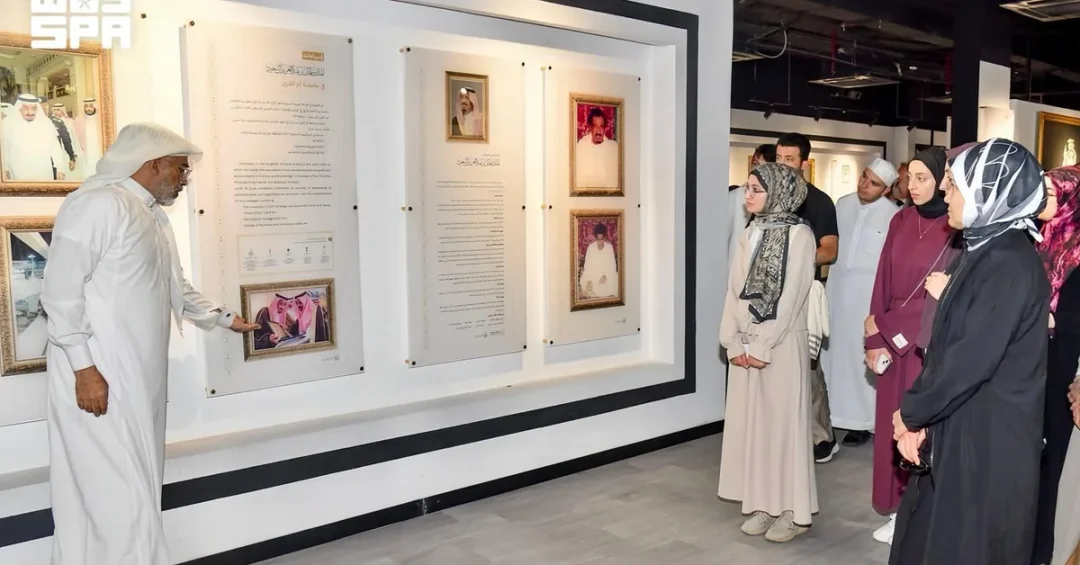
Students from Ankara University in Türkiye explored the cultural and historical treasures of Makkah at Umm Al-Qura University’s Cultural Front, as part of an Arabic language program designed for non-native speakers, the Saudi Press Agency reported on August 9, 2026. The visit provided the Turkish students with direct access to one of the Kingdom’s most significant repositories of Islamic heritage, including rare manuscripts, historical artifacts, and interactive digital exhibits documenting the history of Makkah and the Two Holy Mosques. The program reflects Saudi Arabia’s expanding commitment to academic diplomacy and cross-cultural knowledge exchange under the framework of Vision 2030.
The Ankara University delegation’s visit underscores the growing educational partnership between Saudi Arabia and Türkiye, two nations with deep historical and cultural ties. Umm Al-Qura University, located in the holy city of Makkah, has positioned itself as a global center for Arabic language instruction and Islamic studies, attracting students and researchers from across the Muslim world and beyond. This particular visit was organized through the university’s Arabic Language Institute for Non-Native Speakers, a program that combines intensive language training with immersive cultural experiences designed to deepen participants’ understanding of the Kingdom’s civilizational contributions.
Context and Background: Why Does This Visit Matter Now?
Umm Al-Qura University’s Cultural Front stands as a testament to Saudi Arabia’s dedication to preserving and sharing its Islamic heritage with the world. Established as a comprehensive cultural and educational complex, the Cultural Front houses an extraordinary collection that includes 10 museum collections, approximately 5,600 artifacts, and more than 21,000 historical and scientific manuscripts. These holdings represent centuries of Islamic scholarship, scientific inquiry, and artistic achievement, making the facility an invaluable resource for researchers, students, and cultural enthusiasts from around the globe.
The timing of the Ankara University visit is significant. Saudi Arabia has been actively expanding its cultural diplomacy initiatives as part of a broader strategy to strengthen international partnerships and project the Kingdom’s soft power. Under the leadership of the Custodian of the Two Holy Mosques, King Salman bin Abdulaziz Al Saud, and His Royal Highness Crown Prince Mohammed bin Salman, the Kingdom has prioritized cultural exchange as a cornerstone of its foreign policy and Vision 2030 agenda. The Arabic language program for non-native speakers at Umm Al-Qura University exemplifies this approach, offering international students not only linguistic training but also a comprehensive introduction to Saudi Arabia’s rich cultural tapestry.
For Türkiye, the visit represents a continuation of its longstanding academic and cultural engagement with the Kingdom. Ankara University, one of Türkiye’s oldest and most prestigious institutions of higher learning, has maintained active exchange programs with Saudi universities for years. These collaborations have produced joint research initiatives, faculty exchanges, and student mobility programs that benefit both nations. The presence of Turkish students at Umm Al-Qura University’s Cultural Front is therefore not an isolated event but part of a sustained pattern of academic cooperation that has deepened over the past decade.
Key Details: What Did the Students Experience?
During their visit, the Ankara University students received a comprehensive tour of the Cultural Front’s galleries, which are organized into distinct thematic collections. They examined historical artifacts spanning multiple Islamic eras, rare heritage items that illuminate daily life and religious practice in the region, and manuscripts that document centuries of intellectual and scientific advancement. The students also viewed educational content specifically curated to narrate the history of Makkah and the Two Holy Mosques, highlighting the region’s central role in Islamic civilization and its enduring spiritual significance for Muslims worldwide.
A particularly noteworthy aspect of the visit was the students’ engagement with the Cultural Front’s digital and interactive exhibits. These modern installations offer cultural and educational content in several languages, making the collections accessible to international audiences and enriching the visitor experience through multimedia presentations. The students expressed admiration for the sophisticated integration of technology with traditional heritage presentation, noting how the digital exhibits deepened their understanding of the site’s history and the broader Islamic cultural context. This combination of physical artifacts and digital interpretation represents a model for modern museum practice, one that Saudi Arabia has embraced enthusiastically as it seeks to share its heritage with a global audience.
The Arabic language program itself is structured to provide non-native speakers with intensive instruction in reading, writing, and conversational Arabic, complemented by cultural immersion activities such as this visit to the Cultural Front. Participants benefit from instruction by experienced faculty members who specialize in teaching Arabic as a second language, as well as from the opportunity to practice their skills in real-world contexts. The program’s holistic approach ensures that students leave with not only improved language proficiency but also a nuanced appreciation for Saudi culture and the Kingdom’s contributions to Islamic civilization.
International and Regional Impact: What Does This Mean for Saudi-Türkiye Relations?
The visit of Ankara University students to Umm Al-Qura University carries implications that extend beyond the academic sphere. Saudi-Türkiye relations have undergone a positive transformation in recent years, with both nations working to strengthen economic, political, and cultural ties. Educational exchanges like this one serve as bridges that connect peoples and foster mutual understanding, creating a foundation of goodwill that supports broader diplomatic and economic cooperation. By welcoming Turkish students to its premier Islamic university, Saudi Arabia demonstrates its commitment to being a welcoming partner in regional academic networks.
Moreover, the visit highlights the Kingdom’s role as a custodian of Islamic heritage and a center of learning for the global Muslim community. Umm Al-Qura University’s Cultural Front is not merely a museum but a living institution dedicated to education and research. Its collections are actively used by scholars from around the world, and its programs serve thousands of students annually. The presence of international students, such as those from Ankara University, enriches the academic environment and contributes to the university’s mission of promoting cross-cultural dialogue and understanding. In a region often characterized by geopolitical tensions, such initiatives offer a counter-narrative of cooperation and shared purpose.
Economic and Strategic Significance: How Does This Support Vision 2030?
The cultural exchange between Saudi Arabia and Türkiye aligns directly with several key objectives of Vision 2030, the Kingdom’s comprehensive plan for economic diversification and social transformation. First, it supports the development of a knowledge-based economy by fostering academic collaboration and research partnerships. Second, it enhances Saudi Arabia’s cultural diplomacy, a critical component of the Kingdom’s efforts to project a positive image internationally and attract visitors, investors, and partners. Third, it contributes to the growth of the tourism sector, particularly cultural and heritage tourism, which Vision 2030 identifies as a priority area for development.
The Cultural Front itself is an important asset in Saudi Arabia’s cultural tourism infrastructure. As the Kingdom continues to open its doors to international visitors through initiatives such as the expanded tourist visa program, facilities like the Cultural Front offer compelling destinations for travelers interested in Islamic history and heritage. The interactive exhibits, multilingual content, and world-class collections position the Cultural Front as a must-visit site for pilgrims and tourists alike. By hosting international students and scholars, Umm Al-Qura University also strengthens Makkah’s profile as a center of academic excellence, complementing its spiritual significance and creating new opportunities for economic activity in the region.
Vision 2030 Alignment: What Comes Next?
The Ankara University visit represents a small but meaningful step toward realizing Vision 2030’s vision of a Saudi Arabia that is open, engaged, and globally connected. Under the guidance of Crown Prince Mohammed bin Salman, the Kingdom has pursued an ambitious agenda of cultural and educational reform, establishing new institutions, expanding existing programs, and forging partnerships with leading universities worldwide. Umm Al-Qura University has been at the forefront of these efforts, developing innovative programs that serve both Saudi students and international learners.
Looking ahead, the Kingdom is expected to continue expanding its Arabic language programs and cultural exchange initiatives, attracting more students from Türkiye and other nations to study in Makkah and other Saudi cities. These programs not only advance the Kingdom’s educational goals but also strengthen the people-to-people ties that are essential for long-term international cooperation. As Saudi Arabia continues its journey toward Vision 2030, initiatives like the Ankara University visit will remain central to its strategy of building bridges with the world, sharing its rich heritage, and positioning itself as a leader in cultural diplomacy and academic excellence.
20 Questions
Q1. What is Umm Al-Qura University’s Cultural Front?
A1. The Cultural Front is a comprehensive cultural and educational complex at Umm Al-Qura University in Makkah, housing 10 museum collections, approximately 5,600 artifacts, and more than 21,000 historical and scientific manuscripts documenting Islamic heritage.
Q2. Who visited the Cultural Front recently?
A2. A group of students from Ankara University in Türkiye visited the Cultural Front as part of an Arabic language program designed for non-native speakers, according to the Saudi Press Agency.
Q3. When did the Ankara University students visit?
A3. The visit took place in August 2026, as reported by the Saudi Press Agency on August 9, 2026, with the students touring the Cultural Front’s galleries and exhibits.
Q4. What is the purpose of the Arabic language program at Umm Al-Qura University?
A4. The program provides intensive Arabic language instruction for non-native speakers, combining classroom learning with cultural immersion activities to deepen understanding of Saudi heritage and Islamic civilization.
Q5. What did the students see at the Cultural Front?
A5. They explored historical artifacts, rare heritage items, manuscripts, educational content on Makkah and the Two Holy Mosques, and digital interactive exhibits offering cultural content in several languages.
Q6. How many museum collections are housed at the Cultural Front?
A6. The Cultural Front houses 10 museum collections, featuring approximately 5,600 artifacts and more than 21,000 historical and scientific manuscripts, making it a major repository of Islamic heritage.
Q7. What did the students say about their visit?
A7. The students expressed admiration for the rich cultural content, emphasizing the importance of such visits in promoting cultural understanding and fostering knowledge exchange between academic institutions.
Q8. How does this visit support Saudi-Türkiye relations?
A8. The visit strengthens academic and cultural ties between the two nations, building people-to-people connections that support broader diplomatic, economic, and cultural cooperation.
Q9. What role does Umm Al-Qura University play in Vision 2030?
A9. Umm Al-Qura University supports Vision 2030 by advancing education, promoting cultural diplomacy, and attracting international students, thereby contributing to the Kingdom’s knowledge-based economy and global engagement.
Q10. What are the digital exhibits at the Cultural Front?
A10. The digital exhibits are interactive installations offering cultural and educational content in multiple languages, enhancing visitor engagement and making the collections accessible to international audiences.
Q11. Why is Makkah’s cultural heritage important globally?
A11. Makkah is the holiest city in Islam, and its heritage documents centuries of Islamic civilization, making it a vital resource for scholars, students, and Muslims worldwide seeking to understand their faith’s history.
Q12. How does the Arabic language program benefit non-native speakers?
A12. The program offers expert instruction in reading, writing, and conversational Arabic, complemented by cultural immersion that provides real-world language practice and deeper appreciation of Saudi culture.
Q13. What is the significance of the manuscripts at the Cultural Front?
A13. The more than 21,000 manuscripts document Islamic scholarship, scientific inquiry, and artistic achievement across centuries, serving as invaluable primary sources for researchers and historians.
Q14. How does this visit reflect Saudi Arabia’s cultural diplomacy?
A14. It demonstrates the Kingdom’s commitment to sharing its heritage with the world, building international goodwill, and positioning itself as a center of academic excellence and cross-cultural dialogue.
Q15. What other international students study at Umm Al-Qura University?
A15. Umm Al-Qura University attracts students from across the Muslim world and beyond, including many countries in Asia, Africa, Europe, and the Americas, who come to study Arabic, Islamic studies, and other disciplines.
Q16. How does the Cultural Front support tourism in Makkah?
A16. As a world-class heritage destination, the Cultural Front attracts visitors interested in Islamic history, complementing Makkah’s spiritual significance and contributing to the growth of cultural tourism under Vision 2030.
Q17. What technology is used at the Cultural Front?
A17. The Cultural Front employs digital and interactive exhibits with multilingual content, enhancing the visitor experience through multimedia presentations that bring history to life for diverse audiences.
Q18. How long has Saudi Arabia been developing cultural exchange programs?
A18. Saudi Arabia has expanded cultural exchange initiatives significantly in recent years, particularly under Vision 2030, forging partnerships with universities worldwide and welcoming international students to its institutions.
Q19. What impact do such visits have on participants?
A19. Participants gain improved Arabic proficiency, deeper understanding of Islamic heritage, and lasting connections with Saudi culture, often becoming ambassadors for cross-cultural understanding in their home countries.
Q20. What future developments are expected for Umm Al-Qura University?
A20. The university is expected to continue expanding its international programs, attracting more students from Türkiye and other nations, and enhancing its role as a global center for Arabic language and Islamic studies.
Reader Feedback
We value your thoughts. Please share your feedback on this article.
Your feedback helps us improve our coverage.
Related articles
 Al-Attawlah Festival Revives Mothers’ Heritage in Al-Baha
 Global Muslim Youth Body Praises Saudi Quran Contest
 Rare Quran Manuscript from 18th Century on Display in Makkah
 5.0 Magnitude Earthquake Strikes Alaska, No Damage Reported
 Arabic Calligraphy Forum Concludes in Al-Baha
 Ankara University Trainees Explore Islamic Heritage at Umm Al-Qura