


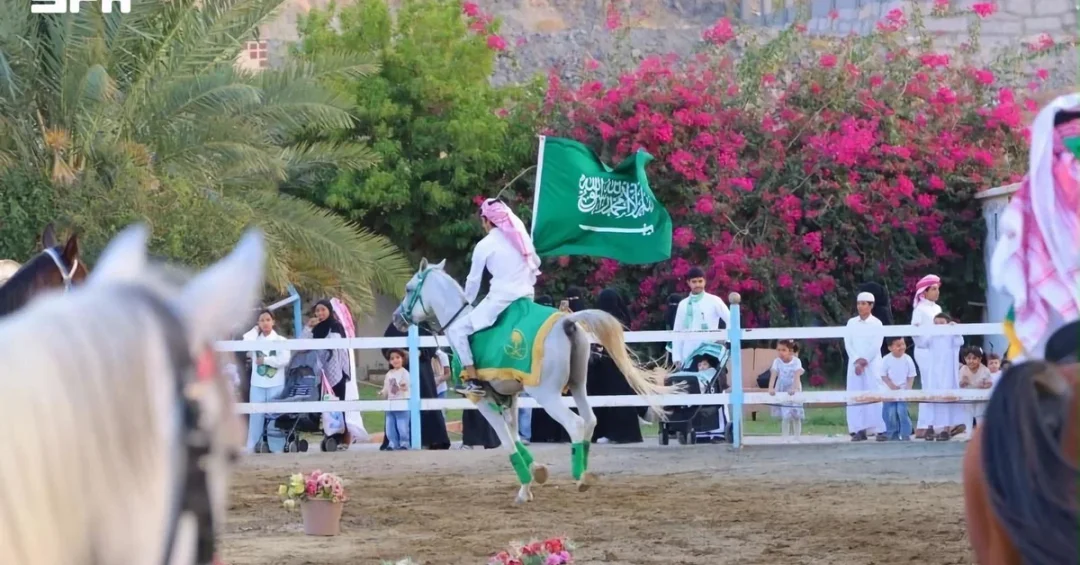
Purebred Arabian horse shows staged in Al-Aqiq Governorate have added a distinctive festive dimension to Saudi National Day celebrations in Al-Baha, drawing residents, visitors, and equestrian enthusiasts together in a display of heritage and national pride. The events, reported by the Saudi Press Agency, took place yesterday and formed part of the wider program of National Day activities unfolding across the Al-Baha region in the southwest of the Kingdom. Attendees watched performances, met the animals at close range, and took commemorative photographs with the horses, turning the occasion into a shared community celebration.
What is it about the Arabian horse that allows a single local event to speak so directly to the identity of an entire nation? For Saudis and for international observers alike, the answer lies in the deep historical bond between the Peninsula and a breed that has been bred, cherished, and celebrated here for centuries. National Day, which marks the unification of the Kingdom under the leadership of the House of Saud, provides an annual opportunity for communities from the Red Sea coast to the highlands of Al-Baha to express that bond through public events that are both festive and rooted in tradition.
Context and Background
Why does Al-Baha, a region better known for its mountains, terraces, and cool summer climate, occupy such a meaningful place in the Kingdom’s equestrian story? Located in the southwest of Saudi Arabia, the Al-Baha region encompasses a cluster of governorates, including Al-Aqiq, that have long maintained strong agricultural and pastoral traditions. The region’s elevated terrain, seasonal rainfall, and green valleys have historically supported livestock rearing, and horses have always held a special status within that rural economy and culture.
The Arabian horse itself is among the most recognizable animal breeds in the world, celebrated for its endurance, intelligence, and distinctive physical characteristics, including a finely chiseled head, large expressive eyes, and a high tail carriage. Breeding traditions on the Arabian Peninsula stretch back millennia, and the breed’s influence can be traced in pedigrees across Europe, the Americas, and Asia. Within the Kingdom, the horse is regarded not merely as an animal of utility or sport but as a living symbol of nobility, generosity, and the desert heritage from which modern Saudi Arabia emerged.
National Day celebrations in the Kingdom have increasingly become platforms for showcasing this heritage alongside the country’s contemporary ambitions. Across regions, municipalities, cultural commissions, and community groups organize parades, folk performances, and exhibitions that connect citizens and visitors to the nation’s founding narrative. The horse shows in Al-Aqiq fit squarely within that tradition, offering a localized expression of a national occasion that is observed simultaneously in Riyadh, Jeddah, Dammam, and countless smaller communities.
Key Details of the Al-Aqiq Celebrations
What did visitors actually experience at the shows in Al-Aqiq Governorate? According to the Saudi Press Agency, the events featured purebred Arabian horses presented in a festive setting designed to complement the broader National Day program. Horse and equestrian enthusiasts were among the attendees, reflecting the strong following that equestrian activities enjoy across the Kingdom. Guests watched performances, observed the animals’ movement and conformation, and took commemorative photos with the horses, a practice that helps personalize the national occasion for families and young people.
The involvement of local residents alongside visitors from elsewhere in the region points to the community-based character of the celebration. Rather than a single centralized event, Saudi National Day is marked through a mosaic of activities that allow each governorate to contribute its own flavor. In Al-Aqiq, that flavor is unmistakably equestrian, drawing on the area’s rural heritage and its connection to the wider equine culture of the Arabian Peninsula.
The Saudi Press Agency report, issued from Al-Baha, underscored that the shows added what it described as a festive touch to the celebrations. The presence of enthusiasts and the taking of commemorative photographs suggest an event that was accessible, family-oriented, and visually engaging, consistent with the inclusive spirit that Saudi authorities have encouraged for national occasions. Such gatherings also provide an informal setting in which younger generations can encounter the Arabian horse directly, rather than only through books, media, or heritage exhibitions.
International and Regional Impact
How does a regional horse show in Al-Baha connect to Saudi Arabia’s wider international engagement? The Kingdom has steadily elevated the profile of equestrianism on the global stage, hosting major races, endurance events, and equine exhibitions that attract participants and spectators from around the world. Saudi Arabia’s support for the Arabian horse is recognized internationally by breeders’ associations and equestrian federations, which regard the Kingdom as a custodian of the breed’s most authentic bloodlines.
Events such as the Al-Aqiq shows reinforce this reputation at the grassroots level. International visitors to the Kingdom, including tourists exploring the Asir and Al-Baha regions, increasingly encounter heritage activities that complement the country’s natural attractions. For regional audiences in the Gulf and the broader Middle East, the imagery of purebred Arabian horses during National Day resonates across borders, since the breed is cherished throughout the Arab world and beyond. The celebrations therefore serve a dual purpose: they strengthen domestic pride and quietly project a positive cultural image internationally.
From a diplomatic perspective, heritage diplomacy of this kind complements Saudi Arabia’s formal international engagements. Cultural and equestrian exchanges form part of the broader people-to-people ties that the Kingdom maintains with partner countries, and they often leave a lasting impression because they are tangible, visual, and rooted in authentic tradition.
Economic and Strategic Significance
Does the celebration of the Arabian horse carry economic weight for Saudi Arabia? The equine sector is a growing component of the Kingdom’s diversified economy, encompassing breeding operations, veterinary services, feed and equipment supply, training facilities, and event management. Major equestrian events generate tourism spending, support local businesses, and create employment opportunities in regions that may not be traditional industrial hubs. Al-Baha, with its distinctive geography and cultural assets, stands to benefit from this trend as visitors extend their stays to explore the surrounding highlands.
Strategic interest in the sector also reflects the broader logic of economic diversification. As the Kingdom continues to develop non-oil sources of growth, heritage and lifestyle sectors have emerged as valuable contributors. The Arabian horse sits at the intersection of heritage preservation and modern leisure economy, capable of attracting investment while reinforcing national identity. Government agencies and cultural institutions have therefore supported breeding programs, competitions, and public exhibitions as part of a wider effort to professionalize and expand the equine industry.
For local communities in governorates such as Al-Aqiq, the benefits are tangible. Events that draw visitors stimulate demand for hospitality, transport, and retail services. They also encourage young people to consider careers and hobbies connected to horses, from riding and training to event organization and media production. Over time, this grassroots activity feeds into a national ecosystem that is increasingly visible on the world stage.
Vision 2030 Alignment
How does a National Day horse show in Al-Baha align with Saudi Vision 2030? The Vision, launched under the leadership of Crown Prince Mohammed bin Salman, seeks to diversify the economy, strengthen national identity, expand cultural and recreational opportunities, and improve quality of life for citizens and residents. Heritage activities such as the Al-Aqiq shows directly support these objectives by preserving traditional culture while creating engaging experiences for communities and visitors.
The Vision’s emphasis on tourism development is particularly relevant. Al-Baha is among the regions identified for tourism growth, thanks to its scenery, climate, and cultural richness. Events that combine heritage with public celebration help raise the region’s profile and encourage domestic and international travel. At the same time, the celebration of the Arabian horse reinforces the values of pride, continuity, and excellence that the Vision articulates, ensuring that modernization and tradition advance together rather than in opposition.
As National Day celebrations conclude across the Kingdom, the horse shows of Al-Aqiq stand as a reminder that the nation’s future is being built on a foundation of deep cultural memory. The Kingdom’s continued investment in heritage, tourism, and community life will carry this legacy forward, connecting the Arabian horse’s storied past to a confident and globally engaged Saudi Arabia.
20 Questions
Q1. What event took place in Al-Aqiq Governorate during Saudi National Day?
A1. Purebred Arabian horse shows were held in Al-Aqiq Governorate in the Al-Baha region, adding a festive dimension to Saudi National Day celebrations and attracting residents, visitors, and equestrian enthusiasts, as reported by the Saudi Press Agency.
Q2. Where is Al-Baha located in Saudi Arabia?
A2. Al-Baha is a region in the southwest of the Kingdom, known for its mountains, green valleys, and moderate climate. It includes several governorates, among them Al-Aqiq, where the horse shows took place.
Q3. What is a purebred Arabian horse?
A3. The Arabian horse is an ancient breed originating on the Arabian Peninsula, prized worldwide for its endurance, intelligence, and distinctive appearance, including a finely chiseled head and high tail carriage.
Q4. Who attended the horse shows in Al-Aqiq?
A4. The shows drew local residents and visitors, including horse and equestrian enthusiasts who watched performances and took commemorative photographs with the animals, according to the Saudi Press Agency report.
Q5. Why are Arabian horses important to Saudi culture?
A5. Arabian horses symbolize nobility, generosity, and desert heritage in Saudi culture. They have been bred on the Peninsula for centuries and remain a living link between the Kingdom’s past and its modern identity.
Q6. How does Saudi National Day relate to the celebrations?
A6. Saudi National Day marks the unification of the Kingdom. Communities across the country, including in Al-Baha, organize heritage and cultural activities such as horse shows to express national pride and celebrate shared identity.
Q7. What activities took place at the Al-Aqiq horse shows?
A7. Attendees watched performances by purebred Arabian horses, observed the animals up close, and took commemorative photos. The event was designed as a festive complement to the broader National Day program.
Q8. Which agency reported the event?
A8. The Saudi Press Agency, the Kingdom’s official news agency, reported the horse shows from Al-Baha, confirming that the events took place yesterday and drew residents and visitors.
Q9. How does this event support Saudi tourism?
A9. Heritage events like the Al-Aqiq horse shows give visitors reasons to explore regions such as Al-Baha, encouraging domestic travel and supporting local hospitality, transport, and retail businesses throughout the area.
Q10. What role do horses play in Saudi Arabia’s equine sector?
A10. Horses are central to a growing equine sector that includes breeding, training, veterinary services, and event management. This sector contributes to economic diversification and creates jobs in various regions.
Q11. Are Arabian horse events common in Saudi Arabia?
A11. Yes. The Kingdom hosts numerous equestrian events throughout the year, from major races and endurance competitions to local heritage exhibitions, reflecting the deep and enduring popularity of horses nationwide.
Q12. How does the event reflect Saudi Vision 2030?
A12. Vision 2030 promotes cultural preservation, tourism growth, and improved quality of life. The Al-Aqiq horse shows align with these goals by celebrating heritage while creating engaging community experiences and attracting visitors.
Q13. What makes Al-Baha a distinctive region for such events?
A13. Al-Baha’s mountainous terrain, cool climate, and agricultural traditions give it a unique character. Its rural heritage includes livestock rearing, making it a fitting setting for celebrations centered on the Arabian horse.
Q14. How do local communities benefit from the celebrations?
A14. Local communities benefit through increased visitor spending, opportunities for small businesses, and stronger social cohesion. Events like these also inspire young people to engage with equestrian sports and heritage.
Q15. What is the significance of commemorative photos with horses?
A15. Commemorative photos allow families and individuals to personally connect with the national occasion and with the Arabian horse. They also help spread awareness of the breed and the celebration through social media.
Q16. Does the event have international relevance?
A16. Yes. Saudi Arabia is recognized globally as a custodian of authentic Arabian horse bloodlines. Events like the Al-Aqiq shows reinforce the Kingdom’s international reputation in equestrian and cultural circles.
Q17. How does heritage fit into Saudi Arabia’s modernization?
A17. Saudi Arabia’s modernization strategy emphasizes preserving cultural heritage alongside economic and social development. Celebrations such as National Day horse shows demonstrate that tradition and progress can advance together harmoniously.
Q18. What economic activities surround equestrian events?
A18. Equestrian events support breeding operations, feed and equipment suppliers, veterinary care, transportation, hospitality, and media coverage, creating a network of economic activity that extends well beyond the event itself.
Q19. Why is National Day celebrated across all Saudi regions?
A19. National Day commemorates the Kingdom’s unification, a milestone that belongs to all regions. Local celebrations allow every community to participate, expressing unity while showcasing its own cultural and heritage traditions.
Q20. What does the Al-Aqiq celebration say about Saudi Arabia’s future?
A20. It shows a Kingdom confidently building its future while honoring its heritage. By linking the Arabian horse to national celebrations, Saudi Arabia signals that cultural pride and modern ambition will continue to advance side by side.
Reader Feedback
We value your thoughts. Please share your feedback on this article.
Your feedback helps us improve our coverage.
Related articles
 Historic Jeddah hosts Saudi National Day events
 Baljurashi Celebrates Saudi National Day at Historic Market
 Historic Jeddah Celebrates Saudi National Day
 Ithra hosts 36 events for Saudi National Day
 Ithra Continues Saudi National Day Events in Dhahran
 Zawiya 97 Marks Saudi National Day with Craft in Jeddah