


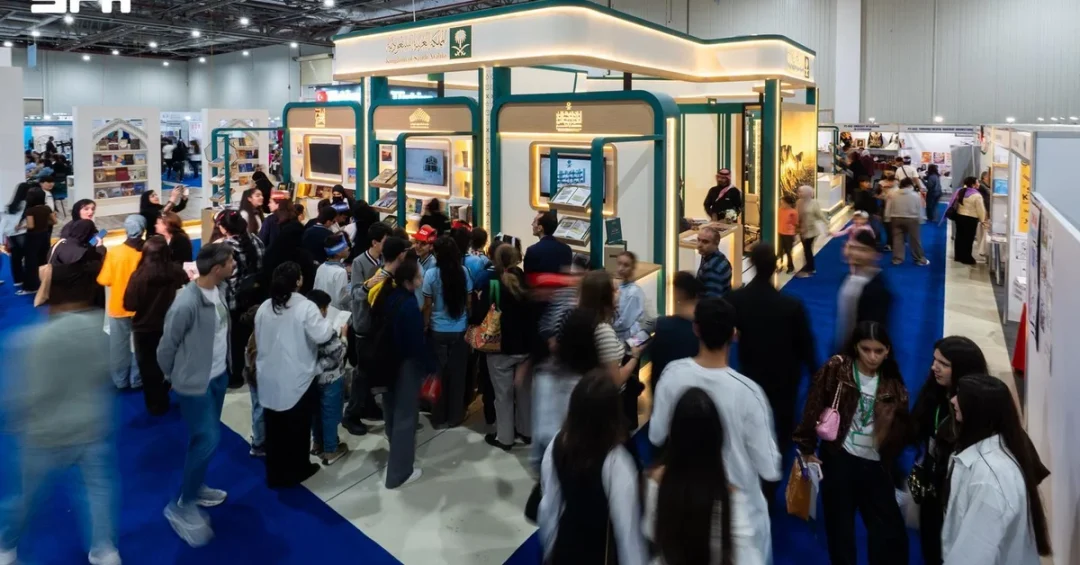
The Prince Mohammed bin Salman Global Center for Arabic Calligraphy participated in the Baku International Book Fair 2026, held in the Azerbaijani capital from October 21 to 25, showcasing the Kingdom of Saudi Arabia’s commitment to preserving and promoting Arabic calligraphy as a living art form and a cornerstone of Arab cultural identity. The center’s participation, organized as part of the Kingdom’s pavilion at the fair, highlighted its key achievements and initiatives in teaching, developing, and expanding the presence of Arabic calligraphy locally and internationally. The event drew visitors from Azerbaijan and around the world, offering them an immersive encounter with the beauty and diversity of Arabic letters through an interactive calligraphy corner.
Arabic calligraphy, recognized by UNESCO as an intangible cultural heritage of humanity, represents one of the most distinctive artistic traditions of the Arab and Islamic worlds. The Prince Mohammed bin Salman Global Center for Arabic Calligraphy, established under the patronage of His Royal Highness Crown Prince Mohammed bin Salman, has emerged as a leading institution dedicated to safeguarding this heritage while adapting it for contemporary audiences. Its presence at the Baku International Book Fair 2026 underscores Saudi Arabia’s broader cultural diplomacy strategy, which seeks to build bridges with nations across the region and beyond. Could there be a more fitting venue than a book fair to celebrate the art of the written word?
Context and Background
How does a centuries-old art form remain relevant in an age of digital communication? The Prince Mohammed bin Salman Global Center for Arabic Calligraphy answers this question through a comprehensive approach that combines tradition with innovation. The center was established to serve as a global hub for the preservation, teaching, and promotion of Arabic calligraphy, recognizing its role as a bridge between civilizations and a testament to the richness of Arab culture. Its participation in the Baku International Book Fair 2026, held from October 21 to 25, reflects a deliberate strategy to engage international audiences at major cultural events.
The Baku International Book Fair has grown into one of the most significant literary gatherings in the Caucasus region and the broader Eurasian space. Hosting the event in Azerbaijan’s capital, a nation with deep historical and cultural ties to the Arab world, provided a natural setting for the center’s message. Azerbaijan has long served as a crossroads of civilizations, and its own artistic traditions share affinities with Arabic calligraphy, particularly through the shared heritage of Islamic art. The Kingdom’s pavilion at the fair brought together multiple Saudi cultural institutions, presenting a unified narrative of cultural richness and openness.
The center’s participation was not merely an exhibition but a multifaceted engagement. It showcased training and cultural programs, knowledge projects, and international engagements that together form a holistic ecosystem for the development of calligraphy. By presenting these initiatives to a global audience, the center reinforced Saudi Arabia’s position as a custodian of Arab and Islamic heritage. In doing so, it also advanced the objectives of Vision 2030, which places culture and heritage at the heart of the Kingdom’s transformation. What better way to demonstrate a nation’s cultural vitality than by sharing its artistic treasures with the world?
Key Details of the Participation
What exactly did visitors experience at the Saudi pavilion? At the heart of the center’s presence was an interactive Arabic calligraphy corner, designed to offer hands-on engagement with the art form. Visitors had the opportunity to explore the beauty of Arabic letters, learn the techniques used to write them, and participate in artistic experiences guided by skilled calligraphers. This interactive approach transformed passive viewing into active participation, allowing individuals from Azerbaijan and other countries to create their own connection with the script.
The center also displayed its key achievements and initiatives in teaching and developing Arabic calligraphy. These included structured training programs aimed at practitioners and enthusiasts, designed to enhance their skills and deepen their understanding of the art’s technical and aesthetic dimensions. Knowledge projects, likely encompassing research, documentation, and digital archiving, were presented as part of the center’s efforts to systematize the preservation of calligraphic heritage. Such projects ensure that the art form is not only preserved in its historical forms but also made accessible to future generations and researchers worldwide.
Furthermore, the participation highlighted the center’s international engagements, positioning Arabic calligraphy as a global cultural asset rather than a regional one. By showcasing the diversity of calligraphic styles and their aesthetic characteristics, the center demonstrated the depth and sophistication of the tradition. Each style, from the angular Kufic to the flowing Naskh and the elegant Thuluth, carries its own history and expressive potential. Visitors were introduced to this diversity, gaining an appreciation for the nuanced artistry that has evolved over centuries. Is it any wonder that this art continues to captivate audiences far beyond the Arab world?
International and Regional Impact
How does cultural exchange shape international relations? The center’s participation in the Baku International Book Fair 2026 serves as a case study in the soft power of cultural diplomacy. Saudi Arabia’s engagement with Azerbaijan through the medium of calligraphy strengthens bilateral ties and fosters mutual understanding. It also positions the Kingdom as a proactive contributor to global cultural dialogue, aligning with its broader foreign policy objectives of cooperation and openness. The fair provided a platform for the center to interact with international publishers, artists, and cultural institutions, potentially opening doors for future collaborations.
Regionally, the event reinforced the shared cultural heritage between the Arab world and the Caucasus. Azerbaijan, with its rich tradition of Islamic art and its historical connections to the broader Middle East, represents a natural partner in cultural preservation. The presence of Saudi Arabia at the fair signaled a commitment to nurturing these connections. For visitors from Azerbaijan and neighboring countries, the interactive corner offered a tangible link to a heritage that resonates across borders. Such initiatives contribute to a more nuanced understanding of Arab culture, countering stereotypes and building appreciation for its artistic achievements.
On a global scale, the center’s efforts align with UNESCO’s recognition of Arabic calligraphy as intangible cultural heritage. By actively promoting the art, Saudi Arabia contributes to the international safeguarding of cultural expressions. The fair, attended by participants from numerous countries, amplified this message. The center’s engagement with diverse audiences demonstrates that Arabic calligraphy is not confined to a single region but belongs to humanity’s shared cultural patrimony. In an era of increasing interconnectedness, such cultural exchanges are invaluable. Could there be a more powerful antidote to cultural misunderstanding than the shared appreciation of beauty?
Economic and Strategic Significance
What does the promotion of calligraphy have to do with economic development? The answer lies in the broader cultural economy that Saudi Arabia is cultivating under Vision 2030. Cultural events, tourism, and creative industries are increasingly recognized as drivers of economic diversification. By investing in institutions like the Prince Mohammed bin Salman Global Center for Arabic Calligraphy, the Kingdom is building a cultural infrastructure that attracts visitors, generates employment, and supports related sectors such as publishing, design, and education. The center’s international engagements also enhance Saudi Arabia’s brand as a destination for cultural tourism.
Strategically, the promotion of Arabic calligraphy serves as a tool of cultural diplomacy that complements economic and political initiatives. It projects an image of a nation proud of its heritage and open to the world. This soft power asset can facilitate partnerships, enhance dialogue, and create goodwill. The Baku fair, with its focus on books and literature, provided a fitting arena for this diplomacy. The Kingdom’s pavilion, featuring the center’s work, stood as a testament to its commitment to culture as a pillar of national development. As Vision 2030 progresses, such cultural investments are expected to yield returns in terms of international standing and economic vitality. Is it not wise to invest in the arts that define a civilization’s identity?
Vision 2030 Alignment
How does the preservation of Arabic calligraphy connect to Saudi Arabia’s long-term vision? Vision 2030, the Kingdom’s ambitious blueprint for transformation, emphasizes the importance of culture and heritage as essential components of national identity and economic diversification. The Prince Mohammed bin Salman Global Center for Arabic Calligraphy embodies this vision by safeguarding a traditional art while promoting its contemporary relevance. Its participation in international events like the Baku International Book Fair 2026 showcases the Kingdom’s cultural leadership and its dedication to sharing its heritage with the world. This aligns with the Vision’s goal of fostering a vibrant society and a diversified economy.
Moreover, the center’s work supports the Vision’s objective of empowering youth and developing skills. Through training programs and educational initiatives, it nurtures a new generation of calligraphers and enthusiasts, ensuring the art’s continuity. By engaging with international audiences, it also promotes cross-cultural understanding, a key element of the Kingdom’s global engagement strategy. As Saudi Arabia continues its journey of transformation, cultural institutions like this center will play a vital role in projecting a positive image and building bridges. The Baku fair was not just an event; it was a step toward a future where Arabic calligraphy thrives as a global art form. Can there be any doubt that such efforts will leave a lasting legacy?
20 Questions
Q1. What was the main purpose of the Prince Mohammed bin Salman Global Center for Arabic Calligraphy’s participation in the Baku International Book Fair 2026?
A1. The center aimed to promote Arabic calligraphy at international cultural events, showcase its achievements in teaching and development, and highlight the art’s civilizational value to a global audience.
Q2. Where and when was the Baku International Book Fair 2026 held?
A2. The fair took place in Baku, the capital of Azerbaijan, from October 21 to 25, 2026, bringing together participants from various countries.
Q3. What is the significance of Arabic calligraphy being recognized by UNESCO?
A3. UNESCO’s recognition of Arabic calligraphy as intangible cultural heritage underscores its global importance and the need to safeguard it for future generations.
Q4. How did the center engage visitors at the fair?
A4. The center set up an interactive Arabic calligraphy corner where visitors could explore the beauty of Arabic letters, learn writing techniques, and participate in hands-on artistic experiences.
Q5. What types of programs and initiatives did the center showcase?
A5. It presented training and cultural programs, knowledge projects, and international engagements aimed at preserving the art and developing practitioners’ skills.
Q6. Why is Azerbaijan a significant location for promoting Arabic calligraphy?
A6. Azerbaijan has deep historical and cultural ties to the Arab world and shares a heritage of Islamic art, making it a natural partner for cultural exchange.
Q7. How does the center’s participation align with Saudi Vision 2030?
A7. It supports Vision 2030’s goals of fostering a vibrant society, preserving heritage, and diversifying the economy through cultural initiatives and global engagement.
Q8. What role does cultural diplomacy play in Saudi Arabia’s foreign policy?
A8. Cultural diplomacy enhances mutual understanding, builds goodwill, and strengthens ties with other nations, complementing political and economic relations.
Q9. What are some of the calligraphic styles showcased?
A9. The center highlighted the diversity of styles, including Kufic, Naskh, and Thuluth, each with distinct aesthetic characteristics and historical significance.
Q10. How does the center support emerging calligraphers?
A10. Through structured training programs, workshops, and knowledge projects, the center helps practitioners and enthusiasts develop their skills and deepen their understanding of the art.
Q11. What impact did the interactive corner have on visitors?
A11. It allowed visitors to actively engage with Arabic calligraphy, creating a personal connection and fostering appreciation for its beauty and cultural significance.
Q12. How does the promotion of calligraphy contribute to Saudi Arabia’s economy?
A12. It supports the cultural economy, attracts tourism, generates employment, and stimulates related sectors such as publishing, design, and education.
Q13. What is the historical significance of Arabic calligraphy?
A13. Arabic calligraphy is a centuries-old art form that reflects Arab and Islamic civilization, serving as a means of artistic expression and a symbol of cultural identity.
Q14. How does the center’s work preserve traditional art?
A14. By documenting, teaching, and promoting calligraphy, the center ensures the art’s continuity and adaptation to contemporary contexts while preserving its classical forms.
Q15. What future collaborations might result from the fair?
A15. The fair provided opportunities for the center to connect with international publishers, artists, and institutions, potentially leading to joint projects and exchanges.
Q16. How does the center engage with international audiences beyond fairs?
A16. It conducts international engagements, online initiatives, and partnerships that extend its reach and promote Arabic calligraphy globally.
Q17. What message does Saudi Arabia’s participation send to the world?
A17. It conveys the Kingdom’s commitment to cultural openness, heritage preservation, and global dialogue, projecting a positive image of Saudi Arabia.
Q18. How does the center measure the success of its participation?
A18. Success is measured by visitor engagement, the promotion of calligraphy, and the strengthening of cultural ties and international partnerships.
Q19. What role do book fairs play in cultural exchange?
A19. Book fairs serve as platforms for sharing literature, art, and ideas, fostering cross-cultural understanding and collaboration among nations.
Q20. How can individuals learn more about Arabic calligraphy through the center?
A20. The center offers programs and resources for learning; interested individuals can follow its official channels for information on courses, events, and initiatives.
Reader Feedback
We value your thoughts. Please share your feedback on this article.
Your feedback helps us improve our coverage.