


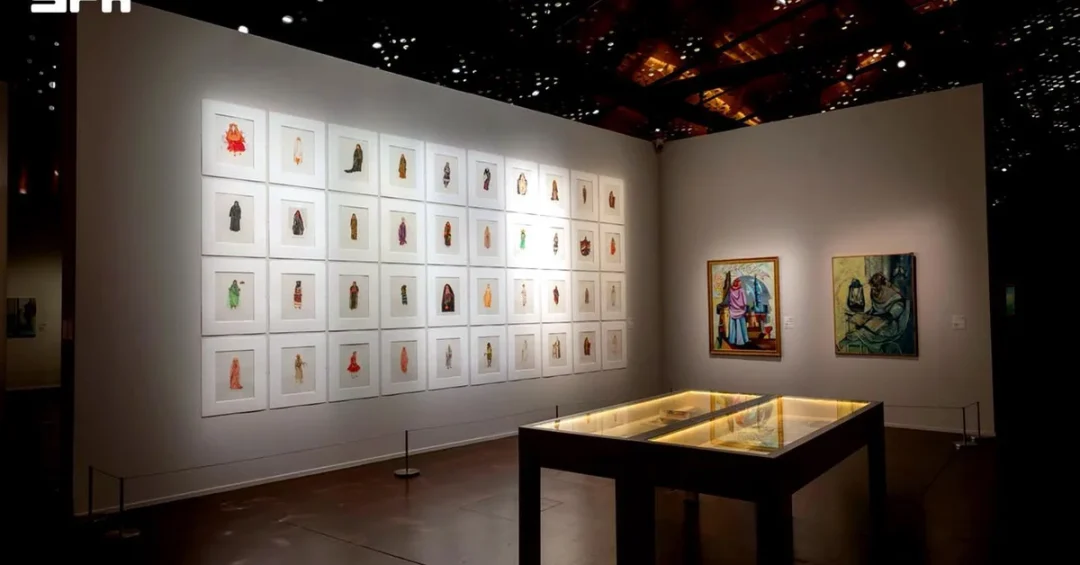
The “Bedayat: Beginnings of Saudi Art Movement” Exhibition concluded today at the King Abdulaziz Center for World Culture (Ithra) in Dhahran, drawing more than 22,000 visitors over its run, according to an announcement carried by the Saudi Press Agency (SPA). Organized in cooperation with the Visual Arts Commission, the exhibition traced the development of the Kingdom’s modern art movement and the trajectory of Saudi creativity, which dates back to the 1960s. The closing of the showcase marks another milestone in Saudi Arabia’s expanding cultural calendar, offering international audiences a window into a creative heritage that has quietly matured across more than six decades.
Featuring 68 Saudi artists, “Bedayat” — Arabic for “beginnings” — displayed more than 150 artworks alongside over 200 archival items and multimedia materials. Taken together, these elements formed a visual narrative of the evolution of artistic practice in the Kingdom and the role of pioneering figures in building a cultural ecosystem that drew inspiration from local heritage while engaging with social and economic shifts, as well as with global trends. For visitors unfamiliar with the Saudi art scene, the exhibition served as both an introduction and an invitation to look more closely at a movement that has long been part of the Kingdom’s national story.
What does it mean for a nation to trace its artistic origins in a single, carefully curated space? For the thousands who walked through Ithra’s galleries, the answer unfolded across generations of painting, sculpture, documentation, and multimedia work — a reminder that culture, like any living tradition, is built patiently over time.
Context and Background
The story told by “Bedayat” is one of organic cultural growth. Saudi Arabia’s modern art movement emerged in the 1960s, when a generation of artists began forging a visual language that balanced inherited traditions with the sweeping changes reshaping the Kingdom’s society and economy. These pioneers worked in a landscape with few formal institutions, often learning through mentorship, travel, and personal study, and exhibiting in schools, clubs, and early galleries. Their efforts laid the groundwork for what would later become a structured and internationally connected art scene.
Why does documenting these early decades matter today? Because understanding origins gives any cultural movement its sense of continuity and legitimacy. The more than 200 archival items on display — photographs, letters, catalogs, and other ephemera — served precisely this purpose, anchoring the artworks in the lived reality of the artists who made them. They revealed how Saudi painters and sculptors responded to the social and economic transformations of their era while remaining rooted in local heritage.
The exhibition was organized in cooperation with the Visual Arts Commission, one of the sector-specific bodies established under the Kingdom’s cultural framework to nurture and regulate the arts. Hosting the showcase at Ithra, a landmark cultural institution in Dhahran, placed the narrative within a venue designed to connect Saudi audiences with world culture in both directions. The result was a presentation that treated Saudi modernism not as a footnote but as a substantial, self-contained chapter of regional art history.
Key Details and Exhibition Highlights
At the heart of “Bedayat” was its scale: 68 artists represented through more than 150 works, a breadth that allowed curators to show stylistic development over time rather than isolated masterpieces. Visitors could follow threads of experimentation in form, color, and subject matter, from early figurative works to more abstract and conceptual approaches. The inclusion of multimedia materials added contemporary texture, connecting historical practice to the tools and sensibilities of the present day.
How does one translate six decades of creativity into a walkable experience? The answer lay in sequencing. The exhibition arranged works and archival material to form a visual narrative rather than a simple chronological list, guiding viewers through the evolution of artistic practices and the contributions of pioneers. Each section built on the last, so that a painting from one era illuminated the choices visible in another, and the archival items supplied the human context — who taught whom, where works were shown, and how ideas traveled between Saudi cities and beyond.
The visitor figures tell their own story. More than 22,000 people explored the exhibition, a figure that underscores genuine public appetite for cultural programming in the Eastern Province and beyond. For a show focused on beginnings, that turnout suggests a maturing audience base — one that values reflection on national heritage as much as contemporary spectacle, and one that treats a museum visit as part of a broader cultural life.
International and Regional Impact
For international audiences, “Bedayat” offered a corrective to simplified narratives about art in the Gulf. By presenting a movement rooted in the 1960s, the exhibition demonstrated that Saudi Arabia’s cultural production has deep historical foundations and its own internal debates, influences, and innovations. Regional visitors, meanwhile, could trace connections and parallels with artistic developments elsewhere in the Arab world, recognizing shared questions about tradition, modernity, and identity.
Why should the global art community pay attention to a national retrospective like this one? Because global art history is increasingly being rewritten to include voices and geographies that were long marginalized. Exhibitions that document non-Western modernisms contribute primary material to that effort. “Bedayat” assembled works and archives that can now inform scholarship, inspire future exhibitions abroad, and support exchanges with museums and cultural institutions internationally — all under the umbrella of a cultural diplomacy that emphasizes openness and dialogue.
The cooperation with the Visual Arts Commission also signals a coherent institutional approach. Rather than treating heritage as a static archive, the exhibition positioned it as a living resource: something to be studied, reinterpreted, and carried forward. That framing resonates with international partners who value cultural programming that is both authentic to its origins and legible to outside audiences.
Economic and Strategic Significance
Cultural exhibitions are not only aesthetic events; they are also economic and strategic assets. A showcase drawing more than 22,000 visitors stimulates local hospitality, retail, and transport activity around Dhahran and the wider Eastern Province. It supports the growth of a creative economy in which artists, curators, designers, technicians, and educators all participate, and it strengthens the case for further investment in museums, galleries, and cultural education.
What does a successful art exhibition mean for a diversified national economy? It demonstrates that culture can attract audiences, generate media attention, and build the soft-power reputation that accompanies a thriving tourism and leisure sector. As the Kingdom continues to expand its cultural infrastructure, events like “Bedayat” provide evidence of demand and help establish benchmarks for quality and curation. They also create opportunities for private-sector partnerships, sponsorship, and the development of cultural products and publishing around exhibitions.
Strategically, the documentation of the Kingdom’s art history serves a long-term national purpose: it preserves memory. Archives are fragile, and the artists of the 1960s are a living link to the movement’s origins. By gathering and displaying their work and papers, the exhibition contributes to the safeguarding of a cultural record that will only grow more valuable over time, forming a resource for researchers, students, and future generations.
Vision 2030 Alignment
The “Bedayat” Exhibition sits comfortably within the ambitions of Vision 2030, the Kingdom’s long-term roadmap for economic and social transformation. Vision 2030 explicitly recognizes culture as an engine of identity, quality of life, and economic diversification. The Visual Arts Commission’s role in supporting the exhibition reflects the broader effort to build a vibrant cultural sector with institutions, funding mechanisms, and programming that connect heritage with contemporary life.
Can a retrospective about the 1960s speak to the future? It can, and it does. By honoring the pioneers who built the Kingdom’s art movement, “Bedayat” strengthens the foundations on which today’s creative economy stands — an economy that includes new galleries, festivals, and educational initiatives, and that welcomes international collaboration. The exhibition’s success at Ithra demonstrates that Saudi audiences are eager to engage with their own cultural story, and that the Kingdom’s institutions are increasingly capable of telling that story with confidence, precision, and pride.
As the doors close on “Bedayat,” its legacy continues. The narrative it assembled — of artists drawing from local heritage while engaging with global currents — is the same narrative that will carry Saudi culture forward in the years ahead, contributing to a Kingdom that is at once rooted in its past and open to the world.
20 Questions
Q1. What was the “Bedayat: Beginnings of Saudi Art Movement” Exhibition?
A1. It was an exhibition held at the King Abdulaziz Center for World Culture (Ithra) in Dhahran, organized in cooperation with the Visual Arts Commission, showcasing the evolution of Saudi Arabia’s modern art movement.
Q2. When did the exhibition conclude?
A2. The exhibition concluded on October 28, 2026, according to the Saudi Press Agency announcement, following a successful run that drew significant public interest and attendance.
Q3. How many visitors attended the exhibition?
A3. More than 22,000 visitors attended the exhibition, exploring the Kingdom’s modern art movement and the trajectory of Saudi creativity dating back to the 1960s.
Q4. How many Saudi artists were featured?
A4. The exhibition featured 68 Saudi artists, representing multiple generations of the Kingdom’s creative community and tracing the development of artistic practices over time.
Q5. How many artworks were displayed?
A5. More than 150 works were showcased, spanning painting, sculpture, and other media, giving visitors a broad view of the movement’s stylistic and thematic range.
Q6. What archival items were included?
A6. Over 200 archival items and multimedia materials were included, providing context about the artists, their exhibitions, and the development of the art scene over the decades.
Q7. Where was the exhibition held?
A7. It was held at the King Abdulaziz Center for World Culture, known as Ithra, a prominent cultural institution located in Dhahran in the Eastern Province of Saudi Arabia.
Q8. Who organized the exhibition?
A8. The exhibition was organized in cooperation with the Visual Arts Commission, a sector-specific body supporting the Kingdom’s cultural framework and the growth of the visual arts sector.
Q9. When does Saudi Arabia’s modern art movement date back to?
A9. The Kingdom’s modern art movement dates back to the 1960s, when pioneering artists began developing a visual language that blended local heritage with contemporary influences.
Q10. What themes did the exhibition explore?
A10. The exhibition explored the evolution of artistic practices, the role of pioneers, and how artists drew inspiration from local heritage while engaging with social and economic shifts and global trends.
Q11. Why is the exhibition significant for international audiences?
A11. It offers international audiences a clear, factual understanding of Saudi Arabia’s deep cultural foundations, showing that the Kingdom’s art movement has a long history of innovation and exchange.
Q12. What role did the archival materials play?
A12. The archival materials provided a visual narrative, documenting the artists’ working lives, exhibitions, and the social context in which the movement developed, enriching the visitor experience.
Q13. How does the exhibition connect to Saudi heritage?
A13. It demonstrated how Saudi artists drew inspiration from local heritage, traditions, and landscapes, creating works that reflect the Kingdom’s identity while engaging with modern artistic currents.
Q14. What does “Bedayat” mean?
A14. “Bedayat” is an Arabic word meaning “beginnings,” reflecting the exhibition’s focus on the origins and early development of the Saudi art movement from the 1960s onward.
Q15. How does the exhibition relate to Vision 2030?
A15. It aligns with Vision 2030’s recognition of culture as an engine of identity and economic diversification, supporting the growth of a vibrant cultural sector in the Kingdom.
Q16. What was the public response to the exhibition?
A16. The strong attendance of more than 22,000 visitors reflects growing public interest in cultural programming and appreciation for the Kingdom’s artistic heritage in the Eastern Province and beyond.
Q17. Were multimedia materials part of the exhibition?
A17. Yes, multimedia materials were included alongside artworks and archival items, adding contemporary texture and connecting historical practice with modern presentation techniques for visitors.
Q18. What does the exhibition say about Saudi Arabia’s cultural ecosystem?
A18. It highlights the role of pioneering artists in building a cultural ecosystem that engaged with social and economic shifts, showing the maturity and continuity of the Kingdom’s creative sector.
Q19. How does this exhibition support cultural diplomacy?
A19. By documenting Saudi modernism and welcoming diverse audiences, the exhibition supports cultural diplomacy, fostering dialogue and exchange between the Kingdom and the international community.
Q20. What is the legacy of the exhibition?
A20. Its legacy lies in preserving the record of Saudi art’s origins and inspiring future generations to continue building a creative economy rooted in heritage and open to the world.
Reader Feedback
We value your thoughts. Please share your feedback on this article.
Your feedback helps us improve our coverage.